
Yes, a dog can tear its ACL (Anterior Cruciate Ligament). This is one of the most common orthopedic injuries seen in dogs, often resulting in sudden lameness or a gradual worsening of a dog limping after activity.
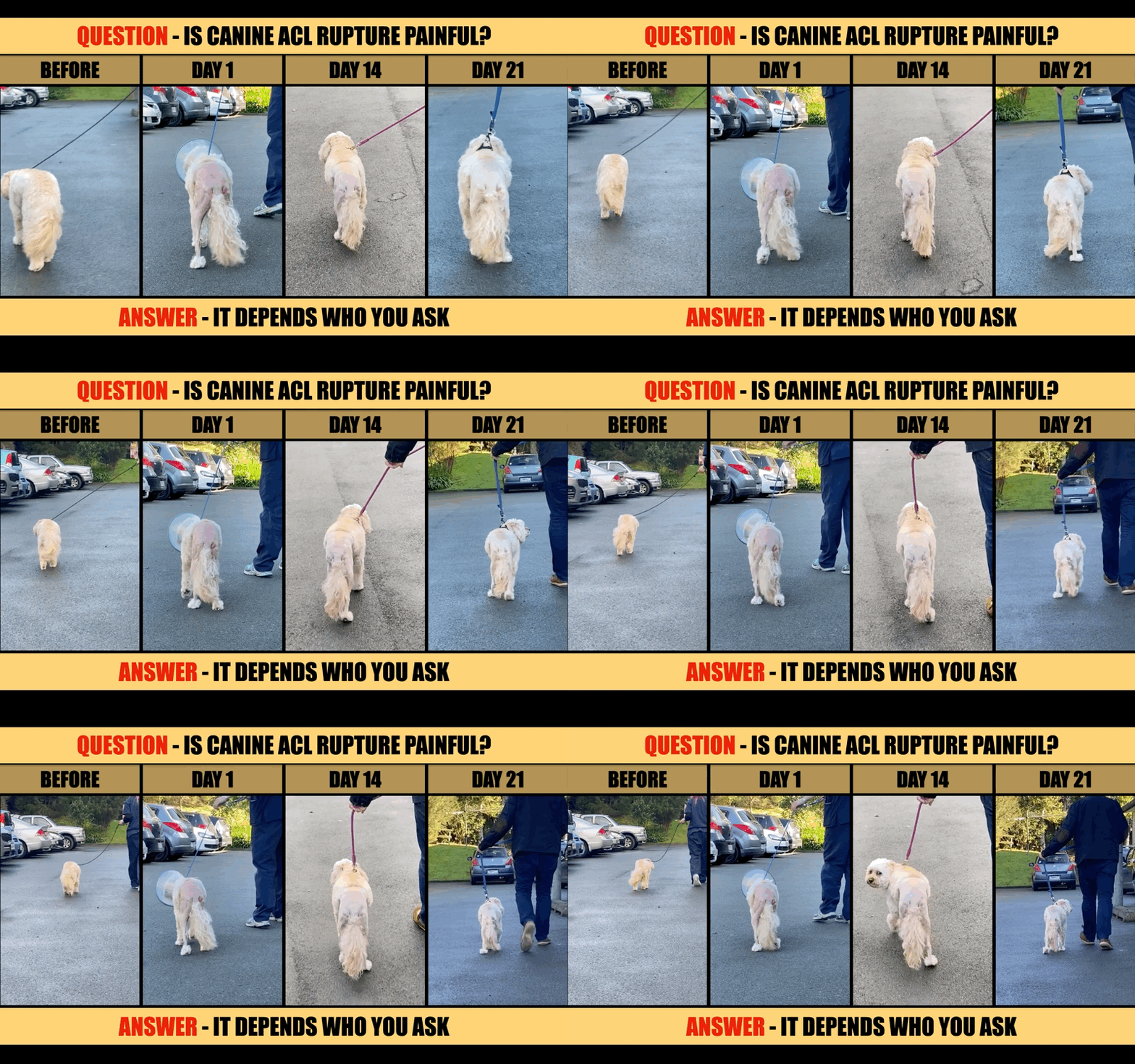
Image Source: images.squarespace-cdn.com
Spotting the Early Signs of a Canine Knee Injury
When your dog injures its knee, the ligament involved is usually the ACL, or technically, the cranial cruciate ligament (CCL) in dogs. Recognizing the canine knee injury signs early is key to getting prompt treatment and better outcomes. Many owners miss the initial subtle cues.
Common Symptoms of a Torn Dog ACL
A torn ACL rarely happens instantly like a sports injury in humans, although it can. More often, it involves wear and tear over time, leading to a partial or complete rupture. Look closely for these telltale dog ACL tear symptoms.
- Limping or Lameness: This is the most obvious sign. The lameness might be sudden and severe, especially after running or jumping. Sometimes, the dog limping after activity starts mild and gets worse later.
- Weight Shifting or Favoring a Leg: You might notice your dog consistently puts less weight on one rear leg. This means the dog is dog favoring back leg because it hurts to bear weight on the injured side.
- Swelling: The knee joint itself may look puffy or swollen compared to the other leg.
- Difficulty Rising or Jumping: Simple actions become hard. Your dog might hesitate before jumping onto furniture or struggle to stand up from a lying position.
- Decreased Activity: Your normally playful dog might suddenly seem reluctant to play fetch or go for long walks.
Subtle Indicators You Might Overlook
Sometimes the signs dog needs knee surgery are not obvious lameness. Pay attention to small changes in behavior.
Changes in Movement
- “Toe Touching”: The dog might only put the very tip of the paw on the ground, trying to avoid bending the knee.
- Stiffness After Rest: The dog might seem stiff when it first wakes up, and the lameness might ease slightly as it “warms up.”
- Knuckling: In severe or chronic cases, the dog might walk with the top of its paw slightly curled under, known as knuckling.
Behavioral Shifts
- Reluctance to Exercise: They might stop initiating play or seem generally less enthusiastic about walks.
- Pain Response: Your dog might yelp or pull away if you gently touch or try to examine the sore knee area.
- Muscle Loss: Over time, the thigh muscle (quadriceps) on the injured side will start to shrink because the dog is not using it properly. This is a clear sign of chronic injury.
What Causes a Dog’s ACL to Tear?
The CCL connects the femur (thigh bone) to the tibia (shin bone) in the knee joint. Its job is to stop the tibia from sliding forward under the femur. When this ligament tears, the joint becomes unstable.
Predisposing Factors for CCL Tears
While trauma can cause an acute tear, most tears happen due to ongoing joint stress.
- Genetics and Breed: Certain breeds are highly prone to CCL issues. These include large, heavy breeds like Rottweilers, Newfoundlands, and Labrador Retrievers. Smaller breeds like Miniature Schnauzers also have a higher risk.
- Obesity: Extra weight puts huge strain on the knee joints, greatly increasing the risk of rupture. Managing your dog’s weight is crucial for joint health.
- Age: As dogs age, the ligament naturally weakens, making it brittle and more likely to snap even with mild activity.
- Poor Conditioning: Dogs that alternate between periods of intense activity and long rest periods are more vulnerable.
Acute vs. Chronic Tears
It is important to know that a tear can be sudden or gradual.
| Type of Tear | How It Happens | Typical Signs |
|---|---|---|
| Acute Tear | Sudden twist, jump, or pivot during play. | Immediate, severe limping; dog may cry out. |
| Chronic Tear | Slow fraying of the ligament over months or years. | Mild, intermittent limping; dog favoring back leg becomes more noticeable over time. |
In many chronic cases, the initial slight tear causes inflammation. This inflammation further weakens the ligament until it finally ruptures completely. Often, if one knee has a tear, the other knee will suffer a tear within the next 12 to 18 months.
The Path to Diagnosis: What Happens at the Vet
If you suspect a dog torn ligament in knee, scheduling a veterinarian check for dog knee is the next critical step. Early and accurate diagnosis leads to faster recovery.
The Initial Physical Examination
The veterinarian will first ask you detailed questions about when the symptoms started and how they have progressed. Then, they will perform a physical exam focused on the hind legs.
Observing Gait and Posture
The vet watches your dog walk, trot, and stand. They look specifically for signs of lameness and how the dog shifts its weight. They will assess muscle mass, noting any thinning in the thigh area on one side.
Palpation and Manipulation
The vet will gently feel (palpate) the leg, checking for pain, heat, and swelling around the knee joint. The definitive diagnostic tests involve manipulating the knee joint to check for instability.
The Tibial Thrust Test
This is the cornerstone of diagnosing a CCL tear without surgery. The vet holds the femur still with one hand and gently pushes the tibia forward with the other.
- Positive Test: If the ACL is torn, the tibia slides forward abnormally under the femur. This abnormal movement is called the “tibial thrust.” This confirms dog knee instability signs.
- Negative Test: If the ligament is intact, the tibia remains firmly seated against the femur.
Drawer Sign (Cranial Drawer Test)
This is similar to the tibial thrust but focuses specifically on the forward movement. If the tibia slides forward like a drawer opening when manipulated, the ACL is definitely torn.
Advanced Diagnostic Tools
Sometimes, the physical exam isn’t conclusive, especially if the dog is tense or if only a partial tear exists.
Sedation for Accurate Testing
If your dog is in significant pain or very large, the vet might recommend sedation. Under light sedation, the leg muscles relax completely. This allows the vet to perform the drawer and thrust tests much more accurately, ensuring no instability is missed.
X-rays (Radiographs)
X-rays are vital for several reasons:
- Rule Out Other Issues: X-rays can show if the lameness is caused by bone cancer (osteosarcoma), fractures, or hip dysplasia, which can mimic ACL symptoms.
- Assess Arthritis: A torn ACL almost always leads to rapid development of arthritis in the joint. X-rays show the extent of these changes.
- Surgical Planning: While the torn ligament itself is often not visible on an X-ray, the images guide the surgeon on the best approach for repair.
MRI and CT Scans
In specialized centers, Magnetic Resonance Imaging (MRI) or Computed Tomography (CT) scans can provide detailed pictures of soft tissues, including the ligament. However, these are expensive and usually not necessary, as the physical exam and standard X-rays are often enough to confirm the diagnosis.
Treatment Options for a Dog Torn ACL
Once the diagnosis is confirmed, the next question is treatment. Treatment paths depend on the dog’s size, activity level, age, and the owner’s budget. Deciding if signs dog needs knee surgery is often made in consultation with an orthopedic specialist.
Non-Surgical Management
Non-surgical treatment is usually reserved for very small dogs (under 15-20 lbs) or elderly dogs with very low activity needs.
Key Components of Conservative Care:
- Rest and Activity Restriction: Strict crate rest and no running, jumping, or rough play for 6-12 weeks. Leash walks only for potty breaks.
- Weight Management: Aggressive diet changes to reduce joint load. This is critical for success.
- Anti-Inflammatories: Prescription non-steroidal anti-inflammatory drugs (NSAIDs) to manage pain and swelling.
- Support Bracing: Custom braces can sometimes offer temporary support, but they do not stabilize the joint as well as surgery does.
The Outcome Without Surgery: In small dogs, the body might form scar tissue to stabilize the joint over time. In medium to large dogs, non-surgical treatment often fails because the constant instability leads to rapid, severe arthritis.
Surgical Repair for Dog Hind Leg Injury Treatment
For medium to large breeds, surgery is overwhelmingly recommended to restore stability and prevent rapid joint destruction. Surgery aims to replace the job of the torn ACL.
Common Surgical Procedures
There are several ways veterinarians repair a dog hind leg injury treatment. The goal is to change the angle of the tibia so that the forward slide (tibial thrust) is stopped by the natural mechanics of the bone, not just a ligament substitute.
1. Tibial Plateau Leveling Osteotomy (TPLO)
TPLO is currently the most common and highly successful surgery for active or large dogs.
- The Method: The surgeon cuts the top part of the tibia (the tibial plateau) and rotates it to a specific, flatter angle.
- The Result: Once rotated, the natural forces of the leg pushing down stabilize the knee, eliminating the need for the CCL entirely. It involves cutting and screwing the bone back together.
2. Tibial Tuberosity Advancement (TTA)
TTA is another osteotomy procedure, similar to TPLO but focusing on advancing the tibial tuberosity (the bump where the tendon attaches). This also changes the joint angle to achieve stability. It is often favored in some breeds or specific joint conformations.
3. Extracapsular Repair (Lateral Suture Technique)
This technique uses a very strong synthetic material (like fishing line or specialized suture) placed outside the joint capsule to mimic the function of the ACL.
- Use Case: More common in smaller dogs or as a temporary measure.
- Limitation: The material can stretch or break over time, especially in very large, powerful dogs, making it less ideal than TPLO for high-energy animals.
Recovery and Rehabilitation After Surgery
Recovery from ACL surgery is lengthy and requires dedication from the owner. Successful recovery is as dependent on post-operative care as it is on the surgery itself.
Immediate Post-Operative Care (First Two Weeks)
- Pain Management: The dog will go home with oral pain medication and often anti-inflammatories.
- Strict Rest: Leash walks only. No running, jumping, stairs, or rough play. This period is crucial for the initial bone healing (TPLO/TTA) or stabilization (suture technique).
- Incision Care: Keep the incision site clean and dry. Prevent licking with an E-collar (cone).
The Rehabilitation Phase (Weeks 2 to 12)
This phase focuses on regaining motion and strengthening muscles without re-injuring the repair. Physical therapy is highly recommended.
| Phase | Focus | Typical Activities |
|---|---|---|
| Early (Weeks 2-4) | Passive range of motion, minimizing swelling. | Gentle passive flexion/extension of the knee; short, controlled leash walks. |
| Mid (Weeks 5-8) | Gradual weight bearing, increasing muscle use. | Controlled leash walking on flat ground; gentle controlled straight-line trotting (if approved). |
| Late (Weeks 9-12+) | Building strength, return to normal activity. | Short periods of controlled running/jogging; balance exercises; swimming. |
It can take four to six months before your dog is fully cleared for strenuous activity. Jumping back into play too soon is the number one cause of surgical failure or the development of arthritis flares.
Fathoming the Costs Involved
The cost of treating a dog torn ligament in knee varies widely based on location, the surgeon’s experience, and the chosen procedure.
Factors Affecting Cost
- Procedure Type: TPLO is generally the most expensive surgical option, followed by TTA, with extracapsular repairs usually being the least expensive surgery.
- Anesthesia and Imaging: Costs for pre-surgical bloodwork, anesthesia monitoring, and necessary X-rays are added on.
- Rehabilitation: Post-operative physical therapy sessions (hydrotherapy, therapeutic exercises) add to the overall investment.
Be prepared for surgical costs to range from $3,000 to $6,000 or more, depending on the clinic and location. Pet insurance often covers a significant portion of these orthopedic expenses if you have coverage.
Why Ignoring the Symptoms is Risky
If you notice canine knee injury signs or excessive dog favoring back leg, delaying treatment only leads to worse long-term problems.
The Cascade Effect of Instability
A torn ACL causes instability (the knee wiggles). This instability leads to two major problems:
- Meniscus Damage: The meniscus is a C-shaped piece of cartilage that acts as a shock absorber. When the knee slides abnormally, the meniscus can get caught and torn. A torn meniscus is often excruciatingly painful and usually requires a second surgery to remove the damaged piece.
- Osteoarthritis (OA): Continuous abnormal joint movement causes the smooth cartilage lining the bones to wear away. This results in painful, chronic arthritis that limits mobility for the rest of the dog’s life, even after surgery.
Treating the ACL tear promptly minimizes the secondary damage to the meniscus and slows the onset of severe arthritis, making the dog hind leg injury treatment much more successful long-term.
Frequently Asked Questions (FAQ) Regarding Dog ACL Tears
Can a dog walk on a torn ACL?
Yes, often they can, especially with partial tears or in large dogs trying to “muscle through.” They might only walk on their toes or limp severely, but they often attempt to walk. If they suddenly refuse to bear any weight at all, the tear is likely complete and very painful.
How long does it take for a dog to recover from ACL surgery?
Full recovery, meaning the ability to return to normal, unrestricted activity, usually takes between four to six months. The first two weeks require strict rest, and the first three months involve careful, controlled rehabilitation exercises.
Is it better to do TPLO or a lateral suture technique?
For most active dogs over 30 pounds, TPLO provides the most biomechanically sound and lasting correction, as it permanently changes the bone angle. The lateral suture technique might be sufficient for small, less active dogs, but it has a higher long-term failure rate in large breeds. Always consult a board-certified orthopedic surgeon.
Will my dog need surgery on the other knee?
The risk is high. Studies show that 40% to 60% of dogs who tear one ACL will tear the other one within 18 months. Maintaining excellent weight control and conditioning is the best defense for the uninjured leg.
How can I tell if my puppy has torn its ACL?
Puppies can tear their ACLs, often due to an acute trauma. Look for sudden onset of severe limping, reluctance to jump, and pain when handling the leg. Because they are young and active, surgery is usually recommended to prevent long-term joint damage.