
Yes, you can get a service dog for Postural Orthostatic Tachycardia Syndrome (POTS). A properly trained service dog can significantly help manage the symptoms of POTS by performing specific tasks that mitigate the owner’s disability-related limitations.
POTS can make daily life very hard. When your heart races when you stand up, it causes dizziness, fainting, and fatigue. A trained service dog offers vital support. This guide will walk you through the steps to find and secure the right assistance animal for your needs.
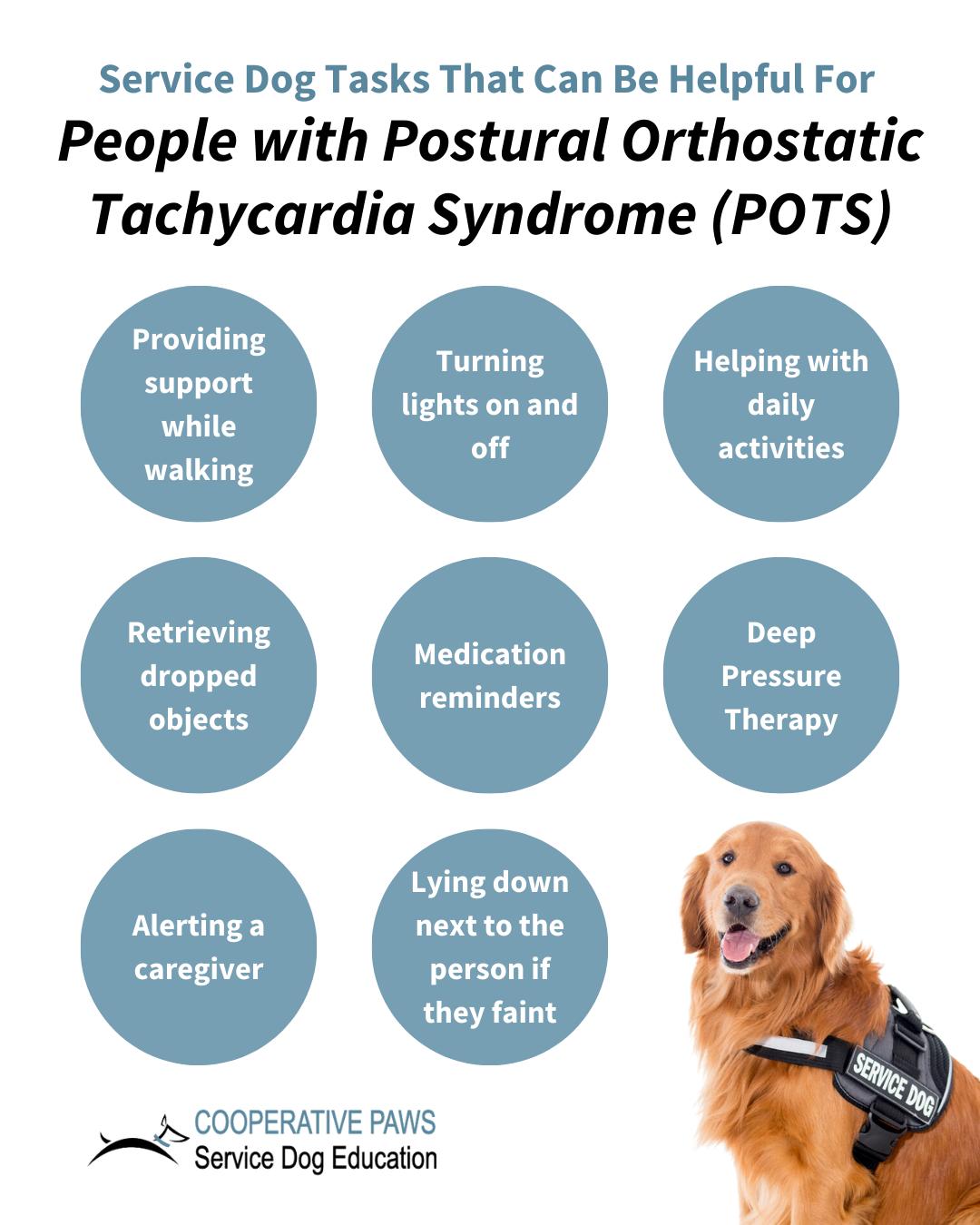
Image Source: cooperativepaws.com
The Difference Between Assistance Animals
It is key to know the difference between types of assistance animals first. Many people confuse these roles.
Emotional Support Animal vs Service Dog for POTS
An Emotional Support Animal (ESA) offers comfort just by being present. They do not need special training for tasks. ESAs have limited public access rights under laws like the Fair Housing Act.
A Service Dog for POTS, however, is individually trained to perform specific tasks directly related to the handler’s disability. This training allows them to work under the Americans with Disabilities Act (ADA). They must be trained to perform tasks that mitigate the POTS symptoms.
Service Dog Certification for POTS vs ESA Letter
You cannot get “service dog certification” because the ADA does not require official certification. A valid ESA letter vs service dog certification for POTS comparison shows a big legal gap. An ESA letter is simply a note from a mental health professional. A service dog needs specific task training recognized under the ADA. There is no official paperwork or certification for service dogs themselves. Proof is in the dog’s training and ability to perform tasks.
Establishing POTS Service Dog Requirements
Before starting the process, you must confirm you meet the POTS service dog requirements. The ADA defines a service animal as a dog (or sometimes a miniature horse) that is individually trained to do work or perform tasks for a person with a disability.
Proving Your Disability
You must have a disability recognized under the ADA. POTS is a recognized condition that significantly limits major life activities, such as the ability to stand or walk for long periods.
You do not need a doctor’s note stating you need a service dog. However, medical records proving your POTS diagnosis are essential for your own documentation. Keep copies of records showing your diagnosis and limitations. This helps with disability documentation for POTS service dog applications or needs down the road.
Defining Necessary Tasks
The dog must be trained to do things that directly help manage your POTS symptoms. This is the most critical step. If the dog does not perform tasks, it does not qualify as a service animal under the ADA.
Training Tasks for a POTS Service Dog
The dog must be trained to perform specific tasks to help you handle your POTS symptoms. This is what separates a pet from a working animal.
Common Training Tasks for POTS
Tasks focus on managing symptoms like dizziness, blood pressure instability, and fatigue.
| Task Category | Specific Action Trained | Benefit for POTS |
|---|---|---|
| Mobility Support | Brace or assist with balance when standing or walking. | Prevents falls due to lightheadedness or syncope. |
| Retrieval | Fetch dropped items (medication, phone, water bottle). | Reduces the need to bend or stand up quickly. |
| Deep Pressure Therapy (DPT) | Apply steady weight across the handler’s lap or chest during a flare-up. | Can help stabilize heart rate and reduce anxiety/dizziness. |
| Alerting | Alerting the handler before a severe drop in blood pressure or extreme fatigue hits. | Allows the handler time to sit or lie down safely. |
| Medical Alert | Nudging the handler to take medication or check vitals. | Ensures timely self-care during episodes. |
| Retrieving Medication | Getting medication from a nearby bag or counter. | Rapid access to necessary treatments. |
It takes hundreds of hours of focused training to reliably teach these behaviors.
Pathways to Getting a POTS Service Dog
There are three main routes to acquiring a service dog: self-training, working with a private trainer, or obtaining one through an organization.
Self-Training Your Service Dog
Many people choose to train their own dogs. This route is the most budget-friendly but requires significant time and knowledge.
- Select the Right Dog: Look for dogs with stable temperaments. Labs, Goldens, Poodles, and certain mixes often excel. Temperament is more important than breed.
- Master Basic Obedience: The dog must be perfectly behaved in public. No jumping, sniffing, or uncontrolled barking.
- Implement Task Training: Use positive reinforcement to teach the specific training tasks for a POTS service dog. Document every training session.
Finding a POTS Service Dog Trainer
If self-training feels overwhelming, hire professional help. Look for someone experienced in service dog work, not just basic obedience.
When finding a POTS service dog trainer, ask these pointed questions:
- What is your experience training dogs for medical alert or mobility support?
- Are you familiar with POTS symptoms?
- What methods do you use (must be positive reinforcement)?
- Can you provide references from clients with chronic illness service dogs?
Be wary of trainers who promise quick results or offer “certification” paperwork.
Organizations That Provide POTS Service Dogs
Some established non-profits train and place service dogs. These programs often have long waiting lists—sometimes years long—and rigorous applicant screening.
Check with organizations that provide POTS service dogs. While many focus on mobility or vision, some now include psychiatric or medical alert service dogs that can assist with POTS, especially when associated anxiety or fainting risks are present. Research their specific programs carefully.
Navigating Public Access and ADA Rights for Service Dogs with POTS
Once your dog is trained to perform tasks, it becomes a service animal protected by law. Knowing your rights is essential.
ADA Rights for Service Dogs with POTS
The ADA grants service dogs the right to accompany their handlers into most public places. This access is based on the dog’s task performance, not the handler’s diagnosis.
Key points about access:
- Public Access: Dogs can go where pets cannot (restaurants, stores, transit).
- Questions Allowed: Staff can legally only ask two questions:
- Is the dog a service animal required because of a disability?
- What work or task has the dog been trained to perform?
- No Identification Required: Staff cannot demand papers, vests, or special ID. However, many handlers use vests or harnesses to signal the dog is working.
Remember, a service dog can be removed if it is out of control or not housebroken. Consistent training ensures this rarely happens.
Financial Realities: Funding for POTS Service Dogs
Service dogs are expensive. The cost of buying, raising, and training a fully trained dog can range from $15,000 to $40,000 or more.
Funding for POTS Service Dogs
Unfortunately, insurance (including Medicare/Medicaid) rarely covers the cost of service dogs, even for recognized medical needs. This is why funding for POTS service dogs requires creativity.
Ways people secure funding:
- Fundraising: Utilize online platforms (GoFundMe) or community events. Prepare a compelling story detailing how the dog directly impacts your ability to function.
- Grants: Search for grants specifically aimed at individuals with chronic illnesses or disabilities who require assistance animals. These can be highly competitive.
- Out-of-Pocket Savings: Saving consistently over time is a common method.
- Applying to Programs: If you are accepted by an organization, they usually cover most or all training costs, though you may have an adoption fee.
Comprehending the Legal Standing: ESA Letter vs Service Dog Certification for POTS
Revisiting the documentation question highlights why task training is paramount.
You might see providers selling “service dog certification” online. This is a scam. The ADA does not mandate certification. If someone sells you a certificate, they are selling you nothing of legal value regarding public access rights.
Contrast this with the ESA letter vs service dog certification for POTS situation:
- An ESA letter provides housing rights (FHA) and sometimes travel rights (though airline rules have tightened significantly).
- A service dog’s rights come from its training under the ADA, making it a working animal.
Next Steps: Securing Your Partner
Getting a service dog is a long journey. It requires medical clearance, deep financial planning, and dedication to training.
Getting a Psychiatric Service Dog for POTS
Some individuals seek help getting a psychiatric service dog for POTS because the chronic illness often causes severe anxiety, panic attacks related to pre-syncope, or depression. While POTS is primarily a physical dysautonomia, the mental health impact is real. If anxiety or panic attacks are significant secondary symptoms that limit your life, a dog trained for psychiatric tasks (like interrupting a panic attack or providing grounding DPT) can qualify as a psychiatric service dog alongside its physical POTS tasks. Ensure the dog is trained for both the physical and mental aspects impacting your daily function.
Finalizing Your Plan
- Get Medical Clarity: Solidify your diagnosis and document the specific limitations POTS imposes on you.
- Determine Tasks: Write a clear list of 3-5 tasks the dog must perform.
- Choose a Path: Decide if you will self-train, hire a private trainer, or apply to an organization.
- Train and Test: Dedicate time to rigorous, consistent training to meet service dog standards.
A successful partnership relies on realistic expectations and solid, task-oriented training rooted in the realities of living with POTS.
Frequently Asked Questions (FAQ)
Can a dog be a service dog if it only alerts me to low blood pressure?
Yes. Alerting to physiological changes, if specifically trained, counts as a task. If your dog is trained to alert you to a dangerous symptom related to POTS, that is a valid service task.
Are vests and IDs required for a POTS service dog?
No. Under the ADA, vests, ID cards, or harnesses are not legally required for a service dog to have public access rights. However, many handlers use them to signal to staff that the dog is working and should not be distracted.
How long does it take to train a service dog for POTS?
Training time varies greatly. A privately trained dog performing basic tasks might take 6 to 18 months. Dogs from reputable organizations often take two years or more before placement due to extensive public access training and socialization requirements.
Can a service dog help if I only have mild POTS?
The ADA focuses on whether the dog performs tasks that mitigate limitations caused by a disability. If your POTS symptoms, even if sometimes mild, regularly impede a major life activity, and the dog performs trained tasks to mitigate that, then yes, a service dog is appropriate. The severity is less important than the functional limitation addressed by the dog’s work.
What happens if a store asks me to leave because of my POTS service dog?
If you are asked to leave despite your dog performing its tasks correctly, politely state that your dog is a service animal protected under the ADA and ask to speak with the manager. Remind them they can only question the dog’s training, not your diagnosis. If they still insist you leave without legal justification, you may need to contact local disability rights groups or the Department of Justice for guidance on filing a complaint later.