
The answer to how many cups in 20 lbs of dog food is not a single, fixed number. It depends heavily on the type of kibble you are using because dog food density varies greatly between brands and formulas. Generally, 20 lbs dog food to cups conversion lands somewhere between 70 and 85 cups for standard dry dog food.
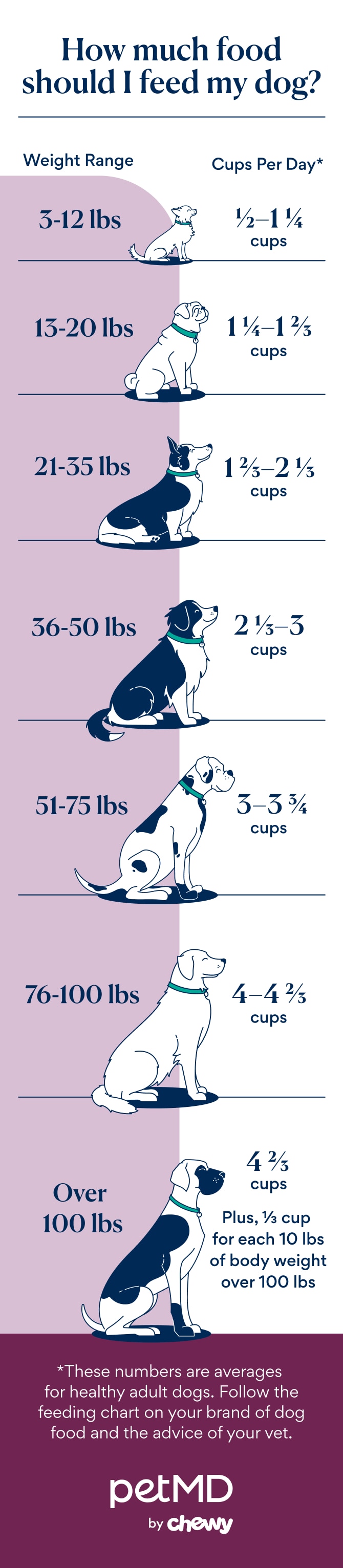
Image Source: image.petmd.com
Deciphering Dog Food Weight to Volume Conversions
Knowing the correct amount of food for your dog is vital for their health. Too little leads to weight loss and low energy. Too much causes obesity and related health problems. When you buy dog food in bulk, like a 20-pound bag, you often rely on measuring cups. This guide will help you find the right conversion for your specific food. We will explore why simply using a standard conversion is often wrong and how to get the most accurate measurement.
The Problem with Standard Conversions
You might see online charts suggesting 1 pound of dry dog food equals about 4 cups. If you use that simple math, 20 pounds would be 80 cups (20 x 4 = 80). However, this is just a rough guess. It fails to account for the huge differences in how dog food is made. This is the core challenge in dog food volume conversion.
Factors Affecting Kibble Density
Dog food density is the key. Density means how much space a certain weight of food takes up. Think about packing rocks versus packing cotton balls. Rocks are dense; cotton balls are light for their size. Kibble works the same way.
Several things change kibble density:
- Ingredient Mix: Foods high in meat meals are often denser than foods high in grains or airy fillers.
- Kibble Shape and Size: Large, irregularly shaped pieces pack less tightly than small, uniform pellets.
- Processing Method: How the food is extruded or baked affects how much air is trapped inside. Light, puffy kibble has more air.
Because of these differences, you must check your specific bag for accurate measurements.
Steps for Accurate Dog Food Serving Size Conversion
To find the true number of cups in your 20-pound bag, follow these steps. This method ensures accuracy, whether you are calculating cups in 20 pounds of kibble for a large bag or just checking a daily serving.
1. Find the Manufacturer’s Guide
The best place to start is the dog food bag itself. Manufacturers test their specific formulas to determine the precise weight-to-volume ratio.
Look for a chart on the back or side of the 20 lb bag. It will usually list feeding amounts based on your dog’s weight (e.g., feed X cups for a 30 lb dog).
If the chart lists daily amounts in ounces or grams, this is your clue. You need to know the how many cups in a pound of dog food for that specific product.
2. Weigh Your Measuring Cup
Since volume measurements can lie, we prefer measuring dog food by weight vs volume. You will need a simple kitchen scale that measures in grams or ounces.
- Set your scale to zero (tare).
- Fill a standard dry measuring cup (usually 8 fluid ounces, or 1 cup) completely with your dog’s kibble. Level it off with a straight edge.
- Weigh this full cup of food.
Example Results:
| Kibble Type | Weight of 1 Level Cup (Ounces) | Weight of 1 Level Cup (Grams) |
|---|---|---|
| High-Density Kibble (Small, Hard) | 4.5 oz | 128 g |
| Average Kibble | 4.0 oz | 113 g |
| Low-Density Kibble (Large, Puffy) | 3.5 oz | 99 g |
3. Calculating Cups in 20 Pounds of Kibble
Once you know the weight of one cup of your specific food, you can calculate the total number of cups in the entire 20 lb bag.
First, convert the total bag weight (20 lbs) into ounces, since most cup weights are measured in ounces.
- 1 pound = 16 ounces
- 20 lbs $\times$ 16 oz/lb = 320 total ounces in the bag.
Now, divide the total weight of the bag by the weight of one cup.
Formula for Total Cups:
$$\text{Total Cups} = \frac{\text{Total Weight of Bag in Ounces}}{\text{Weight of One Cup in Ounces}}$$
Applying the Examples:
- High-Density Kibble (4.5 oz per cup): $320 \text{ oz} / 4.5 \text{ oz/cup} \approx 71.1 \text{ cups}$
- Average Kibble (4.0 oz per cup): $320 \text{ oz} / 4.0 \text{ oz/cup} = 80 \text{ cups}$
- Low-Density Kibble (3.5 oz per cup): $320 \text{ oz} / 3.5 \text{ oz/cup} \approx 91.4 \text{ cups}$
This shows a difference of over 20 cups just based on the dog food density! This is why using the manufacturer’s specific measurement or weighing your own cup is crucial for calculating dog food portions by weight.
The Shift to Measuring Dog Food by Weight vs Volume
Veterinarians and veterinary nutritionists increasingly push for feeding by weight rather than volume. Why? Because volume measuring tools (cups) are inconsistent.
Inaccuracies of Volume Measuring
A standard plastic scoop or measuring cup can be inaccurate for several reasons:
- Scooping Technique: If you pack the cup down firmly, you might add 10% to 20% more food than if you lightly spooned it in.
- Wear and Tear: Cheap plastic cups warp over time, especially with dishwasher use.
- Kibble Settling: Over time in the bag, small pieces settle to the bottom, making the top layer look less dense.
When dealing with a 20 lb bag, serving slightly too much daily might not seem bad, but over a month, this adds up to significant excess calories.
The Precision of Grams and Ounces
Measuring dog food by weight vs volume is superior because mass is absolute. A gram is always a gram, regardless of how tightly packed the kibble is.
When manufacturers provide feeding guidelines in grams or ounces, they are giving you the most precise dog food serving size conversion.
Converting Daily Serving Amounts
Let’s assume your dog needs 10 ounces of food per day, according to the bag’s instructions.
If you use the scale, you simply scoop until the scale reads 10 oz. This is the easiest way to manage your daily feeding.
If you insist on using cups, you must first determine the dry dog food cup conversion for that 10 oz serving.
Scenario: Your food weighs 4.0 oz per cup.
$$\text{Cups per Day} = \frac{10 \text{ oz needed}}{4.0 \text{ oz per cup}} = 2.5 \text{ cups per day}$$
If you switch to a new brand that weighs 3.5 oz per cup, that same 10 oz serving is now $10 / 3.5 \approx 2.86$ cups. You would accidentally overfeed by almost a full cup daily if you stuck with 2.5 cups!
Finding the Manufacturer’s Gram Weight
Check the feeding chart on your 20 lb bag. Look for the section that lists the required feeding amount based on your dog’s ideal weight. It should list amounts in cups or ounces/grams.
- If it says 1.5 cups, use that as your benchmark, but weigh that 1.5 cups once to confirm it matches your scale’s reading for that specific food.
- If it says 250 grams per day, use the scale for the ultimate accuracy in calculating dog food portions by weight.
The Role of Kibble Size and Shape in Conversion
The physical characteristics of the kibble directly influence the dog food volume conversion. This is why a single chart rarely works for all foods.
Small, Dense Kibble (High Density)
Foods designed for small breeds often have very small, hard pellets.
- Packing Efficiency: These small pieces pack tightly into the measuring cup. Less air gets trapped.
- Weight Per Cup: You get more ounces (more mass) per cup.
- Total Cups in 20 lbs: You will have a lower total cup count (closer to 70-75 cups).
Large, Puffy Kibble (Low Density)
Foods made through certain extrusion processes can result in larger, lighter kibble that floats easily. These are sometimes marketed as “lighter” or “easier to digest.”
- Packing Efficiency: Large, uneven shapes trap a lot of air.
- Weight Per Cup: You get fewer ounces (less mass) per cup.
- Total Cups in 20 lbs: You will have a higher total cup count (pushing 90+ cups).
This variation is critical when thinking about how many cups in a pound of dog food. For dense food, one pound might be 3.5 cups. For puffy food, one pound might be 5 cups.
Practical Application: Managing Your 20 Lb Bag
When you first open that 20-pound bag, take a few minutes to calibrate your measurement system. This investment of time prevents mistakes later.
Creating a Custom Conversion Table
If you don’t want to weigh every meal, create a small cheat sheet based on your weighing experiment.
Example: My Food Weighs 4.2 Ounces Per Cup
| Desired Weight (oz) | Cups to Scoop (Approx.) |
|---|---|
| 4 oz | 1 cup |
| 8 oz | 1 3/4 cups |
| 12 oz | 2 3/4 cups |
| 16 oz (1 lb) | 3 3/4 cups |
| 320 oz (20 lbs total) | ~76 cups total |
This customized chart simplifies daily dog food serving size conversion while still being based on the true density of your specific kibble. This bridges the gap between the theoretical dog food weight to volume problems and real-world feeding.
Storing Your 20 Lb Bag Properly
How you store the food in the bag or a storage container also affects volume accuracy over time.
- Avoid Shaking: When you transfer food from the main bag to a dispenser, try to pour it gently. Vigorous shaking causes the kibble to settle and compact.
- Use an Airtight Container: Storing food in an airtight container preserves freshness, but if you repeatedly scoop from the top, you might initially get a slightly less dense scoop until the contents mix again.
Advanced Considerations in Dog Food Nutrition
The focus on 20 lbs dog food to cups conversion often stems from trying to match the feeding guidelines printed on the bag. It is important to know where those guidelines come from.
Interpreting Calorie Density
Manufacturers calculate their recommendations based on calories, not just volume. Different foods have different calorie counts per cup because of ingredient fat and protein content.
- A “light” or “weight management” formula might have fewer calories per cup than a “performance” formula.
- If you switch from a 4.0 oz/cup food (high calorie) to a 3.5 oz/cup food (lower calorie), you might think you are feeding the same volume, but you are actually feeding significantly less. This is why direct dog food volume conversion is so risky without confirming the weight.
Always ensure you are comparing apples to apples: volume to volume with known weight, or, ideally, weight to weight.
Wet Food vs. Dry Food Conversions
This entire discussion focuses on dry kibble. If you mix in wet food, all dry dog food cup conversion rules are broken for that meal.
Wet food is mostly water. A cup of wet food weighs significantly more than a cup of dry food because of the water weight. You must use the manufacturer’s specific guidance for mixing wet and dry foods, usually measured in ounces or grams for the dry component. Never use dry cup measurements when adding wet food to the mix.
Frequently Asked Questions (FAQ)
Q: What is the standard conversion for 1 lb of dry dog food to cups?
A: The standard, rough estimate for how many cups in a pound of dog food is about 4 cups. However, this is highly unreliable. The actual amount can range from 3.5 cups to over 5 cups depending on the kibble’s density.
Q: Can I use the same measuring cup for two different brands of dog food?
A: No. You should not use the same measuring cup for two different brands unless you have weighed both and confirmed they yield the same mass per cup. Since dog food density differs between brands, using the same cup will lead to under-feeding or over-feeding.
Who should I trust for the correct conversion?
A: Trust the manufacturer first, as they tested their product. For the absolute best accuracy, trust your digital kitchen scale. Weighing eliminates all variables related to dog food volume conversion.
Q: My dog food bag says feed 1.5 cups, but I switched to a new 20 lb bag. Should I still feed 1.5 cups?
A: You must re-check the feeding guide for the new 20 lb bag. If the new food has a different texture or size, its density will change. If you are calculating dog food portions by weight, you should check the new bag’s recommended weight (in ounces or grams) and weigh that amount, ignoring the cup measurement.
Q: Why is measuring by weight better than volume?
A: Measuring by weight is better because weight is a constant unit of mass. Volume measures how much space something takes up, which changes based on how loosely or tightly the kibble settles. This relates directly to issues in measuring dog food by weight vs volume.