
A dog MRI procedure time can vary greatly, but typically the actual scan time is between 30 to 90 minutes. However, the total dog MRI appointment length, including all prep and recovery time, can take several hours.
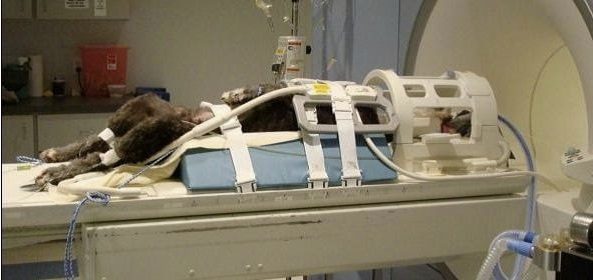
Image Source: animalscan.com
Deciphering Canine MRI Duration
When owners ask, “How long does a dog’s MRI scan take?” they are often looking for a single number. Sadly, there isn’t one simple answer. The canine MRI duration depends on many things. Think of it like a road trip. The driving time is one part, but you also need time for packing and resting afterward.
What is an MRI for Dogs?
A Magnetic Resonance Imaging (MRI) scan uses strong magnets and radio waves. It creates very detailed pictures of soft tissues inside your dog’s body. This helps vets see the brain, spinal cord, joints, or organs clearly. It is a powerful tool for finding problems that X-rays or CT scans might miss.
Key Steps in the MRI Process
The total time for the entire process involves three main stages:
- Preparation: Getting your dog ready for the scan.
- Scanning: The actual time the machine runs.
- Recovery: Waking up and going home.
We will look at how long each part takes.
Preparing Your Dog for the MRI: The Pre-Scan Phase
Preparation is vital for a smooth and quick scan. If this step takes too long, the whole process gets delayed.
Initial Consult and Paperwork
Before you even get close to the scanner, there’s paperwork. The veterinary team needs to confirm consent forms. They review your dog’s medical history. This part might take 15 to 30 minutes.
Fasting Requirements
Most vets require dogs to fast before an MRI. This is because sedation is used, and eating could cause vomiting, which is dangerous under anesthesia.
- Food Restriction: Usually, dogs must stop eating 8 to 12 hours before the scan. Water is usually okay until a few hours before.
- Medication Check: The vet will tell you which, if any, regular medications to give or skip on the day of the scan.
Pre-Scan Monitoring and IV Placement
Once you arrive at the imaging center, the vet team starts monitoring your dog. They check heart rate, breathing, and temperature.
- IV Catheter Insertion: To give sedatives and anesthesia, a needle is placed into a vein, usually in the leg. This is called placing an IV catheter. This step is quick but necessary. It often takes about 10 to 15 minutes.
Calculating Dog Sedation Time for MRI
Because dogs must lie perfectly still for clear images, sedation (or general anesthesia) is almost always needed.
- Induction: The drugs are given through the IV catheter to put the dog to sleep. This phase is usually quick, often under 5 minutes.
- Securing the Head/Body: Once asleep, the team carefully positions the dog inside the MRI machine’s coil (the part that captures the images). They secure the head or limb being scanned. They attach monitoring equipment. This careful placement takes time to ensure accuracy and safety. This positioning can add 15 to 30 minutes to the prep time.
Summary of Preparation Time: Depending on the dog’s temperament and the complexity of the site being imaged, preparing dog for MRI duration can range from 45 minutes to over an hour, not including arrival time.
The Actual Scan: How Long is a Dog’s MRI Scan?
This is the core of the process. The time spent inside the large magnet tube is what most owners worry about. How long is a dog’s MRI scan depends heavily on what the veterinarian is looking for.
Standard Scan Times Based on Area
Different body parts require different numbers of images (sequences). More sequences equal more time.
| Body Area Scanned | Typical Scan Time (Machine Running) | Common Reasons for Scan |
|---|---|---|
| Dog Head MRI Time (Brain) | 30 to 50 minutes | Seizures, tumors, inflammation |
| Dog Spine MRI Length (Cervical/Thoracic/Lumbar) | 45 to 75 minutes | Intervertebral disc disease (IVDD), trauma |
| Limb/Joint (Knee, Elbow) | 25 to 40 minutes | Ligament tears, bone lesions |
| Abdomen/Chest | 45 to 60 minutes | Mass evaluation, organ structure |
Factors Affecting Dog MRI Time
Several variables directly impact the canine MRI duration:
- Area Being Scanned: As shown above, the spine takes longer than a simple knee scan.
- Need for Contrast Agents: If the vet needs to inject a contrast dye (like Gadolinium) to highlight blood vessels or tumors, this adds time. The first set of images is taken, the dye is injected, and then another set of images is taken afterward. This can easily add 10 to 20 minutes.
- Patient Cooperation (Anesthesia Quality): If the dog moves even slightly during a sequence, the image becomes blurry. The technician must stop the sequence, reposition the patient, and repeat the scan. This is a major cause of delays.
- Technique Complexity: Highly specialized scans, like functional MRI or advanced spectroscopy, require more complex setup and longer individual sequence times.
- Machine Speed: Newer, higher-field MRI machines (like 3 Tesla vs. 1.5 Tesla) can often acquire high-quality images faster.
The Importance of Stillness
The magnetic field is incredibly sensitive. Any movement—a twitch of a muscle, a shift in breathing, or even internal movement from digestion—can ruin an image. This is why deep sedation is crucial. If the dog moves during a long sequence, the dog MRI procedure time increases because that sequence must be repeated.
Post-Scan Procedures and Initial Recovery
Once the imaging is complete, the process isn’t immediately over. The team must safely wake your dog up.
Waking Up From Anesthesia
Waking up from general anesthesia is a slow, careful process.
- Reversal Drugs: Reversal agents might be given to speed up the wake-up process, depending on the anesthetic drugs used.
- Monitoring: Your dog is moved to a warm recovery area. Nurses watch breathing, heart rate, and temperature closely until the dog is awake enough to stand or move its head without assistance. This monitoring phase is crucial for safety.
This dog MRI recovery time after scan initiation can range from 30 minutes to an hour or more, depending on the dog’s size and the depth of the sedation used.
Initial Post-Scan Checks
Before discharge, the vet team will often perform a quick neurological check. They ensure the dog is alert and steady on its feet. They will remove the IV catheter if it’s no longer needed.
Total Dog MRI Appointment Length Estimate
To give a realistic expectation, let’s combine the time blocks.
| Stage | Estimated Time Range | Notes |
|---|---|---|
| Arrival & Paperwork | 15 – 30 minutes | Check-in and history review. |
| Pre-Sedation Prep (IV, Monitoring) | 30 – 60 minutes | Includes placing the IV line. |
| Anesthesia Induction & Positioning | 20 – 40 minutes | Time taken to get the dog fully asleep and positioned correctly. |
| Actual Scan Time | 30 – 90 minutes | Varies based on the region scanned (e.g., dog head MRI time vs. spine). |
| Anesthesia Recovery & Monitoring | 45 – 90 minutes | Time until the dog is safely awake and stable. |
| Discharge & Consultation | 15 – 30 minutes | Final instructions from the vet. |
| Total Appointment Time | 2.5 hours to 5 hours | This is the time you will be at the facility. |
This demonstrates why the dog MRI appointment length is much longer than just the scan time itself.
Post-Procedure Care: The True Recovery Period
While the dog leaves the facility the same day, recovery continues at home.
Immediate Aftercare (First 12 Hours)
The primary concern post-MRI is the lingering effect of sedation and the recent anesthesia.
- Lethargy: Your dog will likely be sleepy, wobbly, or groggy for several hours. This is normal due to the dog sedation time for MRI.
- Eating and Drinking: Offer small amounts of water first. If the water stays down after an hour, offer a small, bland meal. Do not let them gulp large amounts of food or water right away.
- Restricted Activity: Keep your dog calm. No running, jumping, or playing. This is vital, especially if the scan was on the spine (dog spine MRI length implies potential spinal issues). Leash walks only for potty breaks.
The Next Few Days
Most dogs bounce back fully within 24 to 48 hours after the anesthesia wears off completely.
- Monitoring Incision Site: Check the area where the IV catheter was placed for swelling or redness, though this is rare.
- Activity Level: Slowly increase activity back to normal levels over 2-3 days, pending your veterinarian’s specific instructions based on the findings.
Factors Affecting Dog MRI Time during recovery include the drugs used and the dog’s underlying health condition that required the scan in the first place. A dog recovering from brain surgery might have a slower overall recovery than a dog simply having a routine diagnostic scan for a minor joint issue.
Preparing Your Dog for Success: Minimizing Scan Time
Owners play a significant role in making the dog MRI procedure time as short and efficient as possible.
Communication is Key
When booking the appointment, be honest about your dog’s behavior:
- Is your dog anxious in strange places?
- Does your dog have a history of difficult restraint or aggression when sore?
This information helps the anesthesiologist choose the best sedation protocol from the start.
Pre-Scan Conditioning (If Applicable)
For some dogs, especially those needing repeat scans or those with known anxiety, mild behavioral conditioning beforehand can help. Slowly exposing them to the sounds or sights of the clinic (without sedation) might reduce pre-scan stress, leading to faster induction times.
Imaging Specifics: Dog Head MRI Time vs. Spine
When a veterinarian orders a brain scan (dog head MRI time), they are often worried about something acute, like sudden blindness or seizures. The goal is usually to get high-resolution brain slices quickly. If the images are perfect on the first try, the time is minimized.
Conversely, a dog spine MRI length often requires scanning multiple vertebral segments. Each segment requires precise focusing, lengthening the total acquisition time, even if the dog remains perfectly still.
Interpreting the Results Timeline
It is important to separate the scan time from the result time.
The actual time the machine runs does not equal the time you get the diagnosis. After the images are taken, a specialist veterinary radiologist must review hundreds of images.
- Preliminary Report: Often available the same day or the next day for urgent cases.
- Full Written Report: This detailed analysis usually takes 24 to 72 hours. The referring veterinarian then uses this report to plan treatment.
Frequently Asked Questions (FAQ)
Can I stay with my dog during the dog MRI procedure time?
No. Due to the powerful magnets, you cannot be in the room with your dog during the scan. All metal objects, including watches and phones, must be left outside the shielded room. You will wait in a comfortable lounge area while your dog is sedated.
How long does the anesthesia last after the scan?
The effect of the anesthetic drugs wears off at different rates. While the dog sedation time for MRI might be an hour, the dog may feel groggy for 3 to 6 hours afterward as they metabolize the drugs.
Is a dog MRI scan painful?
The MRI scan itself causes no pain because the dog is under full general anesthesia or deep sedation. The only potentially uncomfortable part is the initial placement of the IV catheter, which is very quick. If the dog is in pain from the condition being scanned (like severe back pain), the sedation will relieve that discomfort during the scan.
Why does the dog MRI appointment length feel so long?
The majority of the dog MRI appointment length is dedicated to safety protocols: pre-anesthetic checks, carefully administering and monitoring anesthesia, positioning the patient perfectly still, and ensuring a safe, gradual recovery from sedation. These steps cannot be rushed.