
To keep your dog from jumping the fence, you must combine secure physical barriers with effective behavior training and address the root cause of the jumping behavior.
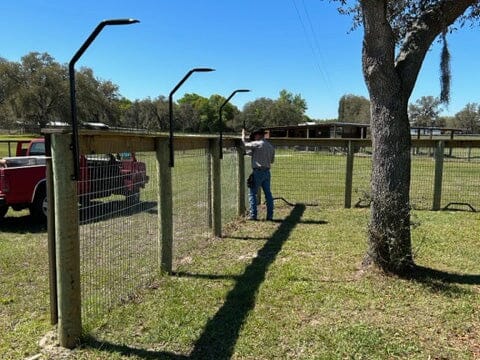
Image Source: www.dogproofer.com
Why Does My Dog Jump The Fence?
Dogs do not jump fences just to be naughty. They jump for clear reasons. Knowing the cause helps you find the right fix. It is key to finding dog fence jumping solutions.
Boredom and Lack of Exercise
A tired dog is a good dog. If your dog has too much energy, they will find ways to use it. A fence seems like a big, fun challenge.
- Lots of pent-up energy.
- Not enough walks or playtime.
- The yard feels small and boring.
Prey Drive and Distractions
Your dog might see something exciting on the other side. A squirrel, a cat, or another dog can trigger a chase instinct.
- Smells draw them in.
- Sounds encourage them to investigate.
- They see movement they want to follow.
Anxiety and Fear
Some dogs jump because they are scared. Loud noises, like fireworks or storms, can cause panic. They jump to escape the scary thing. This is often linked to separation anxiety if they jump only when you leave.
Mating Instincts
Unneutered male dogs often jump to find female dogs in heat. This urge is very strong. It overrides most training efforts until the drive is managed.
Seeking Company
If your dog is lonely, they might jump to get to you if you are outside the yard. They want to be near their family.
Assessing Your Current Fence Setup
Before you change behavior, check your fence. A weak fence invites escape. You need a secure backyard for jumping dogs.
Measuring the Current Height
How high is your fence now? This is the first step in preventing dog escape over fence. Small dogs need less height than large jumpers.
| Dog Size | Recommended Minimum Height | Notes |
|---|---|---|
| Small Breeds (e.g., Terrier) | 4 feet | They can be quick climbers. |
| Medium Breeds (e.g., Lab) | 5 to 6 feet | Standard good height. |
| Large/Athletic Breeds (e.g., Husky, Border Collie) | 6 to 8 feet | These dogs are natural jumpers. |
Checking for Weak Spots
A fence is only as strong as its weakest part. Walk the entire perimeter of your yard.
- Look for loose boards or panels.
- Check the latch on any gates. Make sure they are secure.
- See if there are any gaps underneath the bottom rail.
Physical Barriers: Best Dog Fence Height for Jumpers
If your dog is a proven jumper, you may need to change the fence itself. This is the most direct way to stop the action.
Raising the Existing Fence
You can add to what you already have. This is often cheaper than building new.
Adding Lattice or Panels
Attaching strong wire mesh or solid panels on top of the existing fence adds height. Make sure these additions are securely fastened. Dogs can use loose materials as footholds.
Using Rolled Fencing (L-Footers)
For dogs who try to dig out and jump, you need floor security too. An L-footer uses wire fencing laid flat on the ground, facing inward. This prevents digging under the fence line.
Specialized Escape Proof Dog Fence Options
When standard fences fail, consider specialized systems. These aim to make climbing or clearing the fence physically impossible or uncomfortable.
Angled Outward Extensions
This is a very effective method for jumpers. You add fencing material angled inward, usually at a 45-degree angle, at the top of the fence line.
- When the dog tries to jump, they hit this angled section.
- It prevents them from getting the necessary leverage to clear the top.
- It looks like a “coyote roller” system on a smaller scale.
Solid Privacy Fencing
If your dog jumps because of visual stimuli (seeing other dogs or squirrels), a solid fence removes the temptation. Vinyl or wood fences that block sightlines are great deterrents for dog fence jumping.
Tension Wire Systems
For very high jumpers, a taut, strong wire strung tightly along the top of the fence acts as a visual and physical barrier. It is hard to see but stops forward momentum.
Behavioral Modification: Training Dog Not to Jump Fence
Physical barriers are great, but they do not solve the underlying reason for jumping. Training teaches your dog a better choice. This is crucial for long-term success.
Addressing Boredom with Enrichment
Enrichment keeps your dog busy inside the yard. A busy dog does not think about escaping.
- Puzzle Toys: Feed your dog’s meals in slow feeders or puzzle balls, even when you are outside.
- Rotate Toys: Do not leave the same toys out all the time. Bring new ones out daily to keep things fresh.
- Scent Games: Hide high-value treats around the yard before you let the dog out. Let them use their nose to “hunt.”
Positive Reinforcement for Staying Put
Reward your dog heavily for staying calm inside the fence.
- Go into the yard with your dog.
- Walk the perimeter. If your dog stays near you and does not show interest in jumping, give them high-value treats (like small pieces of cheese or chicken).
- If they look toward the fence but don’t approach, redirect them gently with a command like “Look at me.” Reward the look at you.
- If they start pacing or staring, give them a low-value treat and walk them away from the fence line to a designated play area.
Teaching an Incompatible Behavior
Give your dog something better to do than jump when they see a trigger. This uses training aids for fence jumpers.
- The Place Command: Teach your dog to go to a specific mat or dog bed outside. When they hear a trigger (like a passing dog), cue them to go to their “place” instead of rushing the fence. Reward heavily for staying on the mat.
- Recall Practice: Practice calling your dog away from the fence line. Use a super exciting recall word (“Touch!” or “Here!”) paired with the best treats. Practice this often, even when nothing is happening, so the command is strong when needed.
Managing Triggers
If you know what causes the jump, manage that situation during the training period.
- If Mr. Neighbor’s dog walks by at 4 PM, bring your dog inside at 3:50 PM.
- Use opaque privacy screens temporarily on the fence in problem areas. This removes the visual trigger while you train.
Using Deterrents for Dog Fence Jumping Safely
Deterrents are tools used to make the act of jumping unpleasant. They should only be used alongside positive training and secure physical barriers. Never use them as the only solution.
Fence Top Rollers
These are devices installed horizontally along the top of the fence. They consist of pipes or rollers that spin freely.
- How they work: When a dog puts its paws up to climb, the roller spins. This prevents the dog from getting a grip or leverage to pull themselves over.
- Safety Note: Rollers must be installed correctly so they do not pose a strangulation risk or injure the dog if they fall.
Motion-Activated Sprinklers
These devices detect movement near the fence line and release a harmless but surprising burst of water or air.
- Benefit: They provide an immediate, impersonal correction when you are not there to supervise.
- Effectiveness: They work best for dogs reactive to sights or sounds near the fence line. They help break the habit cycle.
Electronic Containment Systems (Use with Caution)
Invisible fences use buried wires and a receiver collar. They create a boundary that delivers a static correction if the dog crosses it.
Important Consideration: Invisible fences are generally not recommended for dogs who are highly motivated jumpers or escape artists.
- A dog driven by prey or anxiety may run right through the mild correction to get what they want.
- Once they are on the other side, they often do not realize how to get back in without crossing the boundary again, leading to future escape issues.
- They do nothing to stop an intruder from coming into your yard.
Training Aids for Fence Jumpers Summary Table
Different tools help in different ways. Match the tool to the problem.
| Problem | Recommended Aid/Solution | Primary Goal |
|---|---|---|
| High Energy / Boredom | Daily intensive exercise, puzzle toys | Reduce internal drive to escape |
| Visual Triggers | Solid privacy screens, angled extensions | Remove temptation and sightlines |
| Poor Fence Security | Tighter mesh, taller physical barrier | Increase physical difficulty of jump |
| Reactivity at Fence | Motion-activated sprinkler, ‘Place’ command | Create immediate negative association with the fence edge |
Deciphering the Jumper’s Mindset
To truly stop the jumping, we need to figure out what the dog is trying to achieve.
The Height vs. The Climb
Some dogs try to jump straight up. Others are “climbers.” Climbers use fencing material like a ladder.
- Jumper: Needs vertical clearance. Focus on height barriers and angled tops.
- Climber: Needs something to grip. Focus on solid fences or tight, smooth wire mesh that offers no footholds. Avoid chain link if your dog is a climber, as the links are perfect toe-holds.
The Role of Anxiety in Escape
If your dog only jumps when left alone, the issue is likely anxiety, not boredom. Jumping is an escape attempt to find you.
- In this case, physical fixes are only band-aids.
- The core solution involves treating the separation anxiety through counter-conditioning, desensitization, and potentially working with a certified behaviorist.
- Increasing their safe time inside the yard while you are home, paired with high-value chews, can help them associate the yard with calm presence.
Maintaining Security and Training Consistency
Stopping a dog from jumping the fence is not a one-time fix. It requires ongoing effort. Consistency is the most powerful tool you have.
Supervise Early Training
When you first implement new barriers or start training, supervise every time your dog is outside. If you see them approaching the fence with intent to jump, interrupt immediately with a positive command (“Let’s play!”) or redirect them to a known good spot.
Avoid Rewarding the Jump Attempt
If your dog jumps and lands safely on the other side, do not immediately run over and give them attention or food. This rewards the successful escape, making them try harder next time. If they escape, secure them calmly and bring them back inside without fuss. The fun stops when they jump.
Regular Fence Checks
Weather, age, and wear and tear can weaken fences. Make it a habit to check all security measures monthly. Tighten loose screws, check the integrity of any added height, and ensure rollers spin freely. This ensures your escape proof dog fence options remain effective.
Gradual Removal of Aids
Once your dog consistently ignores the fence line for several weeks, you can start removing some of the training aids.
- If you used opaque screening, remove a small section to test if the visual trigger is still an issue.
- If you used motion-activated sprinklers, turn them off for a few days while supervising.
- The goal is for the dog to rely on their learned calm behavior, not on external corrections.
Simple Fixes for Common Scenarios
Sometimes the issue is very specific. Here are quick fixes for common boundary problems.
Scenario 1: The Barking Barrier
If your dog barks constantly at passersby, they are agitated. This agitation often leads to jumping attempts.
- Action: Use a sound machine near the fence line to mask external noises.
- Action: If using solid fencing, ensure it is tall enough to block sight lines completely, not just partially.
Scenario 2: The Digging Jumper
If your dog digs at the base, then uses the momentum to launch up, you have a dual problem.
- Action: Install L-footers (fencing buried horizontally outward) or concrete curbing along the base. This stops the initial dig that provides the launch platform.
Scenario 3: The Curious Climber
The dog uses the fence material itself to climb.
- Action: Replace chain link with smooth, vertical slats (like privacy wood or vinyl panels). If you must keep chain link, stretch a smooth, heavy-gauge wire tightly across the middle and top sections to eliminate gaps.
By systematically checking your fence height, removing triggers, and consistently applying positive reinforcement, you can successfully implement dog fence jumping solutions and create a safe, secure outdoor space for your pet. Remember, a happy, tired, and engaged dog is far less likely to try stopping dog from clearing fences.
Frequently Asked Questions (FAQ) About Fence Jumping
Is it dangerous to use electric fences for stopping dog from clearing fences?
Electric fences can be dangerous for determined jumpers because the dog may charge through the static correction to reach their goal. If they succeed, they learn that the pain is worth the reward on the other side. For jumpers, physical barriers combined with in-yard training are safer and more effective than relying solely on electric correction.
What is the best dog fence height for jumpers like Border Collies or Huskies?
For highly athletic breeds known for jumping, a fence should ideally be 6 to 8 feet tall. Furthermore, you must add an inward-facing angled extension (like an anti-jump extension) at the top to break their upward trajectory and prevent them from hooking their paws over the edge.
Can I train my dog not to jump the fence if I am not home?
Training happens when you are present. However, you can set up management tools to prevent practice when you are gone. Use motion-activated sprinklers or ensure the dog is inside or in a secure run until their underlying boredom or anxiety is managed through separate training programs. Preventing dog escape over fence when unsupervised relies on secure physical barriers first.
Are there any good deterrents for dog fence jumping that do not involve punishment?
Yes. Non-punitive deterrents include motion-activated sprinklers (which startle but do not harm) and environmental changes. Removing visual and auditory triggers (using privacy screens or sound masking) are excellent passive deterrents. Also, providing engaging enrichment toys ensures the dog chooses to play instead of focusing on the boundary.
How long does it take to train a dog not to jump the fence?
The timeline varies based on the dog’s motivation and consistency of training. If the dog is jumping out of boredom, results can be seen in a few weeks with increased exercise. If the dog is highly driven by prey or severe anxiety, it may take several months of consistent positive reinforcement and barrier management before the behavior reliably stops.