
Yes, you absolutely can clean dog poop off a rug, and with the right steps and products, you can remove the stain and the smell effectively. Dealing with dog waste on your favorite rug can be messy and stressful. Accidents happen, especially with puppies or older dogs. This guide will show you the easiest and most effective ways to handle this unfortunate mess, ensuring your rug looks great again. We will cover everything from immediate clean-up to deep stain removal, making dog waste rug removal simple for everyone.
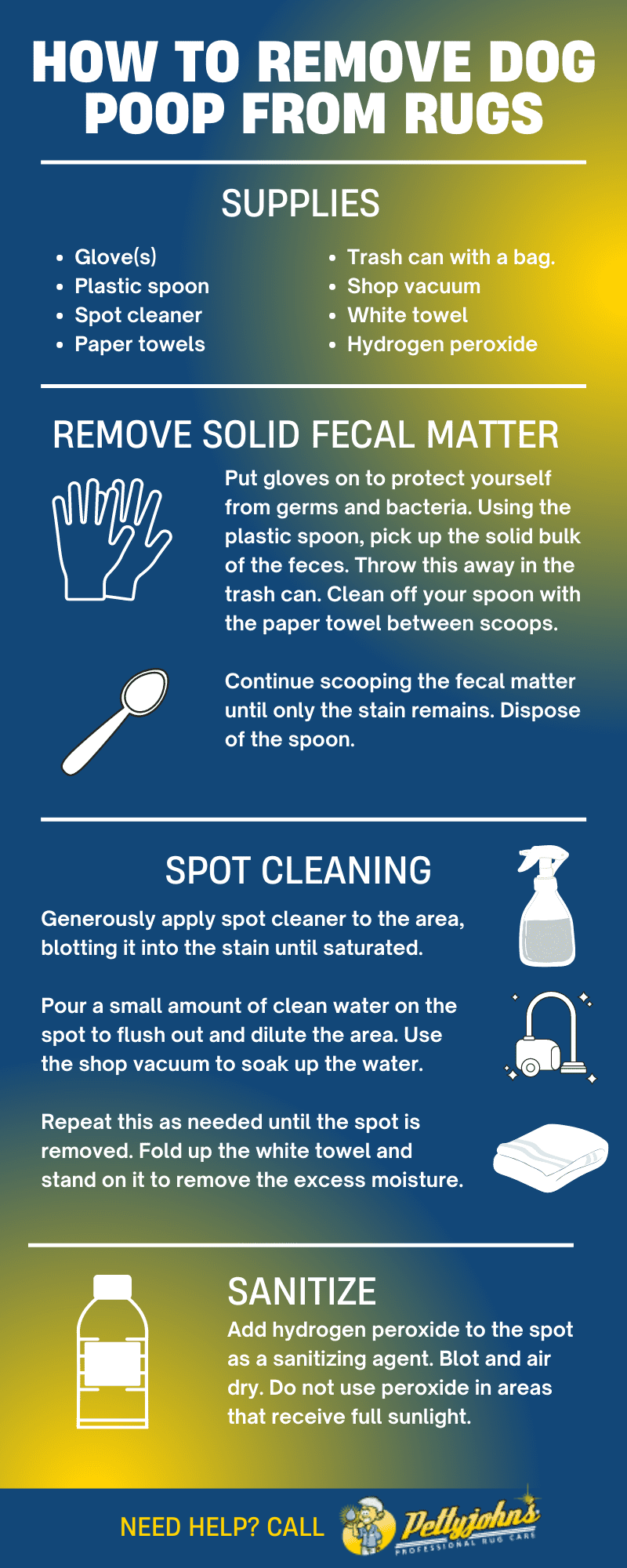
Image Source: www.pettyjohnscleaning.com
Immediate Action: Dealing with Fresh Dog Poop
Speed is key when dealing with fresh dog poop on any floor covering. The faster you act, the less time the mess has to soak in and stain the fibers.
Gathering Your Supplies First
Before you touch the mess, get everything ready. This prevents spreading the mess further.
- Gloves: Always wear rubber or disposable gloves.
- Paper Towels or Old Cloths: Use thick paper towels or old rags you don’t mind throwing away.
- Scooping Tool: A dustpan, stiff piece of cardboard, or a plastic scraper works well.
- Enzyme Cleaner: Have a good enzymatic cleaner for dog urine and feces ready for the final step.
Step 1: Removing the Solid Waste
The main goal here is to remove as much solid material as possible without pushing it deeper into the rug fibers.
- Do Not Rub: Rubbing pushes the feces further down. This is the most common mistake people make.
- Scoop Gently: Use your scraper or cardboard to gently lift the solid waste. Work from the outside edges of the mess toward the center. Think of it like carefully slicing under the pile.
- Use a Paper Towel: After scraping up the bulk, use thick paper towels to blot the remaining surface material. Press down lightly, lift, and repeat with a fresh section of the towel. Continue blotting until no more visible solids transfer to the paper.
Step 2: Dealing with Liquid or Soft Stool
If you are dealing with cleaning wet dog stool off floor covering, the blotting process needs to be more thorough.
- Apply light pressure with dry paper towels.
- Change towels often.
- Continue blotting until the towels come away mostly dry. This pulls out the liquid components that cause the stain and smell.
Tackling the Stain and Odor: Deep Cleaning Methods
Once the visible mess is gone, the real work begins: removing the stain and banishing the smell. This requires a good cleaning solution.
Choosing the Right Cleaning Product
For pet messes, standard carpet cleaners often don’t work well on the biological material. You need something that breaks down the proteins.
- Enzymatic Cleaners: These are essential. An enzymatic cleaner for dog urine and feces contains beneficial bacteria that “eat” the organic matter causing the stain and odor. They are highly effective for removing dog feces from upholstery and rugs.
- DIY Options (Use with Caution): Some people try DIY dog mess stain removal using vinegar and baking soda. While good for general freshness, they might not fully tackle tough biological stains like feces.
Method 1: Using a Professional Pet Stain Cleaner
This is often the best method to clean dog poop from carpet because these products are formulated specifically for this job. Look for professional pet stain removal products labeled for organic matter.
- Test First: Always test the cleaner on a small, hidden area of the rug (like under a couch). Wait 15 minutes to make sure it doesn’t bleach or damage the fibers.
- Saturate the Area: Lightly saturate the stained area with the pet stain cleaner for carpet. Do not soak the padding underneath if possible.
- Let it Dwell: Follow the product instructions for dwell time. Enzymes need time to work—sometimes 10 to 30 minutes.
- Blot Again: Blot the area firmly with a clean, damp white cloth. Blotting lifts the dirt and cleaner out of the fibers. Do not scrub.
- Rinse (Optional): If the product requires rinsing, use a cloth dipped in plain cool water to blot the area clean of residue.
- Dry Thoroughly: Press dry towels onto the spot to soak up excess moisture. Air dry completely.
Method 2: The Vinegar and Baking Soda Approach (DIY)
If you need a quick solution before getting an enzyme cleaner, this works well for neutralizing odors, though it might not lift deep stains as well. This is a great option for a safe way to clean dog waste from area rug fibers if you are worried about harsh chemicals.
- Vinegar Spray: Mix one part white vinegar with two parts cool water in a spray bottle. Lightly mist the affected area. Vinegar helps kill bacteria and break down residues.
- Wait and Blot: Let the mixture sit for 5-10 minutes, then blot thoroughly with clean towels.
- Baking Soda Application: Once the area is damp (not soaking wet), sprinkle a generous amount of dry baking soda over the spot. Baking soda is excellent at absorbing lingering smells.
- Let it Sit: Leave the baking soda on for several hours, or even overnight, to absorb moisture and odor.
- Vacuum: Vacuum up all the dried baking soda thoroughly.
Advanced Stain Removal Techniques
Sometimes, dog feces leaves behind a dark mark, especially on light-colored rugs or natural fibers like wool.
Dealing with Stubborn Brown Stains
If the color remains after the initial cleaning, you need a mild bleaching or oxidizing agent.
- Hydrogen Peroxide (Use with Extreme Caution): For white or very light synthetic rugs, a diluted hydrogen peroxide solution can lift organic stains.
- Mix one part 3% hydrogen peroxide with three parts water.
- Dab onto the stain with a cotton swab or cloth.
- Watch closely. As soon as the stain lifts, immediately blot with a water-dampened cloth to stop the action.
- Warning: Peroxide can easily bleach colors. Test thoroughly!
Cleaning Wool and Natural Fiber Rugs
Wool rugs require special care. Harsh chemicals or excessive heat can damage the natural fibers.
- Avoid Harsh Chemicals: Do not use ammonia or strong commercial cleaners not marked safe for wool.
- Cool Water Only: Use only cool or lukewarm water for rinsing. Hot water can set stains.
- Gentle Soap: If soap is needed, use a very small amount of wool-safe detergent or mild dish soap diluted heavily in water.
- Thorough Rinsing: Rinse very thoroughly. Soap residue left in wool attracts dirt later.
Preventing Lingering Smells: How to Get Rid of Dog Poop Smell on Rug
The lingering odor is often the hardest part of the clean-up. Bacteria left behind continue to produce odor compounds until they are completely destroyed.
The Power of Enzymes for Odor Control
This is why the enzymatic cleaner for dog urine and feces is superior. Standard soap cleans dirt; enzymes clean the odor source itself.
- Deeper Penetration: Ensure the enzyme cleaner penetrates as deeply as the feces did. If the mess soaked through to the rug backing or the floor beneath, you must treat those areas too.
- Airflow is Crucial: After treating the area, maximize airflow. Use fans pointed toward the spot. Do not cover the wet spot with furniture until it is completely dry. Trapped moisture breeds mildew, creating a new, worse smell.
Odor Absorbers
After cleaning, if a faint smell remains, use these absorbents:
| Absorbing Agent | Application Method | Duration |
|---|---|---|
| Baking Soda | Sprinkle heavily over the cleaned area. | 8–24 hours |
| Activated Charcoal | Place pouches or loose charcoal near the area. | Ongoing |
| Coffee Grounds (Used, Dry) | Spread thinly on the dry spot. | 12 hours (Good for temporary masking/absorbing) |
Remember, the goal is not just to mask the smell but to remove the source. If the smell persists, it means the odor-causing bacteria are still active, and you need another application of the enzyme cleaner.
When DIY Isn’t Enough: Professional Help
Sometimes, an accident is too large, too old, or the rug material is too delicate for home treatment.
Signs You Need Professional Help
Consider calling a carpet cleaning service specializing in pet stains if:
- The mess has soaked deep into the rug pad or the subfloor.
- The rug is an expensive antique or a delicate material like silk.
- The stain has set for several days or weeks.
- You have tried enzyme cleaners multiple times and the smell remains.
Professionals use high-powered extraction tools that pull liquids and contaminants out of the rug layers, something standard home blotting cannot achieve. They are experts in professional pet stain removal products and techniques tailored to different fiber types.
Caring for Different Rug Types
The material of your rug drastically changes how you should approach dog waste rug removal.
Synthetic Rugs (Nylon, Polyester, Olefin)
These are the easiest to clean. They are durable and resistant to most water-based cleaning solutions. Use enzymatic cleaners liberally, following the guidelines above.
Natural Fiber Rugs (Wool, Sisal, Jute)
These require a lighter touch.
- Wool: Avoid high heat, harsh alkaline cleaners, and excessive soaking. Cool water and wool-safe products are best.
- Sisal/Jute: These natural plant fibers absorb liquids very easily and can yellow permanently when soaked with water or certain cleaners. Blotting and immediate drying are critical. Use minimal liquid cleaner, focusing primarily on enzymatic foam treatments if available, or call a professional.
Area Rugs vs. Wall-to-Wall Carpet
If the mess is on a removable area rug, your options increase. You can take an area rug outside or into a garage for more aggressive rinsing and drying. If the mess is on wall-to-wall carpet, you are limited by the inability to fully remove the rug to rinse the back side or the subfloor.
Final Steps for a Clean and Safe Rug
After the stain and smell are gone, finishing the job correctly prevents future problems.
Ensuring Complete Drying
Drying is perhaps the most crucial, yet often rushed, final step.
- Absorb Moisture: Place a thick stack of dry towels over the cleaned spot. Place a heavy book or weight on top of the towels for several hours to press out remaining dampness.
- Circulate Air: Use a fan directed at the spot. If weather permits, open windows. If the spot stays damp for more than 24 hours, mold or mildew can start to grow in the backing or padding.
Post-Cleaning Inspection
Once completely dry, inspect the area in good light.
- Stain Check: Look closely for any remaining discoloration. If you see a faint shadow, a second treatment with the enzyme cleaner might be necessary.
- Smell Check: Sniff the area. If you still detect any odor, the bacteria are still present. Reapply the enzyme cleaner.
FAQ on Cleaning Dog Mess from Rugs
Can I use steam cleaners for dog poop on the carpet?
It is generally not recommended to use a steam cleaner immediately on fresh dog poop. The high heat from a steam cleaner can permanently “set” the protein stain into the carpet fibers, making it nearly impossible to remove later. Only use a steam cleaner after the stain and smell have been fully treated and removed using cold water and enzymatic solutions.
Is dish soap safe for removing dog waste from carpet?
Mild dish soap (like Dawn) can be used sparingly as a gentle detergent in a DIY dog mess stain removal process, especially if the mess contained a lot of oil or grease. However, it must be completely rinsed out afterward. Residue from dish soap acts like a magnet for dirt, meaning the spot will get dirty again quickly. Enzymatic cleaners are better for the biological components.
How can I prevent my dog from pooping on the rug again?
Prevention involves addressing why the dog is having accidents. If it’s a new puppy, confine them to easily cleanable areas (like tile or hardwood) when unsupervised, and clean accidents immediately using an enzymatic cleaner to remove the scent marker that encourages repeat behavior. If it’s a behavioral issue, consult your vet or a certified dog trainer.
What is the best DIY mixture for how to get rid of dog poop smell on rug?
The best DIY mixture involves baking soda and vinegar. Apply the vinegar solution first (1 part white vinegar to 2 parts water), blot, then heavily apply dry baking soda. Let it sit for at least 8 hours, then vacuum. Follow up with an enzymatic cleaner for guaranteed odor removal.
Does club soda work for cleaning wet dog stool off floor covering?
Club soda has mild carbonation that can help lift fresh surface material due to the effervescence. It can be used as a gentle initial rinse/blotting agent, but it does not contain the enzymes necessary to break down the biological matter causing long-term staining and odor. It is a supplement, not a replacement for an enzyme cleaner.