
Can I stop a male dog from being obsessed with a female in heat? Yes, you absolutely can calm a male dog when a female nearby is in heat, but it takes planning, strict management, and patience. The intense drive of a male dog around a female in heat is natural, but managing this can be tough. This article shows you simple, proven ways to help your male dog stay calm.
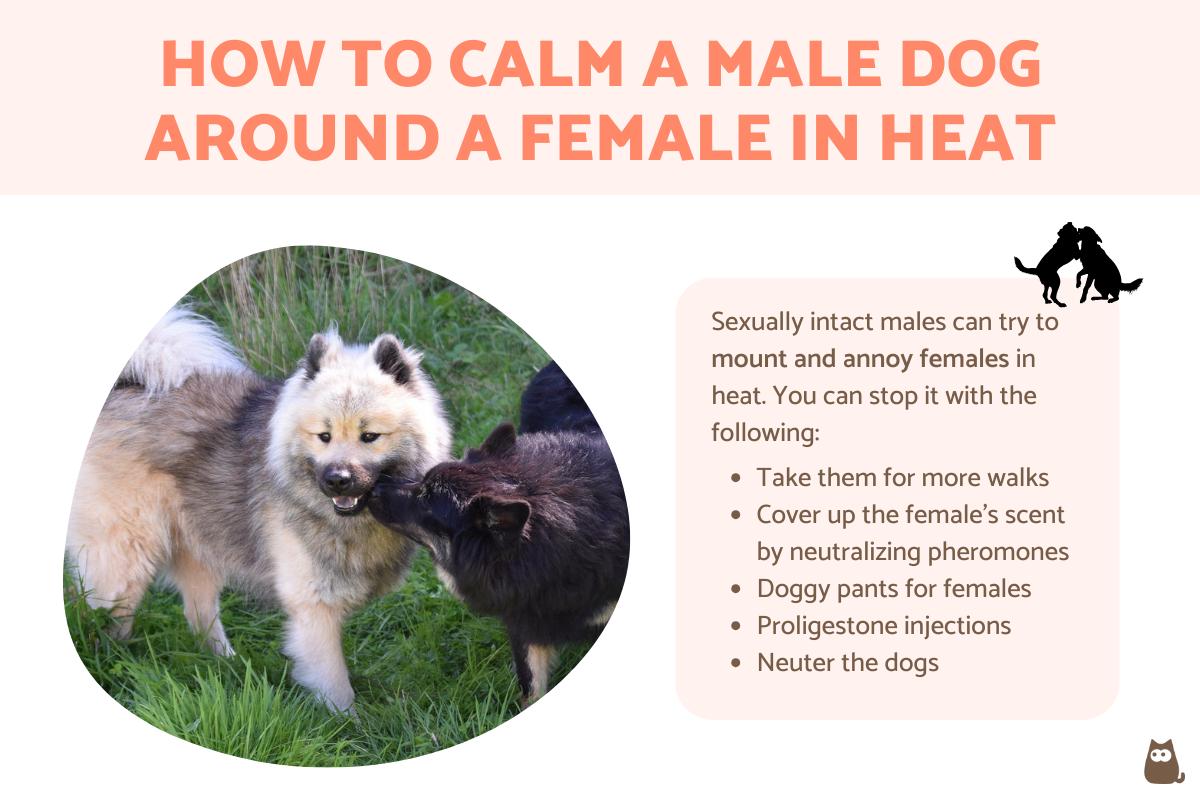
Image Source: cdn0.animalwised.com
The Science Behind Male Dog Frenzy
When a female dog is in heat, her body releases powerful pheromones. These scents travel far. Intact male dogs smell these signals. This triggers a strong, instinctual response. This isn’t just mild interest; it’s a flood of hormones demanding mating. This intense drive leads to stress, pacing, howling, and possible aggression. Dealing with male dog anxiety relief starts with knowing why he acts this way.
Essential First Steps: Immediate Separation
The very first rule for managing intact male dogs around female in heat is strict separation. No amount of calming training works if the male dog can constantly see or smell the female.
Creating Physical Barriers
You must create solid barriers. Think strong, secure separation.
- Separate Rooms: Keep the female in a room the male dog cannot access. Use solid doors, not baby gates, as a determined male can jump or push them.
- Soundproofing: If the female is whining or the male is barking, try to use a room with thick walls.
- Outdoor Separation: Never let them meet in the yard, even for a minute. A determined male can breach fences quickly. Use separate schedules for bathroom breaks.
Timing the Heat Cycle
A female dog’s heat cycle has stages. Knowing these helps you predict the male dog’s stress levels.
| Heat Stage | Duration (Approx.) | Male Dog Interest Level | Management Focus |
|---|---|---|---|
| Proestrus (Pre-Heat) | 9 days | High (Attraction, but no acceptance) | Strict separation. |
| Estrus (Peak Heat) | 9 days | Extreme (Willingness to mate) | Maximum security separation. |
| Diestrus (Post-Heat) | 60-90 days after start | Decreasing | Gradual relaxation of strict rules. |
The most challenging time is the Estrus stage. This is when calming hormonal male dog efforts need to be strongest.
Environmental Control: Reducing Scent Arousal
Pheromones are the main trigger. If the male dog cannot smell the female strongly, his arousal levels drop. Scent masking to reduce male dog arousal is a key strategy.
Deep Cleaning Protocols
The female’s scent lingers everywhere she has been.
- Wash Bedding: Wash all bedding used by the female in hot water with strong, unscented detergent.
- Disinfect Surfaces: Use enzymatic cleaners on floors, furniture, and crates. Standard soap often doesn’t remove pheromones fully.
- Air Circulation: Use air purifiers with strong HEPA or activated charcoal filters. Open windows when the male dog is out of the area to air the space out.
Using Strong Neutralizers
While masking isn’t a cure, it helps lower the intensity of the smell.
- Vinegar: White vinegar is a great, safe deodorizer. Wipe down hard surfaces with a vinegar-water mix.
- Odor Absorbers: Place bowls of baking soda or activated charcoal near areas the female frequents (when she is not there).
- Avoid Perfumes: Do not use heavily scented human perfumes or air fresheners near the male dog. These can sometimes attract him more or cause him stress if they mix weirdly with the natural scents.
Physical Management and Exercise
A tired dog is a calmer dog. Intense physical exercise burns off excess energy built up from hormonal stress. This is crucial for male dog anxiety relief.
High-Intensity Exercise
Focus on activities that require mental focus alongside physical exertion.
- Long Walks: Take the male dog on long, brisk walks away from where the female is located, preferably in areas he hasn’t visited recently to minimize other scent triggers.
- Fetch or Running: If safe, let him run hard. Thirty minutes of intense play can significantly lower his stress hormones.
- Swimming: If available, swimming is excellent low-impact, high-energy exercise.
Structure During Exercise
Keep walks structured. Do not let him roam freely. Use a leash and practice basic commands. This redirects his focus from instinct to obedience.
Behavioral Tools for Calming the Male Dog
Once physical needs are met, you must use training techniques to manage the mental stress. This involves behavior modification for male dogs near females in heat.
The “Place” Command
Teach your male dog to go to a specific mat or bed (“Place”) and stay there until released. Practice this daily, even when the female is not in heat.
- Reward heavily for staying on the mat.
- During the heat cycle, place his “Place” far away from the female’s room.
- If he shows signs of stress (pacing, staring), immediately send him to his Place. Reward stillness heavily.
Impulse Control Exercises
These exercises teach the dog to override a strong desire (like sniffing something interesting or reacting to a sound).
- Wait at Doors: Make him sit and wait before going through any doorway.
- Leave It: Practice “Leave It” with high-value treats. This builds the muscle to ignore the female’s scent.
Dealing with Howling and Pacing
Minimizing male dog pacing and howling near female in heat requires consistency.
- Interruption, Not Punishment: Do not yell at him when he howls. Yelling is attention, which can reinforce the behavior. Instead, interrupt the behavior with a sharp, neutral sound (like a clap or “Ah-ah!”).
- Redirect Immediately: As soon as you interrupt, ask for an incompatible behavior—something he cannot do while howling (like sitting, looking at you, or going to his Place). Reward the new behavior.
Natural Support and Supplements
For some dogs, environmental and behavioral management needs backup. Natural remedies for male dog heat stress can aid in lowering overall anxiety. Always talk to your vet before starting new supplements.
Calming Herbs and Supplements
Certain ingredients help soothe the nervous system without heavy sedation.
- L-Theanine: Found in green tea, this amino acid promotes relaxation without drowsiness. It’s often used for generalized anxiety.
- Casein Hydrolysate (Zylkene): This milk-derived protein has proven calming effects.
- Valerian Root or Chamomile: Used traditionally for calming, these can be given as teas (cooled) or in supplement form. Use caution, as some dogs react poorly to valerian.
- Melatonin: Sometimes used short-term to help regulate cycles or stress, but dosage must be veterinary-approved, especially when controlling male dog aggression during female heat.
Importance of Routine
Dogs thrive on routine. During this stressful time, keep feeding times, walk times, and potty breaks rigidly scheduled. Predictability reduces the male dog’s uncertainty and stress levels.
Addressing Specific Problem Behaviors
Intact males often display specific behaviors driven by hormones that need direct action.
Preventing Male Dog Mounting During Heat Cycle
Mounting is a clear sign of high arousal. It must be stopped instantly to prevent injury and reinforce boundaries.
- Immediate Removal: As soon as mounting starts, calmly remove the male dog. Do not engage in a tug-of-war or scolding match.
- Time Out: Place him in a separate “time out” zone (a crate or different room) for 5–10 minutes. This is not punishment, but a necessary break until he can regulate himself.
- Increase Distance: If mounting occurs, it means your separation barriers are too weak. Increase the distance between the dogs immediately.
Managing Potential Aggression
Hormonal frustration can sometimes lead to redirected aggression. He might snap at a family member because he cannot reach the female. This is a serious issue requiring strict management. Controlling male dog aggression during female heat is non-negotiable for safety.
- Muzzling (If Necessary): If aggression is serious, use a comfortable basket muzzle during supervised moments when he is near the female (even separated). This prevents bites while you work on training.
- No Forceful Interactions: Never force the male dog near the female, even if he seems calm. The scent can trigger him instantly.
- Safety First: If you cannot guarantee 100% safety, keep them completely separated until the heat cycle ends.
Advanced Separation Techniques
When simple room separation fails, you need more robust methods. Safe separation of male and female dogs in heat often requires doubling down on barriers.
Crating and Kenneling
If the male dog is crate trained, use his crate in a different part of the house or even a sound-proofed garage (if temperature controlled and safe).
- Crate Covers: Covering the crate can help reduce visual stimulation, which can lower arousal.
- Enrichment Inside: Provide long-lasting chews like frozen Kongs stuffed with peanut butter or puzzle toys inside the crate. This keeps his mouth and mind busy when you cannot supervise him directly.
Rotating Locations
If you have multiple caregivers, rotate who is responsible for the male and female.
- One person handles the male dog entirely (walks, feeding, training) in one area of the house.
- Another person handles the female in a totally separate, secured zone.
- This limits the transfer of scent between handlers and reduces the male dog’s ability to track his handler to find the female.
Long-Term Solutions: Contemplating Neutering
While this article focuses on managing the heat cycle, it is important to mention the most definitive way to remove this intense drive.
Neutering (castration) removes the primary source of the hormonal drive. While it does not eliminate all learned behaviors, it significantly reduces the obsessive focus on females in heat and lessens the intensity of hormonal surges. If you do not plan to breed your male dog, neutering offers significant behavioral advantages and health benefits.
Summary of Calming Actions
To maintain peace and reduce stress for both dogs, remember these core actions:
- Separate Absolutely: No sight, sound, or close smell contact.
- Clean Thoroughly: Use enzymatic cleaners to minimize residual pheromones.
- Exercise Heavily: Burn off the anxious, pent-up energy daily.
- Train Consistently: Use “Place” and “Leave It” to build impulse control.
- Use Aids Wisely: Incorporate mild, natural supplements if needed for anxiety support.
- Maintain Routine: Keep all daily schedules strictly the same to provide comfort.
Managing this period requires vigilance. By implementing strong physical separation and proactive behavior management, you can successfully navigate the female’s heat cycle while ensuring your male dog remains as comfortable and safe as possible.
Frequently Asked Questions (FAQ)
Q: How long does it usually take for a male dog to calm down after the female stops being in heat?
A: Most male dogs begin to calm down noticeably within a few days after the female has clearly finished her fertile period (usually when discharge stops and she no longer shows interest in him). However, the obsessive behavior might linger for a week or two as residual hormonal effects fade. Keep the routine strict until you see a clear return to normal behavior.
Q: Can I use human sedatives to calm my male dog during this time?
A: No. Never give your dog human medication without explicit instruction from a veterinarian. Many human drugs are toxic to dogs. If you feel your dog needs chemical help for anxiety, ask your vet about safe, dog-specific calming aids.
Q: My male dog keeps pawing at the door separating us. What should I do?
A: Pawing is attention-seeking behavior driven by stress. You must ignore the pawing completely. If you open the door or speak to him, you reward the action. Instead, wait for a half-second of silence, then reward him for being quiet (even if he’s still near the door). If the pawing is destructive, you need better physical barriers, like a solid gate or closing off the hallway.
Q: Should I exercise the male dog near the female’s scent?
A: No. When managing intact male dogs around female in heat, avoid walking him near areas where the female has recently been. This just reinforces the scent cue and increases his stress and arousal levels. Take him to new, neutral territory for exercise.