
The main difference between a groundhog and a prairie dog is their classification, social life, and where they live. Groundhogs (or woodchucks) are generally solitary animals living across eastern and central North America, while prairie dogs are highly social, living in large groups called “towns” primarily in the grasslands of the western United States.
This deep look explores the groundhog vs prairie dog comparison, breaking down their looks, homes, and habits. Deciphering the traits of these two common burrowing rodents differences helps tell them apart easily.
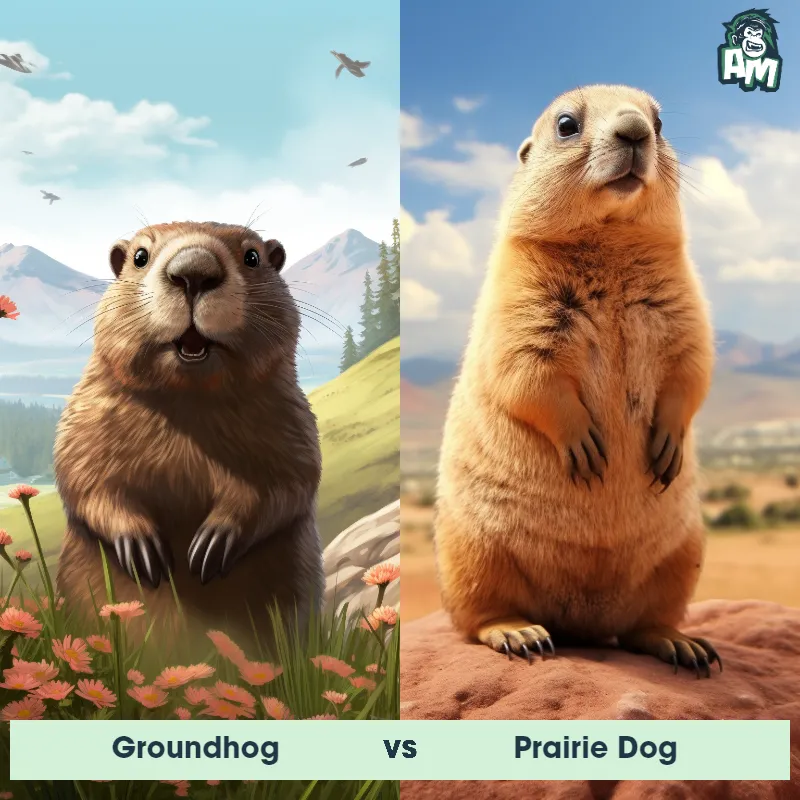
Image Source: cdn.animalmatchup.com
Identifying Burrowing Mammals Comparison: Taxonomy and Kinship
Both groundhogs and prairie dogs are fascinating burrowing mammals comparison subjects. They share a common ancestry, belonging to the order Rodentia (rodents) and the family Sciuridae (squirrels). However, they fall into different genera, leading to distinct evolutionary paths.
Groundhog Scientific Classification
The groundhog, also famously known as the woodchuck vs prairie dog contender, has a specific place in science.
- Genus: Marmota
- Species: Marmota monax
This places the groundhog firmly within the group of large ground squirrels known as marmots. This means that when comparing a marmot vs prairie dog, the groundhog is closely related to other marmots worldwide.
Prairie Dog Scientific Classification
Prairie dogs are also ground squirrels but belong to a different genus, reflecting their specialized lifestyle.
- Genus: Cynomys
- Species: There are five recognized species of prairie dogs (e.g., Black-tailed, White-tailed).
This difference in genus highlights a major split in their development, even though they are both stout, ground-dwelling rodents.
Physical Traits: Size, Shape, and Color
While both animals are chunky rodents that dig extensively, you can spot differences in their bodies and faces.
Groundhog Appearance
Groundhogs are built for digging and hibernation. They look robust and heavy.
- Size: They are quite large for squirrels. They can weigh between 5 and 15 pounds. They can grow up to 20 inches long, plus a short, bushy tail.
- Color: Their fur is usually grizzled brown or grayish-brown. The color helps them blend into woods, fields, and meadows.
- Body Shape: They have short, powerful legs and very strong claws, perfect for moving dirt quickly.
Prairie Dog Appearance
Prairie dogs look sleeker and are generally smaller than groundhogs. They look more like squirrels built for open plains.
- Size: Prairie dogs are smaller, typically weighing between 1.5 and 3 pounds. They are shorter, around 12 to 15 inches long, including their tails.
- Color: Colors vary by species but are generally lighter—tan, buff, or grayish. The Black-tailed prairie dog has a black tip on its tail, a key identifier.
- Body Shape: They have leaner bodies and longer tails than groundhogs. Their claws are also strong but adapted for the finer soils of the plains.
| Feature | Groundhog (Marmota monax) | Prairie Dog (Cynomys species) |
|---|---|---|
| Typical Weight | 5 to 15 pounds | 1.5 to 3 pounds |
| Tail Length | Short and bushy | Moderately long, often with a distinct tip color |
| Build | Stocky, heavy, robust | Leaner, more agile looking |
| Claw Strength | Extremely powerful (for deep digging) | Strong (for open-field burrowing) |
Deciphering Habitat and Geography
Where these animals live is one of the most significant differences separating the groundhog vs prairie dog matchup. Their environments shape their entire way of life.
Groundhog Habitat and Behavior
The groundhog habitat and behavior are tied to areas with plenty of cover and milder winters suitable for long hibernation.
- Range: They are found widely across the eastern and central United States, extending into Canada.
- Preferred Settings: Groundhogs like areas near woods, fields, farm borders, and suburban areas. They prefer locations where they can dig deep burrows near vegetation for food and cover from predators.
- Burrow Style: Groundhog burrows are complex, deep systems with multiple chambers, including a sleeping chamber and a bathroom area. They dig these deeply to escape temperature extremes and predators.
Prairie Dog Habitat and Range
Prairie dogs are creatures of the open sky and wide-open spaces.
- Range: They dominate the grasslands, prairies, and plains of western North America, especially in the Great Plains region.
- Preferred Settings: They require large, open areas with short grass. This visibility is crucial for spotting danger.
- Burrow Style: Prairie dog burrows are connected in massive, complex underground networks called “towns.” These towns can span hundreds of acres. Their entrances are often marked by distinctive mounds of dirt they push up around the opening.
Social Structure: Solitary vs. Highly Communal
If you are trying to distinguish between a woodchuck vs prairie dog, look at how many are hanging out together. This is perhaps the clearest behavioral difference.
Groundhog Social Structure (Solitary Lives)
Groundhogs are famously solitary creatures.
- Lifestyle: Except during mating season or when a mother is raising young, groundhogs live alone in their individual burrows.
- Interactions: They are generally intolerant of other groundhogs in their immediate territory. They mark their space and defend it against intruders.
- Hibernation: Because they are solitary, they hibernate alone in their deep, well-insulated winter chambers.
Prairie Dog Social Structure (Town Life)
Prairie dogs exhibit one of the most complex prairie dog social structure systems in the animal kingdom.
- Towns and Coteries: They live in massive colonies called towns, which consist of thousands of individuals. Within the town, they form smaller family units called “coteries.”
- Communication: They are famous for their alarm calls—sharp, distinct barks—that warn the entire community of danger. This teamwork is essential for survival on the open plains.
- Cooperation: Coteries share protection duties, groom each other, and even share underground tunnels, though territoriality exists between coteries. They do not hibernate deeply; they enter periods of torpor but remain somewhat active year-round.
This key difference in rodent species differentiation—solitary vs. communal—reflects their evolutionary pressures. Solitary life works well where cover is available; communal life is necessary when open exposure demands collective vigilance.
Diet: What They Eat
Both are herbivores, feeding mainly on vegetation, but their specific diets reflect the plants available in their respective groundhog habitat and behavior zones.
Groundhog Diet
Groundhogs are opportunistic feeders, eating whatever greens are nearby.
- Clover and alfalfa are favorites.
- They eat grasses, weeds, and garden vegetables (making them pests to gardeners).
- They occasionally consume insects or snails, but these are minor parts of their diet.
Prairie Dog Diet
Prairie dogs rely heavily on the grasses of their habitat.
- They consume primarily grasses, seeds, and roots.
- They clip surrounding vegetation around their burrow entrances. This keeps the area clear, improving their line of sight for predators.
Hibernation vs. Torpor
The way these two animals deal with cold weather is another critical point in the marmot vs prairie dog discussion.
Groundhog Hibernation
Groundhogs are true hibernators.
- Preparation: They gorge themselves throughout the late summer and fall to build up thick fat reserves.
- Deep Sleep: When cold weather hits, they retreat to their deepest burrow chambers, plug the entrance, and enter a state of deep hibernation. Their heart rate drops dramatically, and their body temperature falls close to the surrounding soil temperature.
- Duration: This deep sleep can last five to six months, depending on the region.
Prairie Dog Activity
Prairie dogs do not truly hibernate like groundhogs.
- Torpor: They enter periods of winter lethargy or torpor. They wake up periodically to eat stored food or move around slightly.
- Shelter: They rely on the insulating properties of their large, interconnected tunnel systems to stay warm enough.
- Year-Round Presence: Because they remain somewhat active, prairie dog towns are often visible throughout the winter, even if activity is low.
Defense Mechanisms and Communication
Survival strategies differ greatly due to their social structures and environments.
Groundhog Defenses
The groundhog relies on speed and its burrow as a safe haven.
- Retreat: If a predator (like a coyote or fox) approaches, the groundhog sprints for the nearest burrow entrance.
- Vocalization: They have a high-pitched whistle or shriek used to warn others or express alarm, though less frequently than prairie dogs.
Prairie Dog Communication
The prairie dog social structure demands highly efficient communication.
- Alarm Calls: They use a complex vocabulary of barks, yips, and chirps to signal the type and direction of a threat (e.g., hawk vs. badger).
- Sentry Duty: Members of the coterie often take turns standing watch on top of their dirt mounds.
- Mounding: The dirt mounds surrounding their holes are defenses against flooding and predators, offering a high vantage point.
Reproduction and Lifespan
Reproduction patterns reflect their differing life strategies.
Groundhog Reproduction
As solitary animals, groundhogs focus their energy on a single litter.
- Mating: They mate shortly after emerging from hibernation in early spring.
- Litter Size: Females typically have one litter per year, with four to six young (pups).
- Independence: Pups are weaned quickly and leave the mother’s burrow by late summer to find their own territory.
Prairie Dog Reproduction
Prairie dogs reproduce within their tightly knit coteries.
- Mating: Mating occurs early in the spring.
- Litter Size: Litters are usually smaller, often just two to four pups.
- Social Rearing: While the mother nurses them, the survival of young prairie dogs is heavily aided by the collective vigilance of the coterie.
Analyzing Rodent Species Differentiation Through Behavior
Fathoming the differences between these two species requires looking at how their environment shaped their behavior. The contrast between the groundhog vs prairie dog serves as a classic example of divergent evolution within the squirrel family.
The groundhog evolved to be a powerhouse digger, capable of creating deep, secure, private winter homes. Its survival hinges on its ability to hide and sleep through harsh conditions alone. This leads to the term woodchuck vs prairie dog always highlighting the woodchuck’s larger, more robust build suited for temperate forests and fields.
Conversely, the prairie dog evolved for an exposed life on the open plains. Its survival depends entirely on vigilance and teamwork. This communal living requires complex communication and a focus on maintaining the vast network of tunnels that make up the town—a structure completely foreign to the solitary groundhog. This highlights why they are so distinct in the burrowing mammals comparison.
In summary, while both are members of the squirrel family that love to dig, their lifestyles diverge completely: one is the solitary, heavy-set hibernator of the woods’ edge, and the other is the highly communicative, social resident of the open plains.
Frequently Asked Questions (FAQ)
Q: Is a groundhog the same as a woodchuck?
A: Yes, groundhog and woodchuck are two common names for the same animal, Marmota monax.
Q: Do prairie dogs hibernate?
A: No, true hibernation does not occur. Prairie dogs enter periods of torpor or lethargy during cold weather but remain active enough to eat stored food.
Q: Are groundhogs social animals?
A: No, groundhogs are generally solitary. They only associate briefly for mating or when a mother is raising her young pups.
Q: Can you keep a prairie dog as a pet?
A: In many places, prairie dogs are considered wild animals and are illegal to keep as pets. Even where legal, they require specialized care due to their complex social and environmental needs.
Q: Which animal is larger, the groundhog or the prairie dog?
A: The groundhog is significantly larger and heavier than any species of prairie dog.
Q: Why do prairie dogs build mounds around their holes?
A: The mounds serve several purposes: they help drain water away from the burrow entrance during rain, they provide a high perch for spotting predators, and they mark the territory boundary.