
Yes, you can often help a dog with something stuck in its throat, but only if the object is visible and easily reachable, and only if you remain calm. If your dog is severely struggling to breathe, immediately seek help from a veterinarian for dog choking. A blocked airway is a life-threatening emergency. Knowing the dog choking signs is the first step in helping your pet survive this scary event. This guide will help you spot the signs of a canine throat obstruction and know the right steps to take.
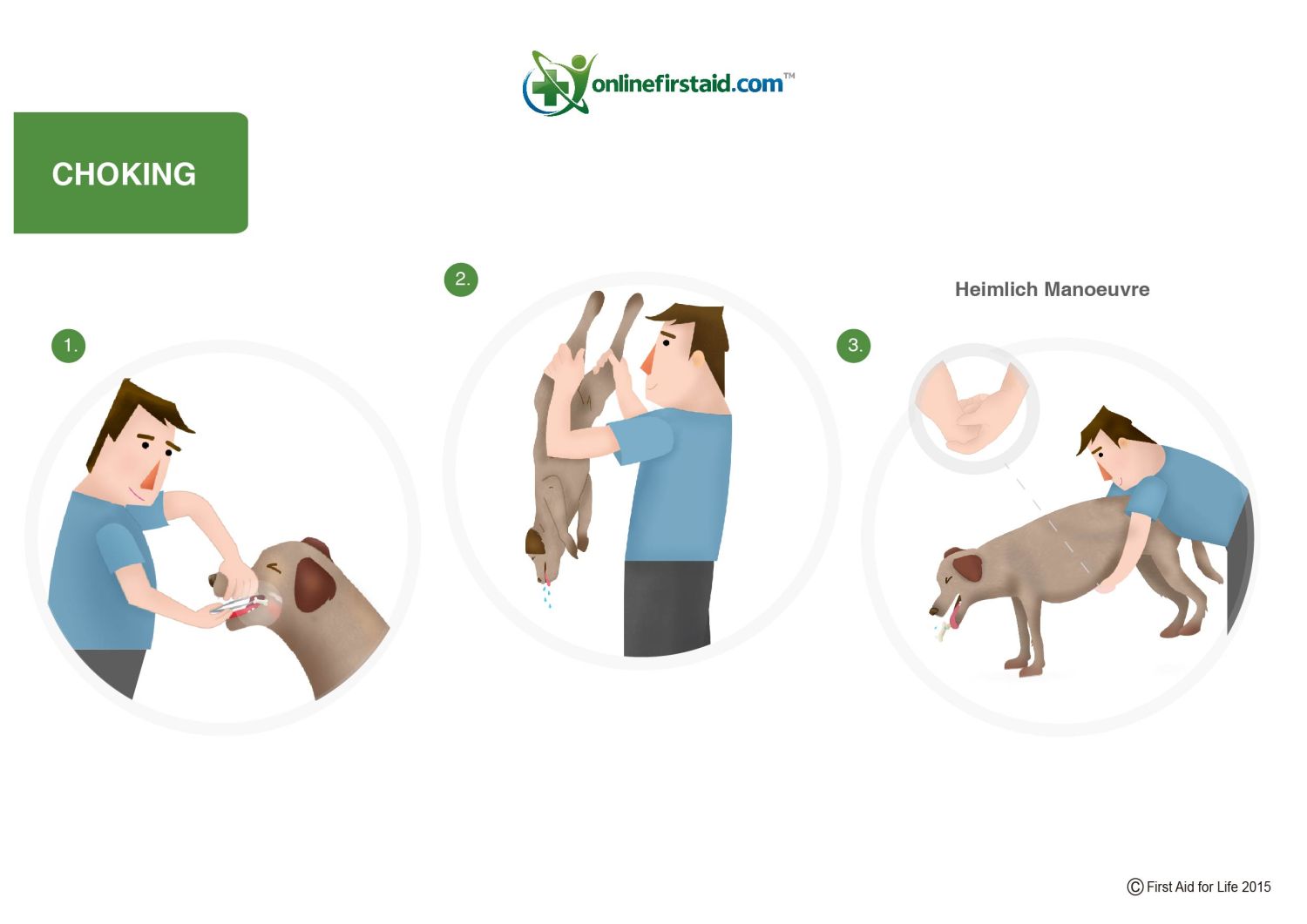
Image Source: firstaidforpets.net
Recognizing Early Signs of Trouble
A dog swallowing a toy, bone, or piece of food that gets lodged can happen fast. Recognizing the warning signs early makes a huge difference. These signs often point to a foreign object in dog’s throat or a serious blockage.
Immediate Distress Signals
When something gets stuck, your dog will usually show signs right away. They cannot ignore the blockage.
- Sudden, Violent Coughing: This is often the first sign. The cough might sound wet or harsh. Your dog might make repeated hacking noises.
- Paw at the Mouth: Dogs instinctively try to clear their throats. They will often lift a paw to their face repeatedly. This is a major indicator of dog gagging and coughing.
- Drooling Heavily: Excessive, thick saliva production often occurs because the dog cannot swallow normally.
- Gagging or Retching: These are attempts by the body to expel the object. It looks like they are trying to vomit but nothing comes up.
Signs of Dog Breathing Difficulty Throat
If the object is large enough to block the windpipe, breathing becomes the biggest concern. This is an extreme emergency.
- Noisy Breathing (Stridor): You might hear high-pitched, wheezing sounds when they try to inhale. This means air is squeezing past a partial blockage.
- Blue or Pale Gums (Cyanosis): Lack of oxygen turns the gums blue, purple, or very pale pink. Check the gums quickly. This signals a critical lack of air.
- Difficulty or Inability to Cough: If the cough stops suddenly, the blockage may have become complete. The dog will struggle silently or make only weak gasping sounds.
- Collapse: If oxygen supply stops, the dog may become weak and fall over.
Locating the Obstruction: What Your Dog Might Show
When a foreign object in dog’s throat is present, the dog’s behavior changes dramatically. Observing these subtle cues helps you pinpoint the issue.
Changes in Eating and Drinking Habits
Dog swallowing problems are a very common indicator.
- Refusal to Eat or Drink: Your dog might approach the bowl but back away suddenly. They may try to lick water but choke or cough instead.
- Swallowing Difficulties: If they do take food or water, they might chew once or twice, then spit it out. They might tilt their head or strain to swallow, often followed by a cough.
- Pain When Touching the Neck: If you gently touch or press near the throat area, your dog might snap, whimper, or move away quickly. This points directly to dog throat irritation symptoms.
Visible Signs
Sometimes, you can actually see what is causing the problem.
- Object Visible at the Back of the Mouth: Look deep into the mouth, past the tongue. If you see a piece of stick, a ball, or string, this is your chance to act quickly.
- Swelling or Redness: The throat lining may look very red and inflamed due to irritation from the stuck item.
It is crucial to note the difference between choking and severe irritation. Choking implies an airway blockage. Irritation might cause persistent coughing but still allow breathing.
Causes of Canine Throat Obstruction
Why do dogs get things stuck in their throats? Most incidents relate to normal dog behavior—eating and playing.
Common Culprits
Knowing what usually gets stuck helps in prevention.
| Type of Object | Examples | Risk Level |
|---|---|---|
| Food Items | Hard bones, large chunks of meat, dried treats, corn cobs | High (Can splinter or lodge) |
| Toys and Chews | Pieces of rubber balls, squeakers, plastic parts, soft toy stuffing | Medium to High (Especially small dogs) |
| Natural Items | Sticks, pieces of bark, burrs, or seeds | Medium (Sticks often cause puncture wounds) |
| Miscellaneous | Rocks, coins, fabric pieces, string/ribbon | Varies (String can cause severe internal issues) |
The Mechanism of Getting Stuck
Objects usually get stuck in one of three places:
- The Pharynx (Back of the Mouth/Throat): This is the most common spot for initial lodging, often right before swallowing.
- The Esophagus (Swallowing Tube): If the object is swallowed but too large to pass into the stomach, it gets stuck here. This causes dog swallowing problems even if it is not technically “choking.”
- The Larynx/Trachea (Windpipe): This is the most dangerous location, causing true choking and severe dog breathing difficulty throat issues.
Immediate First Aid: Helping Dog With Stuck Object
If your dog is conscious and showing dog choking signs but still breathing, you need to act immediately. Stay calm. Panic hinders your ability to help.
Assessing the Situation
First, confirm the blockage. Can your dog inhale air?
- If air is moving but they are coughing, the object is likely partially stuck or irritating the throat.
- If they cannot breathe at all, the airway is fully blocked.
Manual Removal Attempt (Use Extreme Caution)
Removing something from dog throat manually carries risks. You might push the object further down or cause injury. Only attempt this if:
- The object is clearly visible right at the back of the throat.
- Your dog is still conscious enough to tolerate brief handling.
Steps for Visual Inspection and Gentle Removal:
- Secure the Dog: Have someone gently hold the dog steady, keeping its head upright.
- Open the Mouth: Use one hand to gently open the upper jaw. Use the other hand (or a helper’s hand) to pull the lower jaw down.
- Illuminate: Use a bright light (like a phone flashlight) to see clearly.
- Sweep Gently: If you see the object, try to hook it gently with your index finger or use long tweezers. Move the finger in a sweeping motion away from the throat opening. Never poke deeply.
Warning: If you cannot easily grasp the object, STOP. Do not force your hand down. You risk pushing the object deeper or causing the dog to bite reflexively.
The Heimlich Maneuver for Dogs
If the dog is suffocating (cannot breathe, losing consciousness), you must try to dislodge the object using abdominal thrusts, similar to the Heimlich maneuver in humans. This procedure is only for life-threatening, complete obstructions.
Procedure for a Small to Medium Dog:
- Lift the dog up so its back is against your chest. You can also lay the dog on its side on a firm surface.
- Locate the soft spot just behind the rib cage.
- Make a fist with one hand. Place the thumb side of your fist against this soft area.
- Wrap your other hand around your fist.
- Thrust inward and slightly upward sharply. Do this 3 to 5 times quickly. The goal is to force air out of the lungs to expel the object.
Procedure for a Large Dog:
- Stand behind the dog while it is standing or lying on its side.
- Find the soft area below the rib cage.
- Use two hands, pressing firmly and quickly inward and upward.
After performing thrusts, immediately check the dog’s mouth again for the expelled object.
When to Call the Veterinarian for Dog Choking
Immediate professional help is mandatory in many choking scenarios. Know when to stop home intervention and rush to the clinic.
Critical Triggers for Emergency Vet Visit
- The object is not dislodged after one or two attempts at removal or thrusts.
- The dog becomes unconscious or stops breathing entirely.
- The dog is still coughing violently or appears distressed even after the object seems to have passed (indicating damage or irritation).
- You suspect the object has gone down the esophagus, causing dog swallowing problems even if breathing is fine.
What the Vet Will Do
Veterinary clinics are equipped to safely manage airway obstructions.
- Sedation and Visualization: Vets often sedate the animal lightly to relax the throat muscles, making visualization easier and safer.
- Endoscopy: They use an endoscope—a flexible tube with a camera—to locate and gently retrieve the object using specialized tools. This is the safest way to extract objects from the upper airway or esophagus.
- Tracheotomy: In rare, severe cases where the object is lodged in the lower trachea and cannot be reached via endoscopy, an emergency surgical opening (tracheotomy) might be needed to restore airflow.
After the Incident: Recovery and Follow-Up Care
Even if you successfully managed to clear the blockage yourself, veterinary follow-up is essential to check for injuries caused by the object or the removal attempt.
Checking for Dog Throat Irritation Symptoms
The physical process of choking or having an object removed can injure the delicate tissues of the throat.
- Persistent Coughing: A cough that lasts more than 24 hours after the event might signal lingering irritation or, worse, damage to the esophagus or windpipe.
- Refusal to Eat: If the dog continues to refuse food or drinks water awkwardly for several hours, the esophagus may be bruised or scratched.
- Pain on Swallowing: Watch for whining or hesitation when swallowing liquids later on.
Your vet will examine the throat carefully. They may recommend soft food or liquid diets for a few days to allow the tissues to heal after significant dog gagging and coughing.
Investigating the Cause
If your dog frequently tries to eat inappropriate items, you need to address the root cause to prevent future incidents of canine throat obstruction.
- Boredom: Ensure your dog gets enough physical and mental stimulation.
- Pica: Some dogs compulsively eat non-food items (Pica). This requires veterinary behavioral assessment and management.
- Supervision: Never let your dog play with toys that are small enough to fit entirely in their mouth, especially soft rubber toys that can be torn apart.
Differentiating Choking from Other Illnesses
Sometimes, severe coughing or gagging is mistaken for choking when the cause is something else entirely, such as kennel cough or regurgitation.
Kennel Cough vs. Choking
| Feature | True Choking (Obstruction) | Kennel Cough |
|---|---|---|
| Onset | Sudden, immediate distress | Gradual onset, often after exposure to other dogs |
| Breathing | Difficulty inhaling, cyanosis possible | Dry, harsh “honking” cough, usually breathing okay between episodes |
| Action | Attempts to paw at mouth, distress | Often pauses to cough, seems otherwise normal |
| Response to Aid | Does not respond to calm reassurance | May calm down after an episode |
If you are ever in doubt about dog breathing difficulty throat, always treat it as a true emergency first. It is safer to have a vet confirm mild irritation than to wait when a true blockage is occurring.
Dealing with Esophageal Blockage
An object stuck in the esophagus means the dog can still breathe fine, but has severe dog swallowing problems.
- They may drool excessively because saliva pools in the throat, unable to pass down.
- They often look uncomfortable but not panicked about air, unlike a dog whose windpipe is blocked.
This still requires immediate veterinary attention because the esophagus can become damaged, or the object might shift and cause a complete airway blockage later. Safely removing something from dog throat or esophagus requires specialized tools to prevent tearing the tissue.
Prevention: The Best Defense Against Blockage
The simplest way to deal with a foreign object in dog’s throat is to ensure it never gets there. Prevention focuses on careful management of the dog’s environment and diet.
Toy Safety Guidelines
- Size Matters: Ensure toys are too large to fit entirely into your dog’s mouth, especially for power chewers.
- Durability: Choose durable toys made for your dog’s chewing strength. Throw away any toy that has cracks, missing pieces, or exposed squeakers.
- Supervision: Never leave dogs unattended with new or complex toys.
Feeding Practices
- Appropriate Bones: Avoid cooked bones completely, as they splinter easily. If you give raw recreational bones, supervise closely to ensure large chunks are not swallowed whole.
- Portion Control: If feeding large chews or rawhides, monitor the dog until the item is safely consumed or taken away.
By recognizing the dog choking signs early and knowing when to seek expert help from a veterinarian for dog choking, you maximize your dog’s chance of a quick recovery from this frightening emergency.
Frequently Asked Questions (FAQ)
Q: How long can a dog survive if something is stuck in its throat?
A: Survival time depends entirely on how complete the obstruction is. If the airway is fully blocked, a dog can lose consciousness within one to two minutes and face severe brain damage or death within a few minutes without oxygen. If the object is lodged in the esophagus (causing dog swallowing problems but leaving the airway open), survival time is longer, but veterinary intervention is still needed urgently to prevent tissue damage or secondary blockage.
Q: My dog coughed up the object. Should I still go to the vet?
A: Yes, it is highly recommended. Even if the initial emergency is over, the object may have caused trauma. You need to check for dog throat irritation symptoms like scratches or inflammation. The vet will examine the mouth and throat to ensure no pieces remain and that breathing passages are clear.
Q: What should I never use to try removing the object?
A: Never use sharp objects like knives or sticks, as you can cause severe lacerations to the throat lining or push the object deeper. Also, avoid using fingers if you cannot see the object clearly, as a scared or choking dog might bite reflexively.
Q: Can I use human medicine to soothe my dog’s throat after choking?
A: No. Never give your dog human medication without explicit instructions from your veterinarian. Many human pain relievers or cold medicines are toxic to dogs. If your dog has dog throat irritation symptoms, the vet will prescribe safe treatments.
Q: What if my dog is gagging but not making any noise?
A: Silence combined with visible distress (pawing the mouth, panicking) is extremely worrying. It often means the blockage in the windpipe is nearly or completely closed. Perform the Heimlich maneuver immediately and transport the dog to the nearest emergency vet without delay.