
A 40 lb bag of dog food holds roughly 140 to 160 cups of kibble. The exact number depends on the density and size of the food pieces.
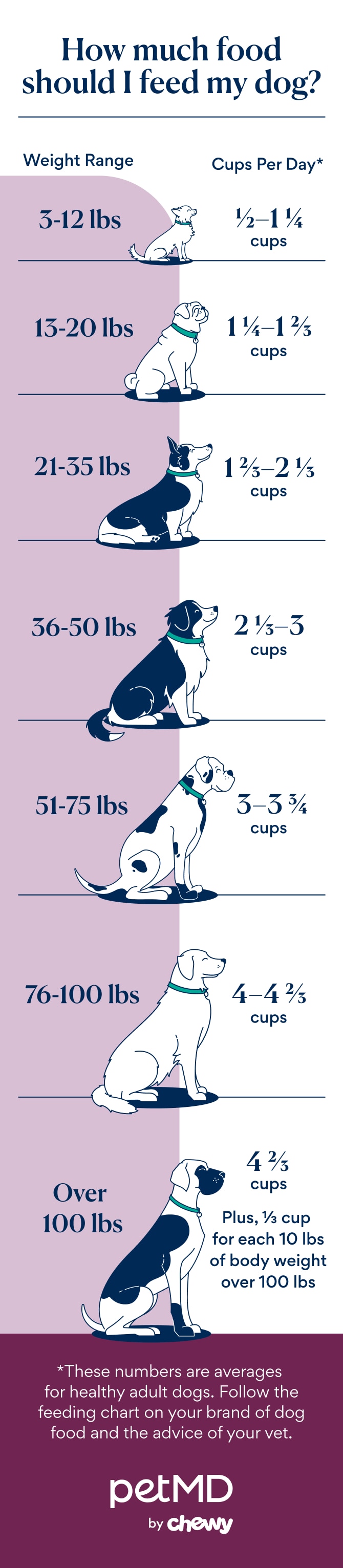
Image Source: image.petmd.com
Deciphering Dog Food Volume: Weight Versus Measure
Dog owners often face a common puzzle: how to turn the weight listed on a large dog food bag into the cups needed for daily feeding. Knowing how many cups in 40 pound bag of kibble is vital for proper dog food portion control. Relying on weight (pounds) is always best, but measuring cups are what most people use daily.
This article will help you make that conversion accurately. We will look at why the numbers vary. We will also show you how to find the right standard cup size for dog food measurements.
Why The Number Isn’t Fixed: Density Matters
You might think that 40 pounds of anything equals the same volume. This is not true for dog food. Different brands make different kibbles.
- Kibble Size and Shape: Small, dense pellets take up less space than large, airy puffs.
- Ingredient Mix: Foods high in meat meal might pack down more than foods high in vegetable fillers.
- Air Pockets: How the food settles in the bag creates air pockets. This changes the final cup count.
Because of these differences, a single answer won’t work for every bag. This is why checking a dog food bag weight conversion chart specific to your brand is helpful.
Converting Dog Food Weight to Cups Accurately
The core task here is converting dog food weight to cups. This process relies on knowing the density of your specific dog food.
Finding the Density Factor
Most pet food companies calculate density in terms of pounds per cup (lb/cup) or cups per pound (cup/lb). They use this information for their feeding guides.
If your dog food maker provides this number, use it!
Formula: Total Cups = Total Weight (lbs) $\times$ Cups per Pound (cup/lb)
For a 40 lb bag: $40 \times (\text{Cups per Pound})$
If a brand states their food is 0.25 cups per pound, then: $40 \text{ lbs} \times 0.25 \text{ cups/lb} = 100 \text{ cups total}$.
If a brand states their food is 4 cups per pound, then: $40 \text{ lbs} \times 4 \text{ cups/lb} = 160 \text{ cups total}$.
Using General Estimates for the 40 Lb Bag Volume
When you cannot find the specific density, you must use general estimates based on common kibble types. This gives you a good starting point for your dog food bag volume.
| Kibble Type | Estimated Cups per Pound (cup/lb) | Estimated Total Cups in 40 Lb Bag |
|---|---|---|
| Small, Dense Kibble (e.g., Puppy Formulas) | 3.75 to 4.25 cups/lb | 150 to 170 cups |
| Medium, Standard Kibble | 3.5 to 3.75 cups/lb | 140 to 150 cups |
| Large, Airy Kibble (e.g., Large Breed Adult) | 3.0 to 3.5 cups/lb | 120 to 140 cups |
Remember, these are estimates. Use these numbers to plan your initial feedings, then adjust based on your dog’s needs.
How to Measure Dog Food from a Bag Effectively
Once you know the approximate total cups, the next step is how to measure dog food from a bag correctly for each meal. Inconsistent measuring leads directly to poor dog food portion control.
Choosing the Right Tool
What tool should you use? This brings up the 40 lb dog food scoop size question.
- Standard Measuring Cups (Kitchen Cups): These are marked in 1/4, 1/3, 1/2, 3/4, and 1 cup increments. They are precise but require you to scoop multiple times for a large serving.
- Dedicated Pet Food Scoops: These scoops often come in fixed sizes, like 1-cup or 2-cup sizes. They are easier to use when feeding large amounts. Always check if the scoop is marked in standard US customary cups or if it is an arbitrary volume.
- Digital Kitchen Scale (Recommended): For the best accuracy, weigh the food. A scale eliminates all volume errors.
Importance of the Standard Cup Size for Dog Food
When using any cup, ensure it is a true standard US cup. A “scoop” from a generic scoop tool might hold 1.2 cups or only 0.8 cups compared to a kitchen measuring cup.
Best Practice: Use a standard, marked kitchen measuring cup. Level off the food at the top line. Do not pack the food down.
Leveling vs. Scooping
- Leveling: Pour the food into the cup, then use the straight edge of a knife or spatula to level the top, removing excess. This gives the most accurate volume measurement.
- Scooping (Packed): If you press the food down into the cup, you are adding more weight and calories than intended. This is a common reason dogs gain unwanted weight, even when owners think they are following the directions. Always keep the food loose when measuring.
Utilizing the Feeding Guide for 40 lb Dog Food Bag Calculations
Every reputable dog food bag includes a feeding guide for 40 lb dog food bag calculations. This guide connects your dog’s weight to the suggested daily amount in cups.
Reading the Feeding Chart
Feeding charts usually look like this:
| Dog’s Weight (lbs) | Activity Level (Cups Per Day) |
|---|---|
| 10 | 1 to 1 1/4 |
| 25 | 2 to 2 1/2 |
| 50 | 3 1/2 to 4 |
| 75 | 4 1/2 to 5 |
| 100 | 5 1/2 to 6 1/4 |
Example Application: If you have a 75 lb dog needing 5 cups per day, and your 40 lb bag holds 150 total cups (based on our estimate), you can calculate how long the bag will last:
$$\text{Days the Bag Will Last} = \frac{\text{Total Cups in Bag}}{\text{Cups Fed Per Day}} = \frac{150 \text{ cups}}{5 \text{ cups/day}} = 30 \text{ days}$$
If you used a kitchen scale, the calculation would be even simpler if the guide listed weight (grams or ounces) instead of cups.
Employing a Dog Food Serving Size Calculator
For owners who frequently switch foods or want precise daily amounts, using an online dog food serving size calculator is highly beneficial. These tools automate the complex math.
How These Calculators Work
These calculators need three main inputs:
- Your Dog’s Current Weight and Body Condition Score (BCS): BCS helps adjust the standard calorie recommendation up or down.
- The Specific Dog Food: You input the guaranteed analysis or, ideally, the caloric density (Calories per cup or kcal/kg).
- The Bag Size: You input that you are using a 40 lb bag.
The calculator determines the exact number of cups needed per meal to meet the required daily caloric intake, taking the density of that specific food into account. This is far more accurate than generic charts, especially if your dog is very active or needs weight management.
Factors Affecting Dog Food Portion Control
Maintaining accurate dog food portion control is crucial for your dog’s health, longevity, and maintaining the correct dog food bag weight conversion chart for your supply.
Life Stage Adjustments
A dog’s nutritional needs change dramatically throughout life. The feeding guide assumes an average maintenance diet for an adult dog.
- Puppies: Need more calories per pound of body weight for growth. They eat significantly more than the chart suggests for their current weight.
- Senior Dogs: Often require fewer calories due to lower activity levels, necessitating smaller portions.
- Lactating/Working Dogs: Need substantial increases in food volume to support high energy demands.
Treat Intake
Treats count toward the daily caloric budget! Most veterinarians suggest that treats should not make up more than 10% of a dog’s total daily caloric intake. If you give many high-calorie treats, you must reduce the amount of kibble served from the 40 lb bag.
Metabolic Rate and Breed Size
Smaller dogs generally have higher metabolisms per pound than giant breeds. A 10 lb dog might need 1.5 cups, while a 100 lb dog needs 5.5 cups. The ratio is not linear. Always follow the specific guidelines on the bag tied to your dog’s weight, not just general rules of thumb.
Practical Tips for Managing Your 40 Lb Supply
A 40 lb bag is a significant investment and bulk purchase. Storing it correctly ensures the food stays fresh, which affects its nutritional value and palatability.
Storage Best Practices
Keeping the food fresh helps you accurately track how much you are using.
- Airtight Containers: Transfer the food from the paper or plastic bag into a dedicated, airtight plastic or metal container immediately after purchase. Oxygen and moisture degrade the fats and nutrients in kibble.
- Keep Original Bag (For Reference): Keep a section of the original bag, or at least the feeding chart and density information, taped inside the storage bin. This is essential for future reference if you need to check the dog food bag weight conversion chart.
- Cool, Dry Place: Avoid storing the food near the water heater, stove, or in direct sunlight. Heat speeds up rancidity.
Re-evaluating Measurements Regularly
Since volume changes based on how the kibble settles, it is smart to check your measurements periodically.
- Measure out the amount you think is one cup using your kitchen cup.
- Weigh that amount on a digital scale.
- Compare that weight (in ounces or grams) to the recommended weight listed on the back of the bag (if provided).
If your “cup” weighs significantly more or less than the bag suggests, you need to adjust your scooping technique or switch to weighing the portions entirely. This confirms the accuracy of your 40 lb dog food scoop size routine.
Step-by-Step Guide to Finding Your Bag’s Cup Count
Here is a simplified procedure to determine exactly how many cups are in your specific 40 lb bag.
Step 1: Inspect the Packaging
Look closely at the back or side panels of the 40 lb dog food bag. Search for:
- A dog food bag weight conversion chart for cups.
- A metric listed as $\text{kcal/kg}$ (Calories per kilogram) or $\text{kcal/cup}$ (Calories per cup).
Step 2: Calculate if Density is Given (Cups/lb)
If the bag states the food has 4 cups per pound:
$40 \text{ lbs} \times 4 \text{ cups/lb} = 160 \text{ cups total}$.
If the bag states the food has 0.25 lbs per cup:
$40 \text{ lbs} / 0.25 \text{ lbs/cup} = 160 \text{ cups total}$.
Step 3: Calculate if Calorie Information is Given (Requires Calorie Needs)
This is the most accurate method without a cup-per-pound listing:
- Find Dog’s Daily Calories Needed (RER): Use a standard formula (like $70 \times \text{Weight in kg}^{0.75}$) to find Resting Energy Requirement (RER), then multiply by a life stage factor (e.g., 1.6 for average adult).
- Find Food Calories Per Cup: This is often printed near the guaranteed analysis. Let’s say your food has 400 kcal/cup.
- Calculate Daily Cups:
$$\text{Daily Cups} = \frac{\text{Dog’s Required Daily Calories}}{\text{Food Calories Per Cup}}$$ - Total Cups in Bag: Multiply the Daily Cups by the estimated days the 40 lb bag should last based on the chart (e.g., 30 days).
This method directly relates to the dog food serving size calculator function, ensuring your feeding matches nutritional needs, regardless of the kibble’s actual physical volume.
Final Thoughts on Accurate Measurement
Accurate measurement is the foundation of good canine nutrition. While knowing the dog food bag volume helps you estimate how long a 40 lb purchase will last, daily success depends on consistent scooping. Always prioritize the feeding guidelines provided by the manufacturer, adjusting only based on professional veterinary advice or clear changes in your dog’s body condition. Utilizing a scale, even occasionally, is the best way to confirm your cup measurements and maintain perfect dog food portion control.
Frequently Asked Questions (FAQ)
What is the average weight of one cup of dry dog food?
The average weight of one cup of dry dog food is usually between 3.5 and 4.5 ounces (about 100 to 130 grams). However, this varies significantly. Small, heavy kibble might weigh 5 ounces per cup, while large, airy kibble might weigh only 3 ounces per cup.
Can I use the same scoop for different brands of dog food?
You should be cautious. If you switch brands, you must recalculate the volume. The 40 lb dog food scoop size that delivered the right amount of Brand A kibble might deliver too much or too little of Brand B kibble because the densities are different. Always re-check the feeding guide when changing foods.
Is it better to measure dog food by weight or by volume (cups)?
Measuring by weight using a digital scale is always more accurate than measuring by volume (cups). Weight measurement is not affected by how tightly the food is packed or the shape of the kibble. If precision is vital, switch to weighing the food.
Where can I find the density information (cups per pound) for my dog food?
Check the manufacturer’s website first, specifically the FAQ or product specifications page. Some newer bags list the caloric density ($\text{kcal/cup}$) directly on the label, which allows you to use a dog food serving size calculator more effectively. If you cannot find it, estimate using the charts provided in this article until you can weigh a portion.
How do I adjust feeding if my 40 lb bag seems to run out faster than expected?
If your 40 lb bag is emptying too quickly, it means you are serving more cups per day than the chart suggests.
1. First, weigh a single cup of the current food to see if it is lighter (less dense) than average.
2. If the weight is normal, you are likely over-scooping (packing the cup).
3. If your dog is maintaining a healthy weight, you may need to increase the total cups per day slightly, especially if the dog is young or very active. Consult your vet if you are unsure about your dog’s body condition.