
Yes, you must measure your dog accurately before buying a dog door to ensure your pet can use it comfortably and safely. Incorrect sizing can lead to injury or simply make the door unusable for your furry friend. This guide will walk you through the simple steps for measuring your pet for a doggy door.
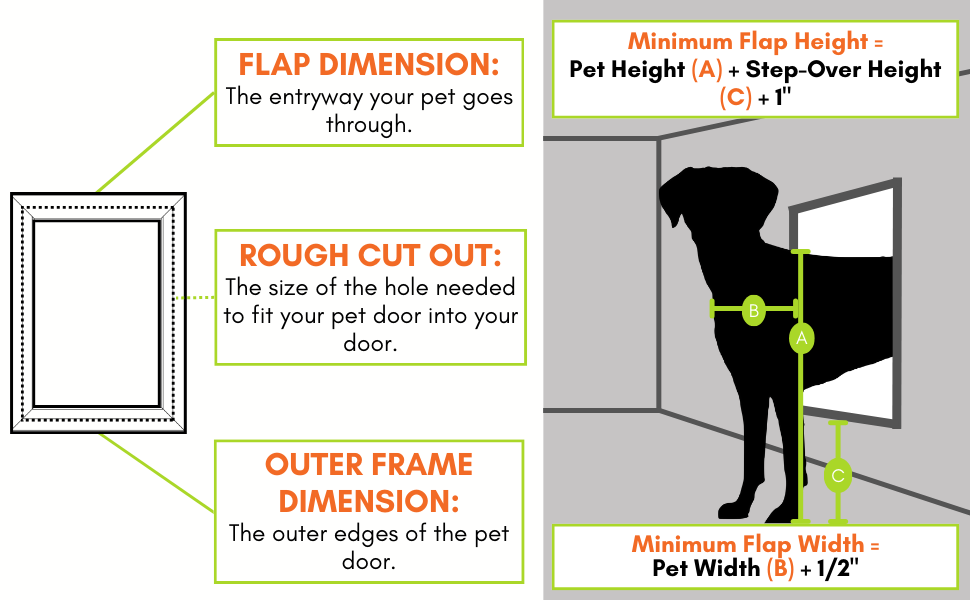
Image Source: cdn.shopify.com
Why Correct Sizing Matters for Pet Doors
Choosing the right size dog door is not just about convenience; it is about safety and comfort. A door that is too small causes your dog to bend, stoop, or squeeze, which can hurt their back, neck, or shoulders, especially in older or arthritic dogs. A door that is too large can lead to energy loss through the opening and may allow small pests or wild animals to enter your home. Getting the proper fit prevents these issues. This dog door sizing guide simplifies the process.
Gathering Your Tools for Accurate Measurement
Before starting, you need a few simple tools. Having these ready makes the pet door measurement instructions much smoother.
- Tape Measure: A standard cloth or metal tape measure works best.
- Ruler or Straight Edge: Helpful for marking points precisely.
- A Helper (Recommended): Having someone to gently hold your dog steady makes taking precise measurements much easier.
- Treats or Toys: To keep your dog calm and cooperative during the process.
- Pen and Paper: To write down the final measurements clearly.
Step-by-Step Guide to Measuring Your Dog
We focus on two main dimensions: height and width. These measurements determine the required size of the flap opening.
Determining the Correct Dog Door Height
The height of the dog door flap must be tall enough for your dog to pass through without ducking their head excessively. We measure your dog at their highest point.
Measuring Dog Height at the Shoulder (Withers)
This is the standard measurement for most dog door fitting guide recommendations.
- Position Your Dog: Have your dog stand squarely on all four paws on a flat, level surface. Ensure they are standing naturally, not leaning or stretching.
- Locate the Withers: The withers are the highest point of your dog’s back, right above the shoulder blades.
- Measure Upwards: Place the end of the tape measure right on the floor, directly below the withers.
- Read the Measurement: Have your helper hold the tape measure straight up to the highest point of the withers. Record this number. This is your baseline height measurement.
Adding the Safety Clearance for Height
Simply matching the flap height to the withers height is not enough. Dogs rarely walk perfectly straight through a door. They often dip their heads slightly as they approach the flap, or they might be walking slightly uphill or downhill outside.
- The Rule of Thumb: Add 1 to 2 inches (2.5 to 5 cm) to the shoulder height measurement.
- For Elderly or Large Breeds: If your dog is very large (Great Dane, Mastiff) or elderly with stiff joints, add the full 2 inches (5 cm) to ensure comfort.
Final Required Flap Height = Withers Height + 1 to 2 inches.
This final number helps determine the correct dog door height needed.
Determining the Dog Door Width Measurement
The width measurement ensures your dog can pass through without scraping their sides or hips. This is especially important for broad-chested or heavily muscled dogs.
Measuring Dog Width at the Widest Point
- Position Your Dog: Again, ensure your dog is standing straight on level ground.
- Identify the Widest Point: For most dogs, the widest point is across the chest, just behind the front legs (the sternum/rib cage area). For some, it might be the hips. Observe which part sticks out the most when your dog turns slightly.
- Measure Across: Measure straight across the body from one side to the other at this widest point. Record this measurement.
Adding Clearance for Width
Unlike height, you don’t need as much extra clearance for width unless your dog is extremely fluffy or has very broad shoulders.
- The Rule of Thumb: Add 1 to 2 inches (2.5 to 5 cm) to the widest point measurement.
- Fluffy Dogs: If your dog has very thick fur (like a Chow Chow or Newfoundland), use the full 2 inches of clearance.
Final Required Flap Width = Widest Point Measurement + 1 to 2 inches.
This final number dictates the dog door width measurement you need to look for in sizing charts.
Dealing with Specific Scenarios
Sometimes, the standard measurement technique isn’t perfectly suited for every pet or situation.
Measuring Puppies and Young Dogs
If you are buying a door for a puppy that will grow into it, you must estimate their adult size.
- Use Breed Charts: Look up the average adult height and width for their specific breed.
- Measure Current Size: Take their current measurements as described above.
- Determine Growth: Calculate the difference between their current size and the estimated adult size.
- Sizing for Growth: Select a door that accommodates the adult dimensions plus the necessary clearance. It is better to buy a door that is slightly too big for a puppy than one that is too small for an adult dog.
Measuring Dogs That Hesitate or Won’t Stand Still
This is where your helper becomes crucial.
- Use a Barrier: If your dog is restless, try measuring them while they are eating or distracted by a favorite toy placed just ahead of them.
- Marking the Floor: If you can’t measure the height accurately, mark the floor directly beneath their withers and their widest point. Then, use a wall or another straight object held against them to measure vertically against a wall using a standard ruler.
Converting Measurements to Dog Door Sizing Guides
Once you have your final required flap dimensions (Height and Width), you need to compare them to available products. Manufacturers rarely list doors by “dog size”; instead, they list the actual dog door cutout dimensions (the hole you cut in your door or wall) and the flap size itself.
Interpreting Standard Dog Door Sizes
Most manufacturers offer doors in Small, Medium, Large, and Extra-Large categories. Use this table as a general guideline for relating your pet’s measurements to standard dog door sizes. Always confirm the exact flap opening size provided by the specific manufacturer.
| Dog Door Size Category | Typical Flap Opening Height (Approx.) | Typical Flap Opening Width (Approx.) | Best Suited For (General) |
|---|---|---|---|
| Small | 10″ – 12″ | 8″ – 10″ | Terriers, Chihuahuas, Small Breeds |
| Medium | 12″ – 14″ | 10″ – 12″ | Beagles, Cocker Spaniels, Medium Mixes |
| Large | 14″ – 17″ | 12″ – 14″ | Labs, Golden Retrievers, Border Collies |
| Extra-Large (X-Large) | 17″ – 20″+ | 14″ – 17″+ | Great Danes, Mastiffs, Very Large Breeds |
Example: If your correct dog door height calculation yielded 15.5 inches and your required width was 13 inches, you would be looking for a door rated as Large or XL, but you must verify the actual flap opening size matches or slightly exceeds your calculated needs.
Fathoming Cutout Dimensions vs. Flap Size
Be careful when shopping. The dimensions listed on the box often refer to one of three things:
- Flap Opening Size: The clear space your dog steps through (This is what you based your measurements on).
- Rough Cutout Dimensions: The size of the hole you must cut into the material (wall, door, etc.). This is always smaller than the outer frame of the door.
- Overall Frame Size: The total external size of the installed door unit.
Always prioritize finding the Flap Opening Size measurement when comparing it to your calculated needs. The product description should clearly state what the dimensions refer to.
Final Checks Before Purchasing
After determining the size you need, perform these final checks based on your dog door fitting guide needs.
Door Type Consideration
The type of door you choose can slightly affect the required clearance.
- Standard Flap Doors: These are the easiest to measure for, as the clearance needed is simply the physical opening.
- Double Flap Doors (Energy Efficient): These have two flaps that meet in the middle. They often create a slightly tighter passage. If you are using a double flap door, consider adding an extra half-inch (0.5″) to your required width measurement, especially if your dog is barrel-chested.
Location of Installation
Where the door is being installed affects the required height of the frame, not necessarily the flap opening size.
- Installation on a Standard Interior Door: The bottom of the dog door frame usually sits close to the floor, maybe 1 inch up.
- Installation on a Wall (Exterior): If installing in a wall, the bottom of the frame needs to sit higher to clear the interior threshold and the exterior sill. This means the top of the frame might be higher up the wall than if installed on a standard door.
The dog door cutout dimensions will tell you exactly how high the top of the rough opening needs to be based on the model you select. Ensure the height from the floor to the top of the frame won’t interfere with furniture or window sills inside your house.
Summary of Key Measurement Rules
To ensure you have covered all bases when how to measure your dog for a flap door, review these critical additions:
| Measurement Component | Dog Must Be… | Add Clearance (For Flap Size) | Why? |
|---|---|---|---|
| Height | Standing naturally on level ground. | 1″ to 2″ (More for older/large dogs) | To allow for natural head dip when entering/exiting. |
| Width | Standing naturally, facing forward. | 1″ to 2″ (More for fluffy dogs) | To prevent scraping shoulders or hips. |
By following these precise pet door measurement instructions, you significantly increase the chances of a smooth installation and a happy, comfortable pet using their new door for years to come.
Frequently Asked Questions (FAQ) About Dog Door Sizing
What is the general rule for determining the correct dog door height?
The general rule is to measure your dog from the floor to the highest point of their shoulder (the withers) while they are standing squarely. Then, you must add at least one inch, and preferably two inches, to this measurement to ensure your dog doesn’t have to crouch uncomfortably.
How do I measure my dog if they are very nervous or won’t stand still?
If your dog is uncooperative, try measuring them when they are distracted, such as while eating or focused intently on a toy. Alternatively, you can have a helper gently hold a yardstick or straight edge against their side while you measure the height from the floor up to the top edge against a flat wall surface.
Can I buy a dog door based on the breed size chart alone?
While breed charts give you a starting point for standard dog door sizes, it is never recommended to rely solely on them. Dogs within the same breed can vary significantly in size. Always take your dog’s individual measurements first, and then use the breed chart only as a cross-reference.
What are dog door cutout dimensions?
The dog door cutout dimensions are the exact measurements of the hole you must physically cut into your wall, door, or panel to fit the dog door frame securely. These dimensions are usually slightly smaller than the overall outside frame of the actual pet door unit. Always check the manufacturer’s specifications for the required cutout size before cutting into anything.
Does the door size change if I select a magnetic flap versus a rigid flap?
The required opening size dictated by your dog’s body (height and width) remains the same regardless of the flap type. However, if you select a double-flap, energy-efficient door, you might want to add an extra half-inch to your calculated width measurement because the two flaps meeting in the middle reduce the usable passage space slightly.