
Imagine waking up every single day feeling overwhelmed by anxiety or invisible mental health battles. For many people, a Psychiatric Service Dog (PSD) is not just a pet; it is a life-changing partner that offers independence and calm. These highly trained dogs perform specific tasks to help their handlers navigate a world that often feels too loud or chaotic to manage alone.
However, the journey to finding the right training program is often filled with confusion. You might feel lost searching through endless websites, expensive trainers, and conflicting advice. It is difficult to know which methods are safe and effective when your mental well-being is on the line. Choosing the wrong path can waste your time, your money, and your hope.
In this guide, we will clear away the confusion. We break down exactly what you need to look for in a trainer and how to spot the red flags early on. You will learn how to build a strong foundation for your future service dog, ensuring you get the support you truly deserve. By the end of this post, you will feel confident and ready to take the next step in your training journey.
Let’s dive into the essential steps for choosing the perfect training plan for you and your dog.
Top Psychiatric Service Dog Training Recommendations

- HURD, MARK (Author)
- English (Publication Language)
- 147 Pages - 07/22/2025 (Publication Date) - Independently published (Publisher)

- Peterson, Willow (Author)
- English (Publication Language)
- 184 Pages - 11/17/2024 (Publication Date) - Independently published (Publisher)

- Fleming, Lincoln (Author)
- English (Publication Language)
- 130 Pages - 08/11/2025 (Publication Date) - Flora & Water Publishing (Publisher)

- Gonzalez, Katie (Author)
- English (Publication Language)
- 95 Pages - 09/24/2013 (Publication Date) - lulu.com (Publisher)

- Hack, Jennifer (Author)
- English (Publication Language)
- 166 Pages - 06/16/2020 (Publication Date) - Callisto (Publisher)

- Grace, Keagen J. (Author)
- English (Publication Language)
- 280 Pages - 03/17/2020 (Publication Date) - Skyhorse (Publisher)
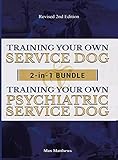
- Hardcover Book
- Matthews, Max (Author)
- English (Publication Language)
- 450 Pages - 12/09/2019 (Publication Date) - Tyler MacDonald (Publisher)

- HURD, MORGAN J. (Author)
- English (Publication Language)
- 263 Pages - 05/08/2025 (Publication Date) - Independently published (Publisher)
The Ultimate Guide to Psychiatric Service Dog Training
A psychiatric service dog (PSD) provides life-changing support for people with mental health disabilities. These dogs perform specific tasks to help their handlers manage conditions like PTSD, anxiety, or depression. Choosing the right training program is a big step. This guide helps you navigate the process of finding the best training for your dog.
Key Features to Look For
When you evaluate a training program, look for these essential features:
- Task-Specific Training: The program must teach your dog to perform tasks directly related to your disability. Examples include deep pressure therapy, room clearing, or interrupting panic attacks.
- Public Access Skills: A service dog must behave perfectly in public. Look for training that focuses on ignoring distractions and staying calm in crowded places.
- Positive Reinforcement: Choose trainers who use rewards like treats and praise. This builds a strong bond between you and your dog.
- Customization: Every handler has different needs. A good program tailors the training to your specific lifestyle and symptoms.
Important Materials and Tools
Success depends on having the right gear. You will likely need:
- Service Dog Vest: This identifies your dog as a working animal in public spaces.
- Clickers or Markers: These help you communicate clearly with your dog during training sessions.
- High-Value Treats: Use these to motivate your dog when they learn a new task.
- Long Leashes and Harnesses: These tools help you maintain control during outdoor practice sessions.
Factors That Impact Quality
Not all training programs are equal. Quality is often determined by these factors:
- Trainer Experience: Does the trainer have experience with service dogs specifically? Look for certifications from reputable organizations.
- Consistency: Training must be repeated daily. If a program relies only on one weekly class, it might not be enough.
- Environment: Training should happen in real-world settings. A dog that only listens in a classroom might fail at the grocery store.
User Experience and Use Cases
Training a PSD is a journey that takes time and patience. Many handlers start by teaching basic obedience before moving to complex tasks. You might use your dog to help you feel safe in a crowd or to alert you when your heart rate rises. The ultimate goal is independence. A well-trained dog acts as a bridge, helping you participate in daily activities with confidence.
10 Frequently Asked Questions
Q: Does my dog need to be a specific breed?
A: No. Any breed can be a service dog as long as they have the right temperament and ability to perform tasks.
Q: How long does training take?
A: It usually takes 12 to 24 months to fully train a psychiatric service dog.
Q: Can I train the dog myself?
A: Yes, you can owner-train a service dog. However, many people find it helpful to work with a professional trainer for guidance.
Q: Does my dog need a special certificate?
A: There is no official government “service dog ID.” However, your dog must meet legal standards by being trained to perform specific tasks.
Q: What is the difference between a PSD and an Emotional Support Animal (ESA)?
A: A PSD is trained to perform tasks for a disability. An ESA provides comfort through presence alone and does not have the same public access rights.
Q: How much does training cost?
A: Costs vary widely. Professional programs can cost thousands of dollars, while owner-training with a private coach is often more affordable.
Q: What if my dog gets distracted in public?
A: This is part of the training process. You should continue to practice “focus” commands in low-distraction areas first.
Q: Can a puppy be a service dog?
A: You can start basic training with a puppy, but they are usually not ready for full service work until they are older and more mature.
Q: Where can I take my PSD?
A: Under the ADA, service dogs are allowed in almost all public areas, including restaurants, stores, and hospitals.
Q: How do I know if my dog is ready for public access?
A: Your dog is ready when they can reliably ignore all distractions and focus entirely on you in busy environments.