
When a dog licks your nose, it is most often a sign of affection, a desire for attention, or a way of communicating a need, such as wanting food or water.
Dogs lick faces for many reasons. This common behavior is a rich part of canine communication nose licking. It is not just a random act. It tells us a lot about how our dogs feel and what they want. For many dog owners, getting that wet, quick lick right on the nose is a special moment. But what is behind this action? Let’s explore the deep roots of dog nose licking behavior.
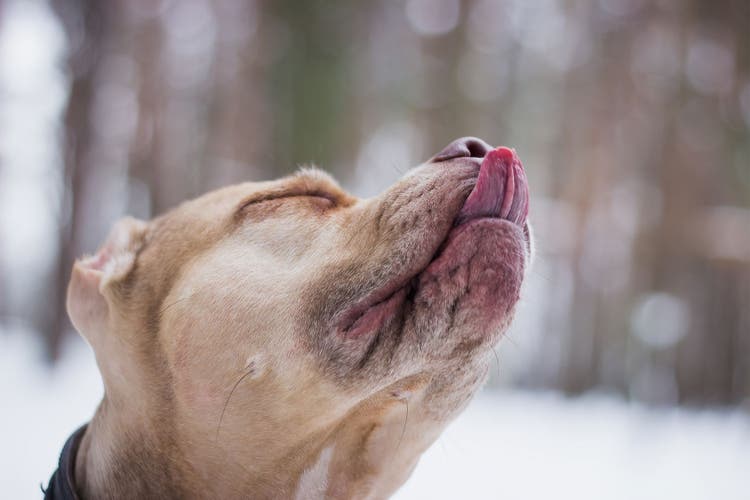
Image Source: www.petplace.com
The Evolutionary Roots of Licking Behavior
To grasp why dogs lick our faces, we must look back in time. This habit is deeply wired into their nature.
Puppy Licking Nose Behavior: A Survival Instinct
For puppies, licking the mother dog’s face is vital. When a mother dog returns from hunting, her puppies greet her. They lick her muzzle. Why? This licking prompts the mother to bring up food for them. It is a clear, learned survival signal.
This early behavior sets the stage for adult dog licking human face interpretation. The act moves from being purely about food to being about social bonding.
Pack Dynamics and Social Grooming
In a dog’s wild social group (a pack), licking serves several social roles.
- Greeting Rituals: A lower-ranking dog might lick a higher-ranking dog’s mouth or face. This shows respect and deference. It says, “I mean no harm.”
- Affection and Bonding: Licking also strengthens social ties. It is a form of mutual grooming. This builds trust within the group. When your dog licks you, they may be treating you as a valued member of their pack. This is a clear sign of dog licking and affection.
Fathoming Why Dogs Lick Faces: A Spectrum of Meanings
The simple act of a dog licking a human face can mean many things. It is important to look at the context. Reasons dogs lick faces are varied.
Attention Seeking
Often, the simplest answer is the right one. If you react strongly every time your dog licks your face—even if you push them away—you are giving them attention.
- Dogs learn quickly what actions get a response.
- If licking gets them a smile, a touch, or even a playful shout, they will repeat it.
- They want to engage with you. They are saying, “Hey! Look at me!”
Showing Submission or Deference
When a dog licks a person’s face, especially the mouth or nose area, it can be a sign of respect. This ties back to pack behavior. You are the leader of the household “pack.” Your dog might be showing you that they respect your position. This is a key part of interpreting dog licking.
Taste and Scent Investigation
Dogs explore the world with their noses and mouths. Your face holds a wealth of interesting scents.
- We sweat. We eat. Our skin has unique smells.
- Licking is their way of “tasting” these scents. They might be checking what you had for lunch or if you just came in from outside.
- The nose is particularly interesting because it holds salt from sweat and residue from breathing.
Stress and Anxiety Relief
For some dogs, licking is a self-soothing behavior. If a dog feels anxious or overwhelmed, licking can calm them down. This is known as displacement behavior. If you notice excessive dog nose licking tied to specific stressful events, it might signal anxiety.
| Context Clue | Possible Meaning | Recommended Action |
|---|---|---|
| Licking when you enter the room | Greeting, excitement | Calmly return the greeting. |
| Licking when you are eating | Desire for food | Never feed from the table. Redirect to a toy. |
| Licking when you look away | Seeking attention | Ignore the licking, reward quiet behavior. |
| Licking during a thunderstorm | Anxiety, comfort seeking | Provide a safe, quiet space. |
The Specific Significance of Nose Licking
While licking the cheek or hand is common, a direct lick on the nose holds special weight. Why focus right there?
The Salty Spot
As mentioned, the nose collects scents and moisture. It can be slightly salty from the skin. Dogs are drawn to this salty taste. This is a simple, physical attraction.
Direct Eye Contact Substitute
When a dog licks the nose, they are close to your eyes. In dog language, direct, prolonged staring can be a challenge. A gentle nose lick can be a less confrontational way to engage closely. It is an intimate form of greeting that avoids the intensity of a hard stare. This directly impacts dog licking and affection.
Seeking a Response (The “Wake-Up Call”)
If a dog needs something urgently—like needing to go outside or realizing their water bowl is empty—a quick, sharp lick to the nose is an effective way to get a fast reaction from a sleeping or distracted human. It’s direct and hard to ignore. This often explains the behavior in puppy licking nose behavior when they are young and need their mother.
Health and Hygiene Considerations
While most reasons dogs lick faces are behavioral, there are practical things to consider.
Is It Safe?
Generally, a quick lick is harmless for a healthy person. However, if your dog licks your face right after eating something questionable off the floor, there is a risk of transferring bacteria.
- Dogs’ mouths carry bacteria, including Pasteurella species.
- If you have a weakened immune system, open cuts on your face, or are elderly or very young, it is best to redirect the licking.
When is Licking Too Much?
Excessive dog nose licking needs attention. If your dog licks your face relentlessly, even when you try to stop them, it might be masking a deeper issue.
- Compulsive Disorder: In rare cases, excessive licking can become obsessive-compulsive. This usually shows up as obsessive licking on their own body too.
- Medical Need: Sometimes, a dog licks intensely because they detect something unusual on your skin, like a strange smell related to a rash or illness. Always check your skin if the licking becomes persistent and focused.
When figuring out why does my dog lick my face, if the behavior seems frantic rather than friendly, consult your vet or a behaviorist.
How to Manage and Redirect Face Licking
You don’t have to let your dog lick your face if you don’t like it. The key to changing the behavior is consistency and positive reinforcement. This is crucial for effective interpreting dog licking.
Step 1: Stop Rewarding the Behavior
If you do not want the licking, you must stop giving it any positive outcome.
- Turn Away: The second the tongue touches your face, calmly stand up and turn your back. Do not say anything. Do not push or shout. Just leave the interaction zone.
- The Freeze Method: If you are sitting, simply freeze and look up toward the ceiling. Make yourself uninteresting. This removes the reward (your attention).
Step 2: Teach an Alternative Behavior
Dogs need to know what to do instead of what not to do. Teach your dog an incompatible behavior.
Teaching “Kisses” on Command (A great redirection!)
- Wait for a quiet moment.
- Hold a small, high-value treat near your knee or elbow (not your face).
- When the dog moves to lick your face, redirect them to lick your knee instead.
- As soon as their tongue touches your knee, say “Kiss!” or “Lick!” and give them the treat.
- Practice this many times. Soon, they will offer the knee lick when they want attention.
This gives you control over the behavior, channeling their need for closeness into an acceptable spot. This helps in dog licking human face interpretation because the dog learns a specific cue for affection.
Teaching “Off”
If the dog jumps up to lick, use a firm, calm “Off.” As soon as all four paws are on the floor, immediately reward them with praise or a gentle scratch under the chin (away from the face).
Deciphering Different Dog Personalities Through Licking
The way a dog licks can tell you about its personality and current mood.
The Enthusiastic Lapper
This dog licks quickly, often covering a large area. They are usually highly social, very happy to see you, and possibly very excitable. They are expressing pure joy. This is a classic example of dog licking and affection.
The Delicate Licker (The “Taste Tester”)
This dog gives one or two very soft, brief licks, often focused precisely on the corner of the mouth or the tip of the nose. They might be investigative, trying to get a scent without being intrusive. They are often more reserved or thoughtful dogs.
The Persistent Licker
This dog seems unable to stop licking until you physically move away or cover your face. If this is new behavior, it warrants a check-in about their environment. Is there stress? Has their routine changed? This leans toward the excessive dog nose licking category and might need behavior modification.
The Puppy Licker
Young dogs are learning social rules. Puppy licking nose behavior is often exploratory and based on instinct. They are trying out different ways to interact with their new pack (you!). They need gentle, consistent guidance on where face licking is acceptable and where it is not.
Comparing Human and Canine Communication
It is easy to misread dog behavior through a human lens. We value a kiss as the ultimate sign of love. Dogs express affection differently.
| Human Interpretation of Licking | Actual Canine Intent |
|---|---|
| “They are giving me a loving kiss.” | Social bonding, affection, pack inclusion. |
| “They are trying to steal my food.” | Investigating smells, tasting residual flavors. |
| “They are apologizing for being bad.” | Submission, showing deference, seeking peace. |
| “They are saying hello.” | Greeting ritual, marking territory with scent. |
The commonality is that in almost all scenarios, the dog is initiating a connection. They are reaching out to you using their most natural tools. Learning interpreting dog licking helps build a stronger relationship.
Advanced Factors Influencing Licking
Sometimes the frequency of dog nose licking behavior changes based on internal states we might not immediately notice.
Hormonal Influences
Hormones affect behavior. A sudden increase in licking might coincide with changes in a dog’s internal state, though this is less common than environmental factors. For instance, a sudden urge to seek comfort might increase licking if the dog is feeling insecure.
Learned Association
Dogs excel at creating complex associations. If you always give them a special treat immediately after they sit quietly while you work, they might associate your concentration (sitting still at a desk) with the need to seek attention. If you then try to ignore the face lick, they may try harder because they learned that sustained effort eventually pays off. This shows how subtle dog licking human face interpretation can be.
Breed Tendencies
While licking is universal, some breeds are known to be more outwardly affectionate or demanding of attention than others. High-energy, highly social breeds (like Retrievers or some Terriers) might be more prone to enthusiastic face licking than reserved breeds. However, environment always plays a bigger role than breed alone.
Conclusion: Cherishing the Connection
The nose lick is a fascinating, complex piece of the puzzle of canine communication nose licking. Whether driven by ancestral instinct, a desire for a salty snack, or simple, overwhelming love, when your dog licks your nose, they are affirming your bond.
By observing the context—when it happens, how intensely it occurs, and what happens before and after—you can gain a clearer picture of what does it mean when a dog licks your nose. It is a request, a greeting, and a loving gesture all wrapped up in one wet swipe. By responding thoughtfully, you honor that communication and strengthen the unique connection you share with your canine companion.
Frequently Asked Questions (FAQ)
Is it bad if my dog licks my nose?
Generally, no, it is not bad. It is usually a sign of affection or attention-seeking. However, if you are immunocompromised or have open sores, it is best to redirect the licking to a different area, like your hand.
Why does my dog lick my face only when I wake up?
This is common. When you wake up, you are usually still for a long time, and your breath and skin scents have changed overnight. Your dog is likely greeting you enthusiastically, checking your scent, and trying to prompt you to start the day (and therefore, breakfast!). This is a strong display of dog licking and affection.
Can a dog lick me because it wants to give me a kiss?
Yes, in the context of dog licking human face interpretation, an affectionate lick is the closest behavior dogs have to a human kiss. It signals high social bonding and acceptance.
How do I stop excessive dog nose licking?
To curb excessive dog nose licking, you must consistently remove the reward. Turn your body away immediately. Never give attention (even negative attention like shouting) while the licking is happening. Immediately reward the dog when they offer a different behavior, like sitting or gently licking your hand instead.
Are there specific health reasons why a dog might suddenly start licking faces more?
While rare, a sudden, noticeable increase in any intense licking behavior should be noted. Sometimes a dog might be reacting to a change in your body chemistry (smells associated with illness or extreme stress). If the licking seems obsessive and directed only at faces, consult your veterinarian to rule out medical causes, although behavior issues are far more common. This falls under analyzing dog nose licking behavior changes.