
If your dog is pooping inside, it means something has changed. This might be a health issue, a training problem, or stress. We need to look closely at the reasons dogs poop indoors to fix the problem quickly.
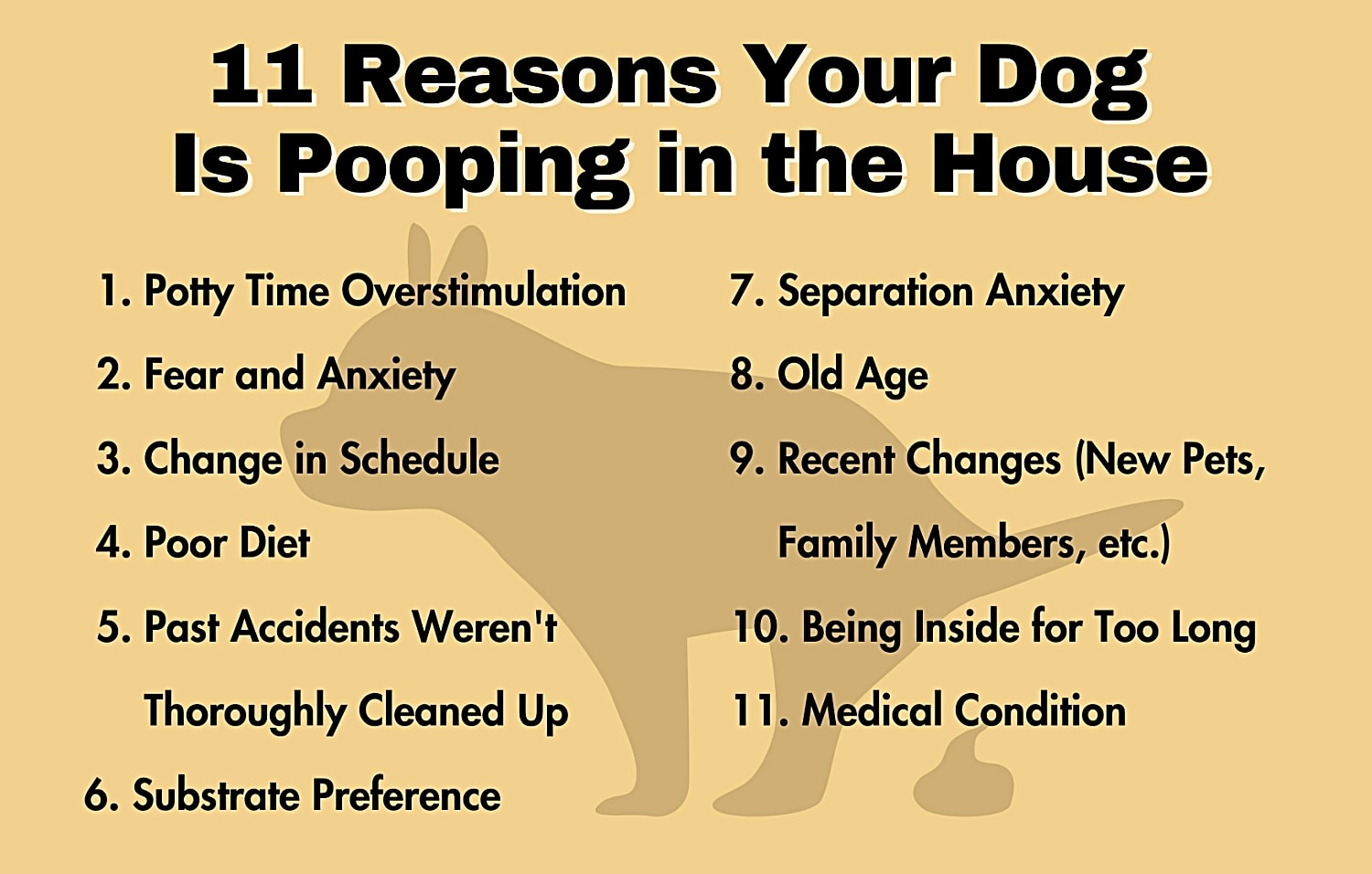
Image Source: pethelpful.com
Grasping the Core Issues Behind House Soiling
When a dog starts having house soiling issues, it is rarely done out of spite. Dogs do not think about making their owners angry. Instead, indoor potty accidents are signals. They tell us something is wrong in the dog’s world or body. Solving dog pooping inside requires patience and detective work. We must explore the main causes for this change in behavior.
Medical Problems Leading to Inappropriate Elimination
The very first step when you see sudden indoor urination and defecation is a vet visit. Pain or illness can stop a dog from holding it or knowing where to go.
Common Health Factors
Many sicknesses can cause a dog to lose control of its bowels.
- Infections: Simple gut bugs can cause fast, urgent bathroom needs.
- Diet Changes: A sudden switch in food can upset the stomach greatly.
- Internal Parasites: Worms can irritate the gut lining.
- Age-Related Issues: Older dogs might get conditions like canine cognitive dysfunction (doggie dementia). This makes them forget house rules. They might also have trouble moving quickly enough to get outside.
- Inflammatory Bowel Disease (IBD): This causes long-term tummy troubles and urgent bathroom trips.
If the vet rules out sickness, we can focus on behavior and training.
Behavioral Causes of Indoor Potty Accidents
When the body is healthy, the focus shifts to the mind and environment. Many things can cause house training regression or new inappropriate elimination.
Stress and Anxiety
Dogs are sensitive to change. Stress is a huge factor in potty accidents.
- Separation Anxiety: If the dog only poops when left alone, this is a likely cause. They may feel panicky and lose control.
- Environmental Changes: Moving to a new home, getting a new pet, or even big furniture changes can stress a dog out.
- Loud Noises: Thunderstorms or fireworks can trigger fear, leading to accidents.
Incomplete House Training
Sometimes, the training was never fully finished. This is common with puppy peeing in house situations that continue longer than expected.
- Inconsistent Schedule: If the dog is not taken out often enough, they will have accidents.
- Punishment During Training: Yelling or rubbing a dog’s nose in an accident creates fear. The dog learns to hide when needing to go, not how to go outside. They may sneak off to poop where you cannot see them.
- Not Enough Potty Breaks: Young puppies need to go out every hour or two. Adult dogs that are busy playing might hold it too long.
Marking Territory
Some dogs, especially intact males, may lift their leg to pee or squat to poop inside to mark their space. This is more common with urine, but sometimes feces marking happens, often near doors or windows.
Deciphering the Difference: House Soiling vs. Regression
It is crucial to tell if this is a brand-new issue or a return to bad habits. The path to training a dog not to go inside changes based on this.
| Scenario | Description | Likely Cause |
|---|---|---|
| New Issue | A fully trained adult suddenly starts having accidents. | Medical problem or sudden stressor. |
| Regression | A dog that was reliable starts having accidents again. | Schedule change, owner absence, or mild anxiety. |
| Puppy Issue | Accidents happen frequently in a young dog. | Normal development or inconsistent potty breaks. |
Exploring House Training Setbacks
House training setbacks happen when a dog regresses on what they learned. Why does this happen?
- Illness Recovery: Even after a vet visit, the dog might still be weak or have lingering urgency.
- Change in Routine: If you go back to work after a long break, your dog might not manage the long stretch alone.
- New Areas: If you start letting the dog have free roam of the house, they might pick a new “safe” spot that isn’t the yard.
Steps to Solve Indoor Potty Accidents
Once health issues are cleared, solving the problem involves management, correction, and positive reinforcement.
Management: Preventing Accidents Before They Happen
Management is about setting your dog up for success. If they cannot have an accident, they cannot practice the bad habit.
Strict Supervision
When you suspect an accident might happen, the dog must be watched constantly.
- Tethering: Keep your dog on a leash attached to your belt while inside. This keeps them near you so you can see the signs they need to go.
- Crate Training: If you cannot watch the dog, they should be safely in a crate or a small, safe puppy-proofed pen. Dogs naturally avoid soiling their sleeping area.
- Frequent Trips Outside: Set a timer. Take your dog out every 30 to 60 minutes initially, no matter what.
Cleaning Up Correctly
If you do find an accident, cleaning is vital. Dogs are driven by scent. If the spot smells like a potty area, they will use it again.
- Use Enzymatic Cleaners: Standard soap will not remove the odor fully for a dog’s nose. You must use a cleaner specifically made to break down organic waste.
- Avoid Ammonia: Ammonia smells like urine to a dog, making the spot more attractive.
Never Punish Accidents
This is the most important rule for training a dog not to go inside. If you find a mess later, say nothing. If you catch them in the act, interrupt with a sharp noise (like a clap) and immediately rush them outside to finish. Praise heavily if they finish outside.
If you punish them, they learn to fear you when they eliminate. This leads to hiding, which makes the dog pooping inside problem worse.
Re-Establishing House Training Basics
If you have a case of house training regression, it is best to go back to the very start of house training, even for an adult dog.
Create a Predictable Schedule
Consistency is the magic word. Dogs thrive on routine. Take your dog out at these key times:
- First thing in the morning.
- After waking up from any nap.
- Five to fifteen minutes after eating or drinking.
- After any active play session.
- Right before bedtime.
When they go potty outside, use a special, excited voice and offer a high-value treat immediately. Make going outside the best thing that can happen all day.
The “Potty Party” Technique
This technique boosts the reward value of going outside.
- Take the dog to the chosen potty spot on a leash.
- Wait patiently. Do not play or talk too much.
- The second they finish the business, throw a “Potty Party!”
- Use happy words (“Good potty! Yes!”), give a favorite treat, and then immediately start a short play session outside.
- This teaches them: “Potty outside = Fun and treats happen right now.”
Addressing Anxiety-Related Soiling
If stress is the root of the inappropriate elimination, management needs to address the fear, not just the output.
Identifying Triggers
Keep a log of when accidents happen. Do they only happen when a specific person leaves? Is it always when the mail truck drives by? Knowing the trigger is the first step.
Creating Safe Spaces
If separation anxiety is the cause, the crate or pen should be a happy, safe den, not a jail.
- Feed meals in the crate.
- Give long-lasting chews only when they are in the crate.
- Never use the crate for punishment.
For general stress, consult a vet about anti-anxiety aids or talk to a certified animal behaviorist. Calming pheromone diffusers or special vests can sometimes help dogs feel more secure indoors.
Special Concerns: Puppy Peeing in House vs. Adult Accidents
The approach for a young dog is different from one for an older dog suddenly having sudden indoor urination and defecation.
Young Puppies
Puppy peeing in house is often due to bladder size and learning curve.
- Bladder Control: A puppy’s bladder is small. A good rule of thumb is they can hold it for one hour per month of age (e.g., a 3-month-old can hold it for about 3 hours max).
- Focus Training: When training a puppy, keep training sessions short and fun. Do not expect a puppy to “hold it” during playtime.
- Supervise Play: When the puppy is awake and playing, they should be tethered to you. If they start circling or sniffing the ground oddly, pick them up immediately (do not scare them) and rush them outside.
Older Dogs Experiencing Sudden Changes
For senior dogs, inappropriate elimination is a red flag.
- Mobility Issues: Arthritis or hip pain might make it too hard to get outside quickly or climb stairs. Make sure they have easy, quick access to the yard, perhaps a ramp instead of stairs.
- Medical Check: Always re-check senior dogs yearly. Conditions like diabetes or kidney disease increase thirst and urination frequency, making accidents common.
- Cognitive Decline: If the dog seems confused or forgets familiar routines, they might need gentle reminders and management, similar to training a puppy again.
Advanced Tactics for Stubborn House Soiling
If simple schedule changes do not work, deeper behavior modification is needed.
Using “Go Potty” Cues
We teach dogs to go on cue on walks. We can apply this indoors too, to prompt the behavior outside.
- When you take the dog out, wait for them to start eliminating.
- As they are going, softly say your cue word (e.g., “Go potty,” or “Hurry up”).
- Reward heavily once they finish.
- The dog learns the word signals the action. If they hesitate outside, use the cue. This helps if they are too distracted to go outside.
Managing Free Roam Areas
A common cause of house soiling is giving the dog too much space too soon. If your dog has access to the entire house, they can easily sneak away to poop behind a chair unnoticed.
- Restrict Access: Keep new or recently rehabilitated dogs to a small, easily monitored area (like a kitchen or laundry room) with easy-to-clean floors.
- Increase Freedom Slowly: Only allow access to a new room after several weeks of perfect behavior in the restricted zone. This builds reliability slowly.
When to Involve Professionals
Sometimes, the effort required to fix severe house training setbacks is beyond what a typical owner can manage alone.
- Veterinary Behaviorist (DACVB): For severe anxiety or compulsive behaviors contributing to the soiling.
- Certified Professional Dog Trainer (CPDT-KA) or Behavior Consultant (CBCC-KA): For complex training issues that need tailored step-by-step plans for training a dog not to go inside.
These experts can assess subtle environmental cues you might miss.
FAQ Section on House Soiling
Q: How long does it take to fix house training regression?
A: It depends on the cause. If it is just a change in routine, it might take one to two weeks of strict adherence to a new schedule. If it involves deep anxiety or medical recovery, it could take several months of consistent work. Be patient; consistency wins out over time.
Q: My dog only poops inside when I leave. Is this spite?
A: No, this is almost certainly separation distress or anxiety, not spite. The dog feels so worried when alone that they cannot control their body functions. Focus on making alone time less scary for them, perhaps with specific chew toys only given when you leave.
Q: Should I use puppy pads if I cannot stop the puppy peeing in house accidents?
A: Generally, using puppy pads confuses the house training process. The pad teaches the puppy that soft, absorbent material indoors is acceptable for going potty. It is usually better to stick to going outside only. If you must use an indoor spot due to severe mobility limits, use a designated litter box with real grass squares, which mimics the texture of the outdoors better than plastic pads.
Q: What if my dog has an accident right after coming in from outside?
A: This usually means the dog did not empty their bladder or bowels completely outside. They might have been too distracted by smells or play. When you get back inside, calmly wait 5-10 minutes, and then take them right back out for another try. Reward them heavily if they go the second time. This addresses the problem of incomplete elimination.
Q: Why does my dog poop in the house only at night?
A: If this is new, medical causes (like increased water intake or kidney issues) must be checked first. If health is fine, it may relate to their sleep schedule or anxiety. Ensure the dog has a very late potty break just before you go to bed. If the dog has free run of the house overnight, restrict them to their crate or a small area near your bedroom so you can hear them if they wake up needing to go.