
Choosing the correct dog crate size means finding a crate where your dog can stand up, turn around easily, and lie down fully stretched out. Getting the right fit is vital for your dog’s comfort and safety. A crate that is too small causes distress. A crate that is too big can encourage bad habits, like potty accidents in one corner. This guide will help you measure your dog and select the perfect space for them. We will explore the essential factors involved in the dog crate size guide, making the process simple and stress-free.
Image Source: assets.petco.com
Why Crate Size Matters So Much
The crate serves several purposes for your dog. It is a safe den, a tool for house training, and necessary for travel. When the size is wrong, these benefits disappear.
Comfort and Well-being
A dog needs room to be comfortable. If they cannot move, they will feel trapped. This stress can lead to fear of the crate. A properly sized crate feels like a secure home base. Dogs naturally want a small space to rest. But this space must still allow natural movement.
Effective House Training
House training relies on a dog’s instinct not to soil their sleeping area. If the crate is too large, your dog might use one end as a bed and the other as a bathroom. This defeats the purpose of crate training. Choosing correct dog crate size ensures they only have space to sleep comfortably. This encourages them to hold their bladder or bowels until let out.
Safety During Travel
For vehicle or air travel, the crate size is critical for safety. A crate that is too small can cause injury during sudden stops. A crate too large might allow the dog to shift too much during turbulence, which can be dangerous. Safety standards often dictate specific sizes for air travel.
Measuring Your Dog for the Right Crate
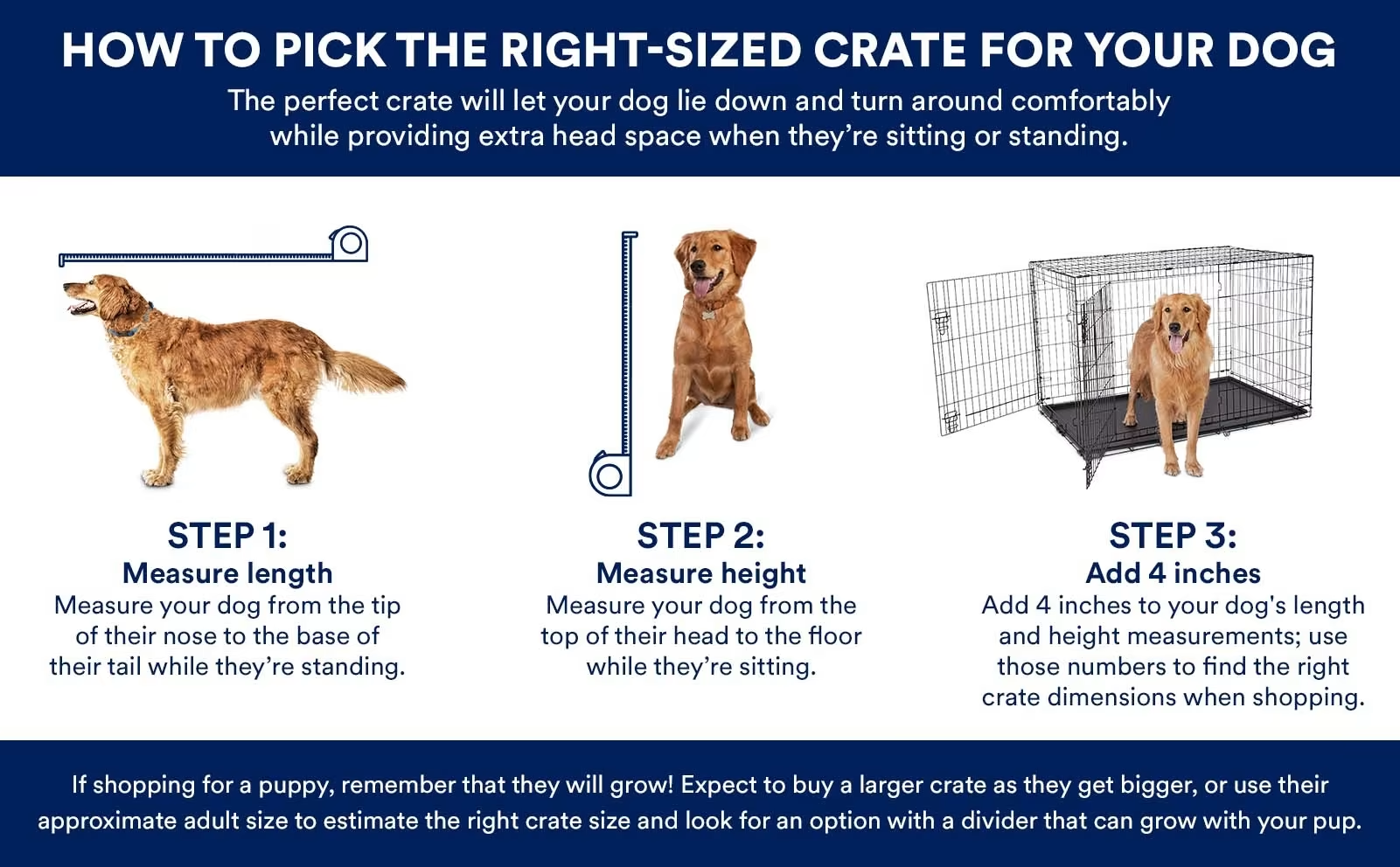
The best way to select a crate is to start with your dog’s measurements. Do not rely solely on breed guidelines, as dogs within the same breed can vary greatly in size. You need to measure two things: length and height.
How to Measure Your Dog for Crate Size
Grab a soft measuring tape. Have a helper keep your dog standing still, facing forward. This ensures accurate results.
1. Measuring Height
Measure your dog from the floor to the top of their head or the tips of their ears, whichever is highest, while they are standing naturally. Use the taller measurement.
2. Measuring Length
Measure your dog from the tip of their nose all the way to the base of their tail. Again, keep the dog standing squarely.
Calculating Required Crate Dimensions
Once you have these two numbers, you need to add extra space to ensure comfort and easy movement. This extra room is key for long-term use and for puppies who will grow.
- Length Requirement: Add 4 to 6 inches to your dog’s measured length. This lets your dog stand up and turn around without hitting the sides.
- Height Requirement: Add 2 to 4 inches to your dog’s measured height. This allows them to stand up fully without hunching their backs or pressing their heads against the top.
Measuring dog for crate size correctly avoids guesswork. These final dimensions tell you the minimum internal size of the crate you should look for.
Dog Crate Dimensions for Breed and Growth
While individual measurement is best, knowing the average size for your breed helps narrow down choices. Dog crate dimensions for breed offer a good starting point.
Crate Sizing for Adult Dogs
Most crate manufacturers use standard sizing based on common breed weights and heights. Always cross-reference these charts with your own dog’s measurements.
| Breed Example (Adult) | Average Height (Floor to Top of Head/Ears) | Average Length (Nose to Tail Base) | Recommended Crate Size (Inches) |
|---|---|---|---|
| Chihuahua | 6–8 inches | 9–11 inches | 24L x 18W x 19H |
| Beagle | 13–15 inches | 20–24 inches | 30L x 21W x 24H |
| Labrador Retriever | 21–24 inches | 28–32 inches | 42L x 28W x 30H |
| German Shepherd | 22–26 inches | 32–36 inches | 48L x 30W x 33H |
| Great Dane | 28–32 inches | 40–46 inches | 54L x 36W x 38H |
Use this table as a reference, but always measure your specific pet.
Puppy Crate Size Considerations
Puppy crate size considerations involve planning for growth. Buying a crate that fits your adult dog immediately is often too expensive and makes house training harder now.
If you buy a crate that fits the adult size, you must use dividers. A divider panel slides inside the crate to temporarily reduce the internal space to fit the puppy now. This is crucial for successful potty training.
How big should a dog crate be for a puppy? It should be just large enough for the puppy to stand up, turn around, and lie down comfortably. When the puppy grows, you move the divider. This ensures the crate always feels like a den, not a large room where they can soil one area.
Types of Crates and Sizing Nuances
The type of crate you choose can slightly affect how the internal space is measured.
Wire Crate Sizing Chart
Wire crates are often sized clearly based on interior dimensions. When reviewing a wire crate sizing chart, look closely at the length, width, and height. Wire crates are usually the most straightforward in terms of internal measurement. They often come with movable dividers, which is ideal for growing puppies.
Plastic Dog Crate Sizing
Plastic dog crate sizing (often called “airline carriers”) must meet strict external dimension requirements if used for air travel. For home use, the interior space is similar to wire crates, but the walls are thicker. This means the exterior dimensions will be slightly larger than the interior usable space. Always confirm the internal measurements if possible.
Crates for Specific Situations
Different uses require different sizing approaches. Travel needs are stricter than home den needs.
Airline Approved Dog Crate Size
If you plan to fly with your dog, compliance is mandatory. The airline approved dog crate size must meet IATA (International Air Transport Association) standards.
Key requirements for airline crates include:
- Sturdy construction (usually hard plastic).
- Secure metal bolts, not just plastic clips.
- Ventilation on at least three sides.
- The dog must be able to stand up without their head or ears touching the top.
- The dog must be able to lie down in a natural position.
- The dog must be able to turn around easily.
Travel crate size recommendations for airlines often mean buying the largest crate your dog fits comfortably in that still meets the specific airline’s size limits for cargo. Airlines often measure the crate’s overall exterior dimensions (Length + Width + Height). Check your specific airline’s published rules well in advance.
Car Travel Crates
For safety in a vehicle, the crate size should prevent sliding during braking or turning. For SUVs or larger vehicles, securing the crate so it cannot move is more important than the exact fit. If the crate is fixed in place, ensure your dog can still stand and turn. A crash-tested crate is highly recommended for vehicle safety.
Comprehending Crate Materials and Shape
The material and shape of the crate can affect how well your dog uses the space.
Wire Crates: Flexibility and Space
Wire crates are popular because they offer great ventilation and visibility. They usually have thin bars, meaning the usable interior space is very close to the listed dimensions. Many come with dividers, which helps with puppy crate size considerations.
Plastic Crates: Security and Travel
Plastic crates offer more security and better insulation against temperature changes. Because the walls are thick, the actual usable space inside is smaller than the external measurements suggest. If you are buying a plastic crate, always check if the manufacturer provides internal dimensions.
Soft-Sided Crates: Portability
Soft crates are great for travel or occasional use. They are lightweight. However, they are generally not recommended for strong chewers or dogs prone to high anxiety, as the fabric can be damaged. Size-wise, measure your dog and choose a crate that allows a few inches of clearance on all sides, as the fabric walls may slightly sag inward.
Special Sizing Needs: Large and Giant Breeds
Large breeds need substantial crates. Buying a crate for a Great Dane or Mastiff requires careful planning. These crates are large and heavy, so consider how often you plan to move it.
When shopping for these extra-large sizes (often 48 inches or larger), ensure the crate door opening is wide enough. A tall dog might need to duck slightly to enter a crate that is otherwise tall enough for them to stand in once inside. Always verify the height clearance, remembering the 2-4 inch rule.
Troubleshooting Common Crate Sizing Issues
Sometimes, even after careful measurement, problems arise. Here is how to fix common sizing mistakes.
My Crate is Too Big: Potty Training Problems
If your puppy is having accidents in the crate, the crate is too large for its current size.
- Solution: Immediately insert a divider panel. Reduce the space so the puppy only has room to lie down and turn around once. This uses the dog’s instinct to keep the area clean.
My Dog Cannot Stand Up Straight
If your dog has to crouch or duck their head inside the crate, it is definitely too short.
- Solution: Exchange the crate for the next size up in height. This is a critical comfort factor for long-term den use.
My Dog Cannot Stretch Out Fully
If your dog lies down and their legs hit the sides, or their nose touches the door while lying down, the crate is too short in length.
- Solution: Upgrade the length. Dogs need to be able to stretch fully on their side or back without feeling cramped.
The Crate Door Alignment
If you are using a wire crate sizing chart, look at where the door is located. Some very long crates might have the door off-center. While this doesn’t change the internal space, it can affect how easily you can place bedding or access your dog.
Final Check: The Comfort Test
Once you have the crate and your dog is inside, perform the comfort test. This is the last step in how big should a dog crate be assessment.
- Stand Test: Ask your dog to stand normally. Can they stand without touching the roof?
- Turn Test: Can your dog spin a full 360 degrees without struggling or bumping the sides?
- Lie Down Test: Can your dog lie on their side and fully stretch out their legs without hitting the front or back walls?
If the answer to all three is yes, you have chosen the correct size. Remember to account for bedding. Thick orthopedic beds take up more space than thin pads. Adjust your final choice based on the bedding you plan to use.
Frequently Asked Questions (FAQ)
What is the standard rule for dog crate sizing?
The standard rule is that the crate should be large enough for your dog to stand up tall, turn around easily, and lie down stretched out completely. Add 4 to 6 inches to your dog’s measured length and 2 to 4 inches to their measured height.
Can I buy a crate for my puppy that fits when they are grown?
Yes, but only if you use a divider panel to make the space smaller now. Buying an adult-sized crate immediately for a small puppy will hinder house training because they will use one end as a bathroom.
How do I know if my plastic dog crate sizing is accurate?
Plastic crates often have thick walls, meaning the interior space is smaller than the exterior dimensions suggest. Always try to find the internal measurements listed by the manufacturer. If you cannot find them, assume the usable space is 1 to 2 inches less on each side than the exterior measurement implies.
What size crate do I need for a medium-sized dog like a Boxer?
For a Boxer, which typically measures around 21 to 23 inches tall at the shoulder and 25 to 27 inches long, you would generally need a 36-inch crate. Always measure your specific Boxer to confirm this recommendation.
Do I need a special crate size for my dog if they are crate trained and rarely soil it?
Even if your dog is perfectly house trained, the crate should still be large enough for them to stretch out fully and change positions comfortably for safety and well-being. A crate used only for sleeping should still meet the minimum comfort dimensions.
What is the difference between airline crate sizing and home crate sizing?
Airline crate sizing prioritizes safety regulations (IATA compliance), focusing on exterior measurements and locking mechanisms to withstand travel. Home sizing focuses primarily on the dog’s internal comfort (standing, turning, lying down). Travel crate size recommendations must meet the airline’s specific requirements, which may override comfort if the dog must fit into a specific cargo slot.