
Dreaming of a furry friend but feeling overwhelmed by all the dog breeds out there? It’s a common feeling! Choosing your very first dog is a big step, and the sheer number of options can make it tough to know where to start. You want a dog that fits your lifestyle, but you might worry about picking one that’s too energetic, too stubborn, or just not the right fit for a beginner owner.
But don’t let the confusion stop you from experiencing the joy of dog ownership! This post is designed to take the guesswork out of finding your perfect canine companion. We’ll explore some fantastic dog breeds that are known for being patient, adaptable, and eager to please – making them ideal for first-time dog parents.
By the time you finish reading, you’ll have a clearer picture of which breeds are most likely to thrive in your home and with your family. We’ll dive into what makes these breeds great beginner choices, so you can confidently take the next step in welcoming a wonderful new member into your life.
Top Beginner Dog Breed Recommendations

- Bendersky, Jorge (Author)
- English (Publication Language)
- 144 Pages - 11/14/2023 (Publication Date) - New Shoe Press (Publisher)

- Four Challenges & Levels 1-3: Multiple games with a flip game and a linear track sliding game, all requiring dogs to learn steps and find treats. This puzzle is designed to be more fun and difficult, with more unique ways to play. It can enhance your dog's IQ and train their sense of smell
- Prolong the Feeding Time: The 14-hole food storage slow feeder has four ways to play, which is effective in slowing down the dog's eating speed. It is also beneficial to the dog's physical and mental health by increasing the time and difficulty of acquiring food, thus avoiding gastrointestinal issues caused by indigestion
- Safe Materials & Cleanable: Furry friends can safely play with this toy, which is made of food-safe and long-lasting materials. Additionally, it is easy to clean with warm water and soap after use
- Six Silicone Anti-Slip Pads: Six silicone anti-slip pads with high resistance ensure a firm grip and prevent the item from sliding to one side during feeding
- Warm Tips: When playing with the puzzle, please keep your dog with you to prevent any possible destruction of the toy. The toy has a tight design of built-in game components, so you don't need to worry about them being easily dislodged and swallowed by your dog

- Zoom Room Dog Training (Author)
- English (Publication Language)
- 180 Pages - 04/02/2019 (Publication Date) - Callisto (Publisher)

- Used Book in Good Condition
- Hardcover Book
- T.F. H. (Author)
- English (Publication Language)
- 192 Pages - 07/02/1987 (Publication Date) - T.F.H. Publications (Publisher)

- 𝐖𝐡𝐢𝐬𝐩𝐞𝐫 𝐐𝐮𝐢𝐞𝐭 & 𝐒𝐭𝐫𝐞𝐬𝐬-𝐅𝐫𝐞𝐞 𝐆𝐫𝐨𝐨𝐦𝐢𝐧𝐠: Ultra-quiet and low-vibration design keeps sensitive dogs Cats calm. No more fear, shaking, or struggling during nail care
- 𝟑 𝐃𝐢𝐚𝐦𝐨𝐧𝐝 𝐆𝐫𝐢𝐧𝐝𝐢𝐧𝐠 𝐁𝐢𝐭𝐬 𝐟𝐨𝐫 𝐀𝐥𝐥 𝐁𝐫𝐞𝐞𝐝𝐬: Soft grinding bit gently removes sharp edges and delivers a smooth finish. Hard diamond bit provides faster grinding for large dogs and thick nails. Ideal for all breeds and sizes
- 𝐁𝐮𝐢𝐥𝐭-𝐢𝐧 𝐁𝐫𝐢𝐠𝐡𝐭 𝐋𝐄𝐃 𝐋𝐢𝐠𝐡𝐭 𝐟𝐨𝐫 𝐌𝐚𝐱𝐢𝐦𝐮𝐦 𝐒𝐚𝐟𝐞𝐭𝐲: Built-in high-brightness LED clearly illuminates the quick to prevent over-cutting. Safe, painless, and beginner-friendly
- 𝟑-𝐒𝐩𝐞𝐞𝐝 & 𝟏𝟐,𝟎𝟎𝟎 𝐑𝐏𝐌 𝐏𝐨𝐰𝐞𝐫𝐟𝐮𝐥 𝐌𝐨𝐭𝐨𝐫: Low speed for small dogs cat & puppies; medium & high speed for medium to large dogs with thick, tough nails. 12,000 RPM motor provides strong, efficient grinding power
- 𝐀𝐥𝐥-𝐢𝐧-𝐎𝐧𝐞 𝐂𝐨𝐦𝐩𝐥𝐞𝐭𝐞 𝐆𝐫𝐨𝐨𝐦𝐢𝐧𝐠 𝐊𝐢𝐭: Includes 1 grinder, 3 grinding bits(1 pre-installed on the device), 1 nail clippers & trimmers, 1 removable dust cap, and 1 velvet storage bag and 1 USB charging cable. Professional results at home

- DK (Author)
- English (Publication Language)
- 352 Pages - 03/17/2020 (Publication Date) - DK (Publisher)
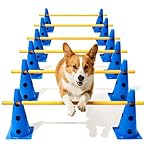
- Build Your Dog's Agility Course: Includes 12 cones & 6 durable rods. Mix and match to create endless training layouts!
- Adjustable Heights for Every Dog: Our agility hurdle cone set stand at 12 inches tall. Easily set jumps at 3 different heights (2", 5.5", 9") using the rods – perfect for puppies to pros!
- Premium Durability & Portability: This dog agility training set is made of lightweight plastic. Cones nest together for compact storage, and the whole set sets up or packs away in seconds – perfect for indoors or backyard fun!
- Versatile Training :This dog agility course backyard set create jumps, weave poles, or zig-zag tunnels! Transform your space into a stimulating agility course that keeps your dog engaged and excited to learn. And the lowest height allows the dog to undergo good rehabilitation training.
- Boost Agility & Bonding Time: Watch your dog gain confidence, speed, and coordination! This dog agility equipment strengthens your connection while providing essential physical & mental exercise.

- Fisher, Diana (Author)
- English (Publication Language)
- 32 Pages - 10/30/2018 (Publication Date) - Walter Foster Jr. (Publisher)
Choosing Your First Furry Friend: A Beginner Dog Breed Buying Guide
Getting your first dog is exciting! It’s a big decision, and choosing the right breed makes all the difference. This guide helps you find a dog that fits your life.
1. Key Features to Look For
When you’re picking a beginner dog breed, some things are super important.
- Temperament: You want a dog that’s friendly, patient, and not too easily startled. A good-natured dog is easier to train and gets along with everyone.
- Trainability: Some dogs learn tricks and commands faster than others. Look for breeds known for being eager to please. This makes training much less stressful.
- Energy Level: Are you super active or more of a homebody? Choose a dog whose energy matches yours. A high-energy dog needs lots of exercise, while a calmer dog is happy with shorter walks.
- Size: Big or small? Smaller dogs can be easier to manage in apartments. Larger dogs might need more space. Think about where you live.
- Grooming Needs: Some dogs have easy-care coats that just need a brush now and then. Others need regular trips to the groomer or daily brushing. Decide how much time you have for grooming.
2. Important Materials (For Dog Care Products!)
While the dog breed itself isn’t made of materials, the things you buy for your dog are.
- Leash and Collar: Look for durable nylon or leather. They should be comfortable for your dog and strong enough to keep them safe.
- Bedding: Soft, washable fabrics like cotton or fleece are great. A sturdy bed that holds its shape is also good.
- Toys: Durable rubber or tough fabric toys are best for chewers. Make sure they’re safe and not too small to swallow.
- Food Bowls: Stainless steel or ceramic bowls are easy to clean and don’t hold odors. Plastic bowls can sometimes cause allergies.
3. Factors That Improve or Reduce Quality
The quality of your dog ownership experience depends on many things.
- Socialization: Early socialization is key. Exposing your puppy to different people, places, and other animals helps them become well-adjusted. This greatly improves their behavior.
- Training Consistency: Regular, positive training sessions build a strong bond and help your dog learn good manners. Inconsistent training can lead to confusion and unwanted behaviors.
- Veterinary Care: Regular check-ups and prompt attention to health issues keep your dog happy and healthy. Neglecting vet care can reduce their quality of life.
- Nutrition: High-quality dog food provides the nutrients your dog needs. Poor nutrition can lead to health problems and a dull coat.
4. User Experience and Use Cases
Think about how you’ll spend time with your dog.
- Family Pet: Many beginner breeds are fantastic with children. They are patient and playful, making them great companions for families.
- Apartment Living: Smaller, lower-energy breeds often adapt well to smaller living spaces. They can be happy with indoor play and short walks.
- Active Lifestyle: If you love hiking or running, a more energetic breed might be your perfect partner. They’ll keep up with you on all your adventures.
- Companionship: For those who want a loyal friend to relax with, many calm and affectionate breeds are ideal. They’re happy to snuggle on the couch.
Frequently Asked Questions (FAQ) for Beginner Dog Breeds
Q: What are the most important things to consider when choosing a beginner dog breed?
A: The most important things are the dog’s temperament, how easy it is to train, its energy level, size, and grooming needs. These features will determine how well the dog fits into your lifestyle.
Q: Are certain breeds naturally better for first-time dog owners?
A: Yes, some breeds are known for being patient, friendly, and eager to please, which makes them easier for beginners to handle and train. Examples include Golden Retrievers and Labrador Retrievers.
Q: How much exercise does a beginner dog breed typically need?
A: Exercise needs vary by breed. Some need daily vigorous activity, while others are content with shorter walks and indoor play. It’s important to research the specific breed’s energy level.
Q: What is “socialization” and why is it important for a new dog?
A: Socialization means exposing your puppy to many different sights, sounds, people, and other animals in a positive way. It helps them grow into a confident and well-behaved adult dog.
Q: Do all beginner dog breeds shed a lot?
A: No, shedding varies greatly by breed. Some breeds shed very little, while others shed moderately to heavily. If shedding is a concern, look for low-shedding breeds.
Q: How much time should I expect to spend training my new dog?
A: Consistent, short training sessions are best. Aim for 10-15 minutes a few times a day. Building a routine is more important than long, infrequent sessions.
Q: What are some common mistakes beginner dog owners make?
A: Common mistakes include not starting training and socialization early enough, expecting too much too soon, and not providing enough exercise or mental stimulation.
Q: Is it better to get a puppy or an adult dog as a beginner?
A: Puppies require more work and training, but you can shape their behavior from the start. Adult dogs are often already house-trained and may have a calmer temperament, but their past can be unknown.
Q: What are the costs associated with owning a beginner dog breed?
A: Costs include food, vet care (check-ups, vaccinations, potential emergencies), toys, bedding, grooming, and training classes. It’s important to budget for these expenses.
Q: How do I choose the right size dog for my living space?
A: Consider your home’s size and your lifestyle. Smaller apartments might be better suited for smaller or less energetic breeds. Larger homes and yards can accommodate bigger, more active dogs.