
Free shaping dog training is a method where you reward small steps a dog takes toward a final goal behavior, without physically guiding or luring the dog. It relies heavily on positive reinforcement and operant conditioning principles to encourage the dog to offer new actions voluntarily.
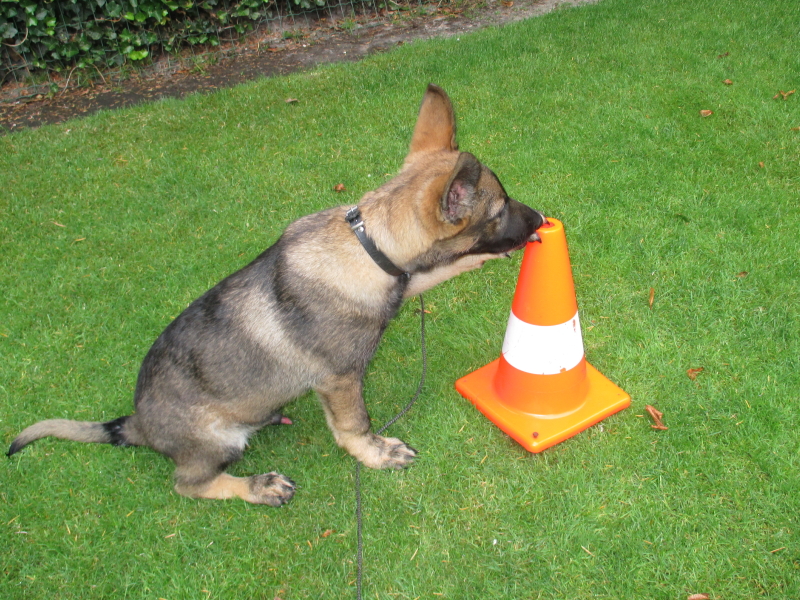
Image Source: media-01.imu.nl
Deciphering Free Shaping in Dog Training
Free shaping is an exciting, advanced concept in dog training techniques. It is a powerful tool for teaching new behaviors. Think of it like this: you set up a situation, and the dog explores options. When the dog does anything close to what you want, you mark and reward it. This builds the behavior piece by piece.
The core idea is to let the dog decide how to get the reward. This fosters problem-solving skills and makes training fun for the dog. It contrasts sharply with methods that rely on physical manipulation or lure reward training, where a treat guides the dog into position.
The Role of Marking and Reinforcement
Effective free shaping hinges on precise timing. You need a way to tell the dog the exact moment they did something right. This is where clicker training comes in handy.
Clicker Training: The Precise Marker
The clicker serves as a bridge between the action and the reward.
- Charge the Clicker: You first pair the sound of the click with something good, like a tasty treat. Click, then treat. Repeat this many times. The dog learns the click means a reward is coming.
- Mark the Behavior: When you are free shaping, you click the instant the dog performs the desired micro-action.
- Follow Up: After the click, you deliver the primary reinforcer (the treat).
This precision is vital for complex shaping behavior. If you are too slow, the dog might think they are being rewarded for the movement after the correct one.
Positive Reinforcement: The Foundation
Free shaping is a pure application of positive reinforcement. You are adding something desirable (a reward) after a behavior, making that behavior more likely to happen again. We never use punishment or force. This builds a strong, trusting relationship essential for cooperative training.
Steps for Implementing Free Shaping
Starting a new behavior using free shaping requires patience and clear goals. You break a complex task into tiny, achievable steps.
Establishing the Target Behavior
Before you start shaping, decide exactly what the final behavior looks like. For example, if you want the dog to touch a target stick with its nose, that is the final goal.
Successive Approximation: Building Blocks
The process of rewarding closer and closer approximations of the final goal is called successive approximation.
Here is how the process moves:
- Step 1: Initial Moment: Reward any movement toward the target object (e.g., looking at it).
- Step 2: Closer Approach: Stop rewarding just looking. Now, only reward the dog taking a step toward the object.
- Step 3: Contact: Wait until the dog is very close or touches it lightly. Click and treat!
- Step 4: Direct Contact: Only reward a firm nose touch.
If the dog gets stuck, you have moved too fast. Go back to the last step the dog succeeded at easily.
Timing and Criteria Management
Managing the criteria—what you are asking for—is the art of shaping.
| Criteria Change | Description | When to Use |
|---|---|---|
| Raising Criteria | Requiring a better version of the behavior. | When the dog offers the current step reliably (8 out of 10 times). |
| Lowering Criteria | Going back to an easier step. | When the dog stops offering the behavior or seems frustrated. |
| Holding Criteria | Repeating the same small step. | To ensure the dog understands the current requirement before moving on. |
Free shaping moves quickly when the dog is engaged but slows down if the dog becomes confused.
Free Shaping vs. Other Training Methods
It is helpful to compare free shaping with other common dog training techniques to see where it fits best.
Free Shaping versus Lure Reward Training
Lure reward training uses a treat held near the dog’s nose to guide them into a position, like moving a hand over the dog’s head to ask for a “sit.”
- Lure Reward Training: Fast for teaching initial positions. The dog follows the lure.
- Free Shaping: Slower initially. The dog chooses the action. It results in higher engagement and retention because the dog solved the puzzle.
While luring is excellent for beginners, free shaping is crucial when teaching novel actions that don’t have an easy lure, such as closing a door or picking up a specific item.
Free Shaping and Dog Behavior Modification
Free shaping is a gentle but powerful tool in dog behavior modification. If a dog exhibits fear or anxiety around a new object (like a strange hat), traditional methods might involve forcing the dog closer.
With shaping, you reward small, calm actions near the object.
- Reward looking at the hat from across the room.
- Reward walking toward the hat without stress.
- Reward sniffing the air near the hat.
This allows the dog to build confidence at their own pace. It promotes a sense of control, which is very calming for anxious dogs.
Benefits of Using Free Shaping
Why go through the effort of free shaping when other methods exist? The advantages are significant, especially for long-term training success.
Enhancing Cognitive Skills
Free shaping forces the dog to think actively. The dog learns, “If I try this, I might get a click and a treat!” This active problem-solving builds great mental fitness. It turns training sessions into engaging cognitive games.
Building Confidence and Trust
Since the dog is never forced or corrected, the process is inherently positive. This boosts the dog’s self-esteem. They learn that trying new things is safe and rewarding. This deepens the bond based on mutual respect, essential for cooperative training.
Achieving Complex Actions
Many advanced dog obedience tasks or complex tricks cannot be taught easily with a lure. Teaching a dog to stack objects, put toys away, or perform a sequence of distinct movements often requires the step-by-step approach of shaping.
Minimizing Stress
For dogs that are easily stressed by physical handling or direct commands, free shaping offers a low-pressure alternative. It keeps training fun and optional, even when working on challenging goals.
Practical Application: Teaching a Novel Behavior
Let’s look at a practical example: teaching a dog to offer a “play bow.”
Phase 1: Getting the Initial Movement
The play bow involves the front legs down and the rear end up.
- Target: The dog’s front paws moving forward or downward.
- Action: Wait. The dog might stretch, lean, or lower one elbow.
- Mark and Reward: Click and treat the very first sign of the front end lowering, even slightly.
- Raise Criteria: Now, only reward if both front paws start to move forward or down together.
Phase 2: Shaping the Full Posture
- Action: Reward only when the dog holds the lowered front end position for one second.
- Raise Criteria: Demand the rear end lift slightly higher or the front paws stretch further out.
- Add Duration: Click and treat only when the dog holds the full bow for two seconds.
Phase 3: Adding the Cue
Only once the dog is offering the behavior reliably (perhaps 80% of the time on its own), you introduce the verbal cue (e.g., “Bow”).
- Say “Bow.”
- Wait for the dog to perform the behavior it has already learned.
- Click and treat.
This sequence ensures the dog performs the action voluntarily before the word becomes attached to the movement. This is a cornerstone of teaching new behaviors effectively.
Troubleshooting Common Shaping Hurdles
Even experienced trainers face challenges when using free shaping. Knowing how to adjust is key to maintaining momentum.
The Dog Stops Offering Behaviors
This often means the criteria were raised too high too quickly. The dog feels pressured or confused.
- Solution: Immediately drop the criteria back to the easiest step the dog was succeeding at previously. Reward that easy step several times to rebuild confidence. Then, raise the standard very slightly.
The Dog Offers Irrelevant Behaviors
The dog starts trying random things (spinning, barking, sniffing the floor) hoping one will earn a click. This is often called “stalling.”
- Solution: Ignore the unwanted behaviors completely. Do not click or treat for stalling. Wait quietly for a tiny approximation of the desired action, even if it takes a long time. Alternatively, reset the session briefly or switch to an easy, known behavior to end on a high note.
Relying on the Lure (Regression)
If you started with luring and are trying to transition to shaping, the dog might keep looking for the food lure.
- Solution: Put the food away entirely during the shaping process. Use the clicker, but deliver the treat from a pocket or pouch after the click, ensuring the dog cannot see where the treat is coming from. This reinforces the idea that the click itself predicts the reward, not the sight of the food.
Free Shaping in Advanced Dog Obedience
While foundational shaping builds basic actions, advanced work heavily relies on it for creativity. Many competition behaviors, like complex retrieves, specific positions on movement, or chains of behaviors, are proofed and refined using shaping.
For example, in competitive obedience, teaching a dog to position itself perfectly parallel to the handler (heeling position) without physical correction relies on rewarding incremental movements toward that precise alignment. This level of detail requires the precision of clicker training integrated with free shaping.
Table: Shaping vs. Forcing for Complex Behaviors
| Feature | Free Shaping Approach | Forcing/Luring Approach |
|---|---|---|
| Dog Role | Active problem-solver | Passive recipient of guidance |
| Learning Speed | Slow build-up, fast adoption | Fast initial learning, slower generalization |
| Motivation | Intrinsic (Desire to earn click) | Extrinsic (Desire for the lure/treat) |
| Result | High reliability, creative responses | Position-specific, reliance on handler cues |
Final Thoughts on Cooperative Training
Free shaping is the pinnacle of positive reinforcement work. It champions the dog’s agency in the learning process. It shifts the dynamic from handler control to cooperative training. When you rely on the dog to figure out the puzzle, you are not just teaching a trick; you are strengthening the dog’s confidence and their relationship with you. This method is essential for anyone serious about positive-based dog behavior modification or achieving excellence in advanced dog obedience.
Frequently Asked Questions (FAQ) About Free Shaping
Is free shaping suitable for all dogs?
Yes, free shaping, when paired with positive reinforcement, is suitable for almost all dogs. However, dogs that are extremely shy or highly fearful may require an initial period of desensitization before they are comfortable offering behaviors without physical guidance. Always start with very easy steps for fearful dogs.
How long does it take to teach a new behavior using free shaping?
The time varies greatly. A very simple action, like touching your hand, might take only a few minutes once the dog understands the process. A complex behavior, like retrieving a specific item from a group, might take weeks or months of short, focused sessions. The key is consistency, not speed.
When should I stop using the clicker and just use praise?
You should stop using the clicker only when the behavior is performed flawlessly and consistently without requiring the shaping process anymore. A good rule of thumb is to fade the clicker once the dog is performing the final behavior correctly on cue 9 out of 10 times. After fading the click, you transition to using praise and intermittent, unpredictable primary rewards (treats).
Can I use free shaping if I prefer not to use clicker training?
While clicker training provides the best timing mechanism for shaping, you can use a verbal marker word (like “Yes!”) instead. The word must be delivered at the exact moment of the correct action. The clicker is generally preferred because it is a distinct, unchanging sound that is easier to execute instantly than a spoken word.
What is the difference between shaping and capturing?
Capturing involves waiting for the dog to offer a natural behavior (like yawning or sniffing) and marking/rewarding it, often done to get a behavior on cue later. Shaping involves actively encouraging the dog, through successive rewards, to offer a behavior it has not done before, or one that is a novel combination of movements. Both rely on positive reinforcement.